Blog · World webcams
APRR Webcam Live: Every Camera, One Live Map

APRR (Autoroutes Paris-Rhin-Rhône) webcams are traffic cameras that provide live images of the conditions on motorways managed by this concessionaire in France. They allow drivers and travelers to check traffic conditions, weather, and potential incidents before or during their journey, facilitating planning and on-route decision-making.
APRR is one of the main motorway concessionaires in France, managing a vital network that connects the center of the country with the east and southeast, including routes to Switzerland and Germany. Its cameras are an essential tool for traffic management and road safety.
The essentials, in 20 seconds
- APRR (Autoroutes Paris-Rhin-Rhône): French motorway concessionaire whose network spans over 2,300 kilometers.
- Network reach: connects Paris, Lyon, Dijon, and Besançon, linking central France with the east, Switzerland, and Germany.
- Key motorways: A5, A6, A31, A36, A39, A40, A42, A46, and A71 make up the core routes.
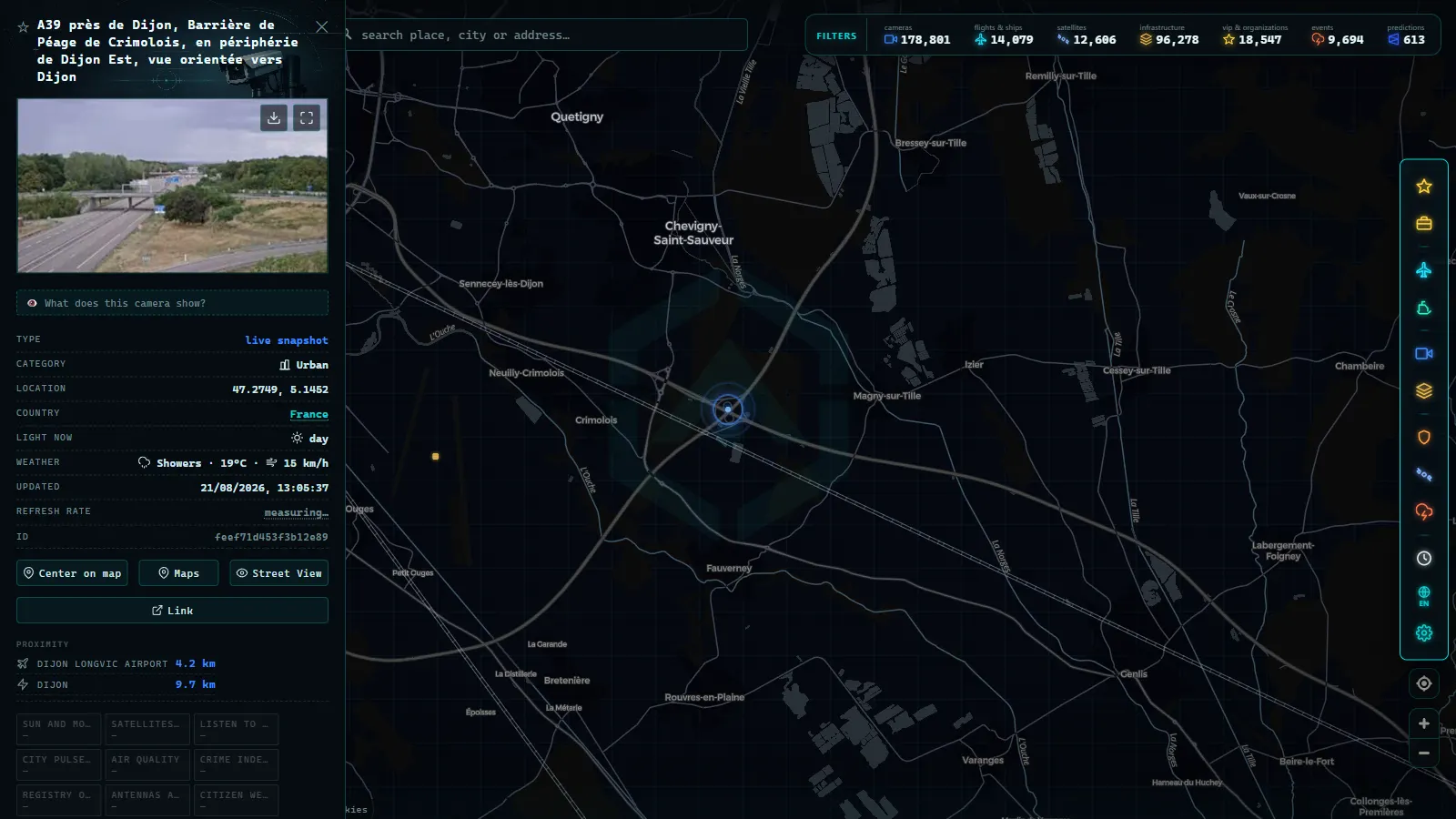
- Camera images: show traffic density, weather conditions (rain, snow, fog), visible incidents, and road visibility.
- Access points: the official APRR site, traffic apps, and aggregating platforms like the ARGOS ATLAS map.
What is APRR and why does it have webcams?
APRR, or Autoroutes Paris-Rhin-Rhône, is a French motorway concession company. Its network spans over 2,300 kilometers of motorways, making it one of the most extensive in Europe. This network is crucial for the transport of goods and people, connecting major cities such as Paris, Lyon, Dijon, and Besançon, and serving as a hub for international traffic.
The main reason APRR, like other concessionaires and traffic authorities, installs webcams is for operational management and safety. These cameras allow traffic control centers to constantly monitor vehicle flow, detect accidents or incidents, and coordinate the response of emergency services. For the public, webcams are a direct and visual source of information on road conditions, complementing data from variable message signs and traffic radio.
The APRR motorway network
APRR's network includes key motorways such as:
- A5: Connects Paris with Langres.
- A6: The famous "Autoroute du Soleil" linking Paris with Lyon, one of the busiest.
- A31: From Beaune to the Luxembourg border.
- A36: Known as "La Comtoise," connects Beaune with Mulhouse and the German border.
- A39: From Dijon to Bourg-en-Bresse.
- A40: "Autoroute Blanche," from Mâcon to Chamonix, crucial for access to the Alps.
- A42: From Lyon to Pont-d'Ain.
- A46: Circles Lyon to the east.
- A71: From Orléans to Clermont-Ferrand.
These routes are fundamental for transport within France and for cross-border connections. The availability of webcams at strategic points on this network is an added value for users.
How to access APRR webcams?
Accessing APRR webcams is straightforward, with several ways to do so, both through their official channels and via third-party platforms that integrate this information.
- Official APRR website: The most direct way is to visit the APRR website. Their traffic section usually includes an interactive map where cameras are located, and you can click on them to see live images. This is the most reliable channel for the most up-to-date and official information.
- Mobile traffic applications: Many navigation and traffic apps integrate webcam images from major concessionaires. When planning a route, these apps can show you cameras near your journey.
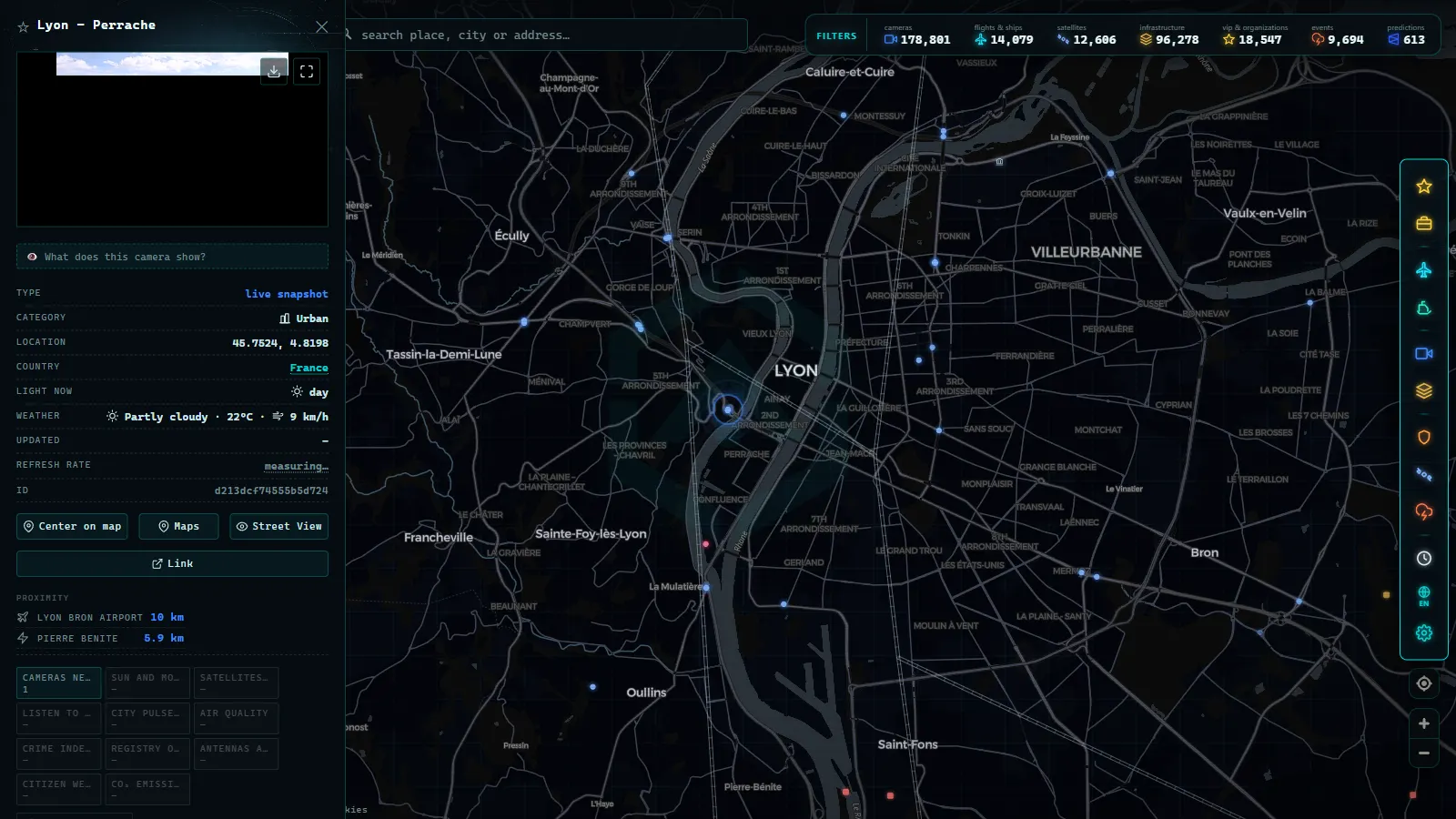
- Global intelligence maps: Platforms like the ARGOS ATLAS map aggregate data from various sources, including traffic cameras worldwide. This allows you to view APRR webcams alongside other public cameras, flights, ships, and more, offering a comprehensive real-time view of the environment. You can explore live webcams from around the world through these tools.
Tips for using traffic webcams
- Pre-planning: Check cameras before you leave to anticipate potential congestion or adverse weather conditions. This is especially useful for long routes or during peak traffic periods.
- Incident verification: If you hear about an accident or traffic jam, webcams can help you verify the magnitude and exact location, allowing you to seek alternative routes if necessary. To better understand how these tools work, you can read about how traffic cameras work.
- Weather conditions: Cameras are excellent for seeing road conditions in case of rain, snow, or fog, information that can be crucial for safety. Weather webcams are a specific resource for this.
Recorded straight off the map, no sound.
What information do APRR webcams offer?
APRR webcams provide a direct visual image of road conditions at a specific point. This includes:
- Traffic density: Allows you to see if there is congestion, smooth traffic, or if the road is clear.
- Weather conditions: You can observe if it's raining, snowing, foggy, or if the asphalt is wet or icy.
- Visible incidents: Although the cause is not always visible, a camera can show a vehicle stopped on the shoulder, an accident, or the presence of maintenance crews.
- Visibility: Especially useful in mountainous areas or with a risk of fog, to assess actual visibility on the road.
It's important to remember that traffic cameras are designed to show the general state of the road and not to identify specific individuals or vehicles. Their purpose is traffic flow management and road safety, always respecting user privacy. For more details on legality, consult traffic cameras and privacy.
The importance of official webcams
When consulting a traffic webcam, it is essential to ensure that the source is official or backed by a recognized entity. APRR webcams are an example of an official source, guaranteeing the reliability and timeliness of the information. Unofficial cameras may offer outdated data, low-quality images, or even be misleading.
Official sources, such as motorway concessionaires or national traffic authorities, invest in the maintenance and updating of their camera systems, ensuring that the information they provide is accurate and useful for drivers. Knowing how to tell if a webcam is official is key to trusting the information you receive.
In summary, APRR webcams are a valuable tool for anyone planning to travel on French motorways. They offer a real-time window into road conditions, allowing for informed decisions and contributing to safer and more efficient driving.
Frequently asked questions
What is APRR and which motorways does it manage?
APRR (Autoroutes Paris-Rhin-Rhône) is one of France's main motorway concessionaires, managing an extensive network connecting key regions like Paris, Lyon, Dijon, and the Swiss border. Its network is vital for transportation in eastern France.
Where can I find APRR webcams?
APRR webcams are available on their official website and associated traffic applications. You can also access many of them through global intelligence maps like ARGOS ATLAS, which integrates various traffic camera sources.
Do APRR webcams show real-time traffic?
Yes, APRR webcams offer real-time or very frequently updated images, allowing users to see current traffic conditions, weather, and potential incidents on the motorways they manage.
Are traffic webcam recordings legal?
Traffic webcams like those from APRR are legal because they are designed to monitor vehicle flow and road conditions, not to identify individuals. They typically focus on the roadway and do not allow facial recognition, respecting privacy.
- Spain Eclipse Traffic Measures Aug 12: Path & Live Webcams
- Spain Beach Webcams: Watch the Coast Live Before You Go
- Hurricane Live Cameras: Watch Miami's 982 Feeds This Season
- Perseids 2026: when to watch and how to see them live
- Canary Islands webcams: 642 live cameras, island by island
- Solar eclipse 2026 live stream: how to watch it safely