Blog · Traffic cameras
Traffic cameras and privacy: what they capture, what they don't, and what the law says
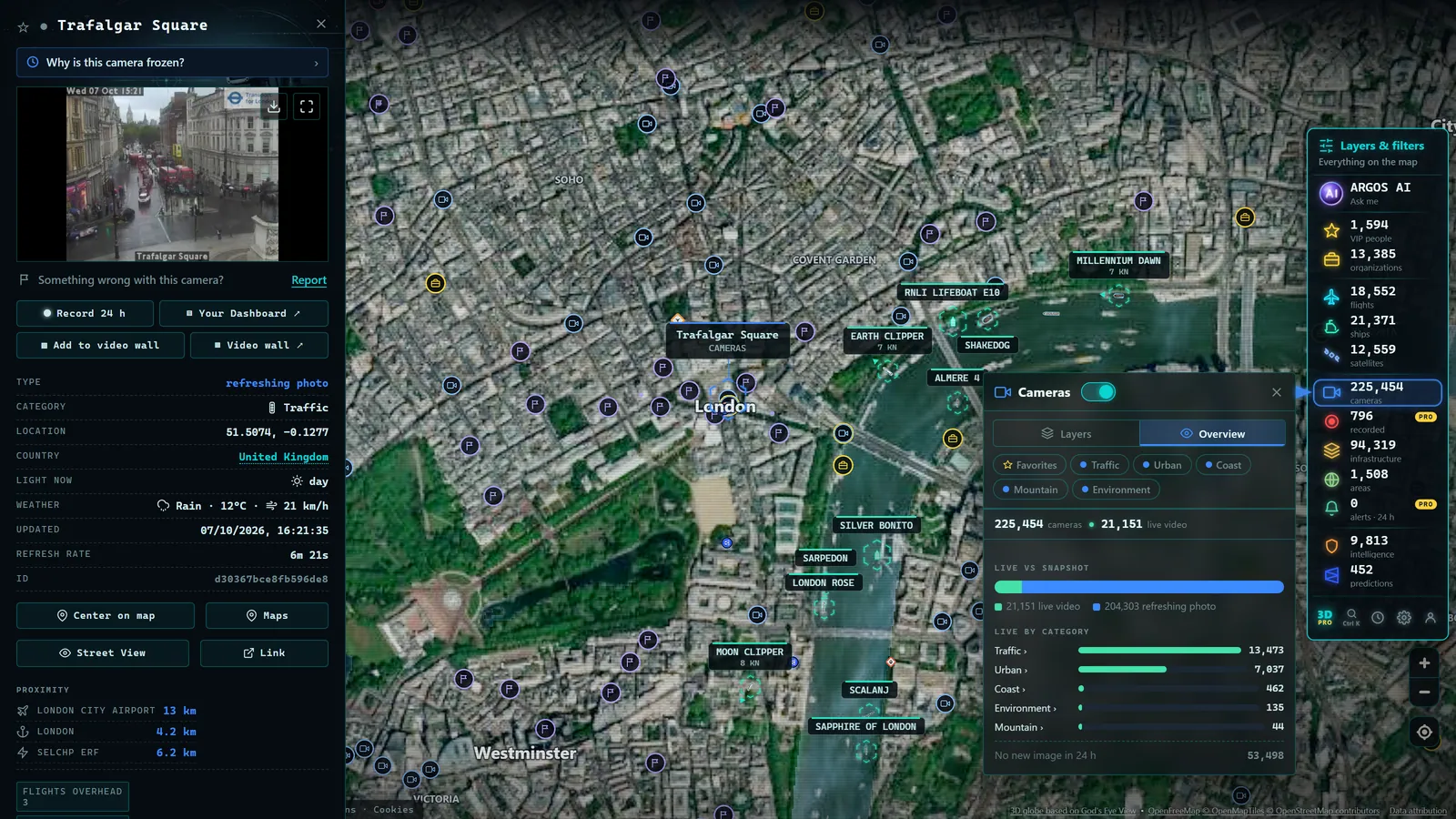
The moment someone discovers they can watch hundreds of roads live from their couch, the same question surfaces: is this legal? What about traffic cameras and the privacy of people driving past them? These are reasonable questions and they deserve a serious answer, neither alarmist nor dismissive. This article explains what these cameras actually exist for, what they capture and what they do not, how they differ from surveillance systems and enforcement cameras, what legal framework authorises their publication, and what practices distinguish a responsible republisher from an irresponsible one. One clarification before we begin: this is informational content, not legal advice, if you have a specific situation, consult a qualified professional.
What these cameras exist for (and what they do not)
Traffic cameras are installed with one specific purpose: traffic management. Control centres use them to monitor road network conditions (vehicle density, incidents, weather on the carriageway) and to make operational decisions: activate variable message signs, coordinate response teams, inform drivers.
They are not people-surveillance systems. This distinction is not rhetorical: it governs everything that follows, from where the cameras are placed to how they are framed and at what resolution images are published. A camera designed to measure flow on a motorway has no need (and is not designed) to distinguish faces or read number plates; it needs to see the road as a whole.
The fact that authorities subsequently publish those images openly reflects a public service logic: if the tool already exists and helps drivers plan their journeys, sharing it multiplies its value at no extra cost. In the United States, state Departments of Transportation publish live camera feeds through 511 systems, the national traveller information number. In the United Kingdom, National Highways and local councils publish feeds through the National Traffic Information Service (NTIS). France's ASFA system aggregates motorway imagery across concession operators. These are deliberate policy decisions, not oversights. In our complete guide to traffic cameras we explain how to find and use them in practice.
What they actually capture: framing and resolution
Open any public traffic camera (whether on a US interstate, a British motorway, or an Alpine pass) and you will always see the same type of image: a wide-angle view of the road, taken from an elevated point, covering multiple lanes and often hundreds of metres of carriageway. Vehicles appear as small shapes in the scene; pedestrians, when present, as tiny silhouettes.
Added to that wide framing is the low resolution of the published image. Together, these characteristics mean that in normal conditions neither individuals nor licence plates are identifiable in what the public sees. This is not accidental: it is a design choice consistent with the purpose. Knowing whether there is congestion or snow does not require more detail, and publishing more detail than necessary adds privacy risk without adding utility.
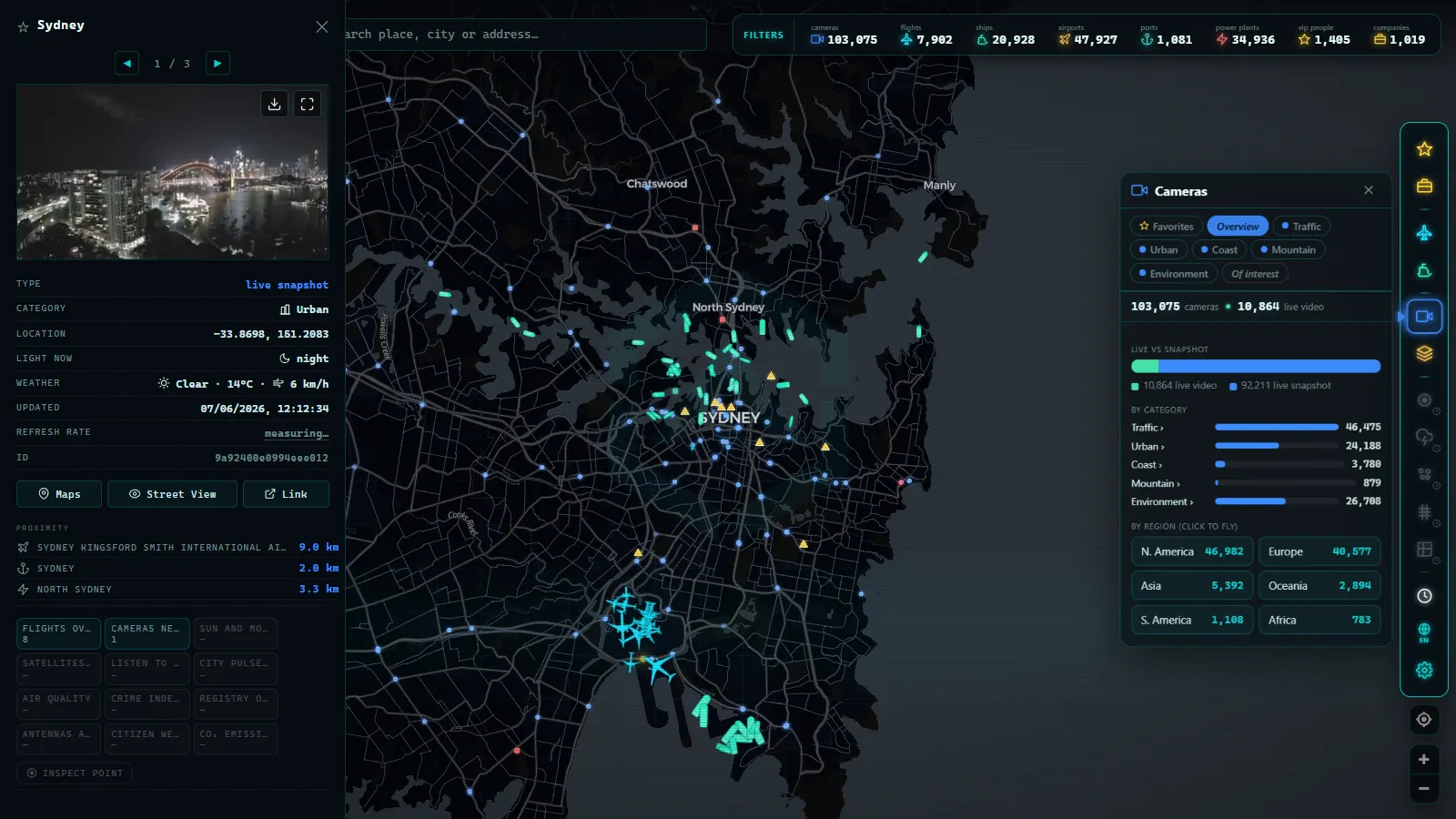
It is also worth noting the format: what the public receives from most official sources is not continuous video but a periodic still frame, a fixed image that refreshes at intervals set by each source. There is a substantial difference, in privacy terms, between a low-resolution snapshot of a motorway and a permanent video stream: the former makes tracking anyone realistically impossible.
Not all road cameras are the same
Much public confusion comes from treating very different systems as a single category. They are worth separating clearly:
- Traffic information cameras: the type this article is about. Wide-angle framing, low resolution, published openly. Purpose: traffic management and public information.
- Enforcement cameras: speed cameras, red-light cameras, bus-lane and congestion-charge enforcement systems. These are technically distinct systems, specifically designed to capture licence plates with evidentiary quality, operating under specific legal regimes with their own procedural safeguards. Their images are not published openly.
- Security CCTV: cameras in commercial premises, buildings, transport hubs, and public spaces. These record for security purposes, retain images for regulated periods, and are subject to data-protection law, including requirements like informational signage.
Three families, three purposes, three legal frameworks. The traffic information camera you consult before a journey belongs to the first: it neither issues fines, nor surveils individuals, nor archives images for security purposes. Anyone who fears that "appearing" in a traffic camera image could result in a penalty is confusing a roadside information feed with a speed-enforcement system, they are deliberately separate worlds.
From the ARGOS ATLAS channel.
The legal framework, in broad terms
Without citing specific statutes (this is informational, not legal advice) the regulatory landscape for these cameras rests on two main pillars.
The first is public-sector information reuse. In the European Union, a substantial body of law actively encourages government-generated data (and traffic imagery qualifies) to be published openly and reused by third parties. The underlying philosophy is clear: what is produced with public resources should, as far as possible, benefit the public. Similar principles apply in the US under open-data and government transparency frameworks, and across most OECD countries. When a road authority publishes its cameras on its website, it is not an oversight; it is a deliberate decision aligned with open-data policy.
The second pillar is personal data protection. The GDPR regulates the processing of personal data within the EU, and an image in which an individual is identifiable constitutes personal data. This is why everything described above matters: wide framing, low resolution, no individual identification possible under normal conditions. The design of these cameras aims precisely to make the published information useful for traffic management without turning it into personal data about the people on the road.
The open publication of traffic cameras is not a legal loophole that someone is exploiting: it is a deliberate public policy, built to inform without identifying.
These two pillars coexist with sector-specific road traffic legislation that authorises the installation of the cameras in the first place. The practical result: authorities publish, citizens consult, and aggregators may republish, provided they do so responsibly. And that is the key word.
What a responsible republisher does
The fact that images are publicly available does not make every use of them acceptable. The difference between responsible aggregation and careless aggregation comes down to verifiable practices:
- Attribute the source: every image should indicate which authority publishes it. Transparency about origin lets users verify and lets the owning authority maintain control of its information.
- Do not alter the images: republish the still frame exactly as the source emits it, without manipulation.
- No facial recognition or licence-plate reading: do not apply any processing to the images aimed at identifying people or vehicles. This is the line that separates traffic information from surveillance.
- No archive: retain only the latest published frame, without building a historical record of past images. A historical archive would convert innocuous snapshots into a tracking tool; forgoing it eliminates that risk entirely.
- A removal channel: provide a clear contact route so that anyone can raise a concern about an image and request its review or removal.
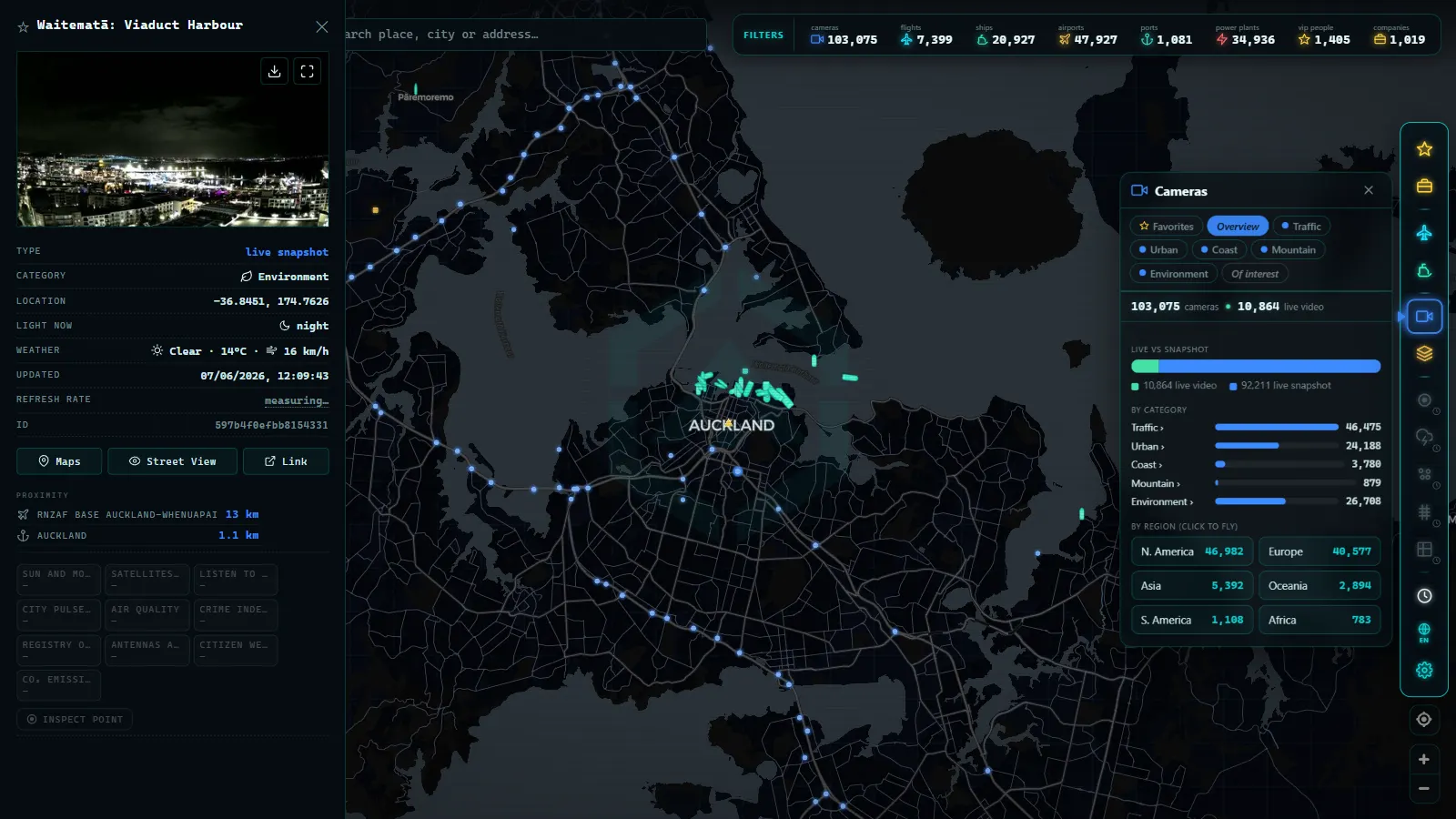
These five practices are exactly what Argos Atlas declares in its methodology: source attribution, unaltered images, no facial recognition or plate-reading, no archive (only the latest low-resolution frame) and an open removal channel. We mention this not as self-promotion, but as a concrete example of how the principles explained in this article translate into operational commitments.
The same criteria serve to evaluate any camera website you come across: if it does not attribute sources, accumulates a historical archive, or claims to identify vehicles, treat it with scepticism. For more context on the variety of public cameras available online and how to distinguish them, see types of public cameras online.
What to do if an image concerns you
Suppose you see a traffic camera image that worries you: you think you can make out your vehicle, your home appears in the background, or something simply does not feel right. The sensible path has three steps.
First, identify the source: the authority that operates the camera, which should be listed alongside the image. They decide what is published and can reframe, blur, or withdraw a camera from their service.
Second, contact the operating authority through its official channels. Road authorities have procedures for handling these requests, including the rights that the GDPR grants data subjects where personal data is involved.
Third, if you saw the image on an aggregator, also use its removal channel. In the case of ARGOS ATLAS, that channel exists and is published in its methodology; requests are handled in relation to the images the map displays. An aggregator cannot modify what the original source broadcasts, but it can review how (and whether) it republishes it.
Frequently asked questions
Are public traffic cameras legal to view?
Yes, fully. They are installed by road authorities under road traffic and highway legislation, and their open publication reflects public-sector information policy across the EU, US, UK, and most other countries. Viewing them is as legal as reading an official traffic bulletin: they are published precisely so that people can see them.
Can they identify me or issue me a fine?
That is neither their purpose nor their design. They provide wide-angle, low-resolution views of the road where neither faces nor licence plates are recognisable under normal conditions. Penalties come from entirely separate systems (speed cameras, red-light cameras, congestion-zone enforcement) specifically designed to capture plates with evidentiary quality and subject to their own distinct legal frameworks.
Do they record and store video?
What reaches the public from most official sources is a periodic still frame, not a continuous video stream. A responsible republisher does not build an archive: it retains only the latest frame published by each source. ARGOS ATLAS explicitly states in its methodology that it maintains no image history.
Who can request the removal of an image?
Anyone with a legitimate concern about what a camera shows. The primary route is the operating authority, which controls the camera and can modify its publication; where personal data is involved, the GDPR grants specific rights to data subjects. Responsible aggregators add their own contact channel for reviewing the images they republish.
Conclusion
Public traffic cameras are a rare case in the privacy debate: observation technology designed, from the outset, not to identify anyone. Wide-angle framing, low resolution, periodic still frames, and deliberate open publication by road authorities compose a system that informs without surveilling, and the responsibility of those who republish those images (source attribution, no recognition processing, no archive, with a removal channel) completes the circle. If you want to see how those commitments work in a real aggregator, we invite you to read our methodology: everything we do, and everything we choose not to do, is set out there in writing.
Frequently asked questions
Are public traffic cameras legal to view?
Yes. They are installed and published by road authorities as a management tool and public information service. Viewing them is entirely legal, they are made openly available precisely for that purpose. This applies whether you are looking at US DOT 511 feeds, UK National Highways cameras, or French ASFA motorway images.
Can they identify me or issue me a fine?
That is neither their purpose nor their design. They show wide-angle, low-resolution views of the road where faces and licence plates are not recognisable. Fines come from entirely separate systems (speed cameras, red-light cameras, access-control enforcement) which operate under a different technical and legal regime.
Do they record and store video?
What reaches the public is typically a periodic still frame, not a continuous video stream. A responsible republisher also does not build a historical archive, it retains only the latest image published by the source, as Argos Atlas declares in its methodology.
Who can request the removal of an image?
Anyone with a legitimate concern. The primary channel is the authority that operates the camera; responsible aggregators also provide their own contact route for requests relating to the images they display.
- Mountain pass cameras: how to check road snow conditions before you travel
- Traffic cameras in Europe: where to see the roads in each country
- Why Is a Traffic Camera Not Working? Outages, Maintenance, and Alternatives
- Live Traffic Mexico City: 15,000+ CDMX Cameras In Real Time
- Live Traffic Cameras in Buenos Aires: Urban Autopistas, Metrobus, and the North-South Corridor
- Live Traffic Cameras in Bogota, Colombia: IDU, Movilidad, TransMilenio and Pico y Placa