Blog · World webcams
Solar eclipse 2026 live stream: how to watch it safely
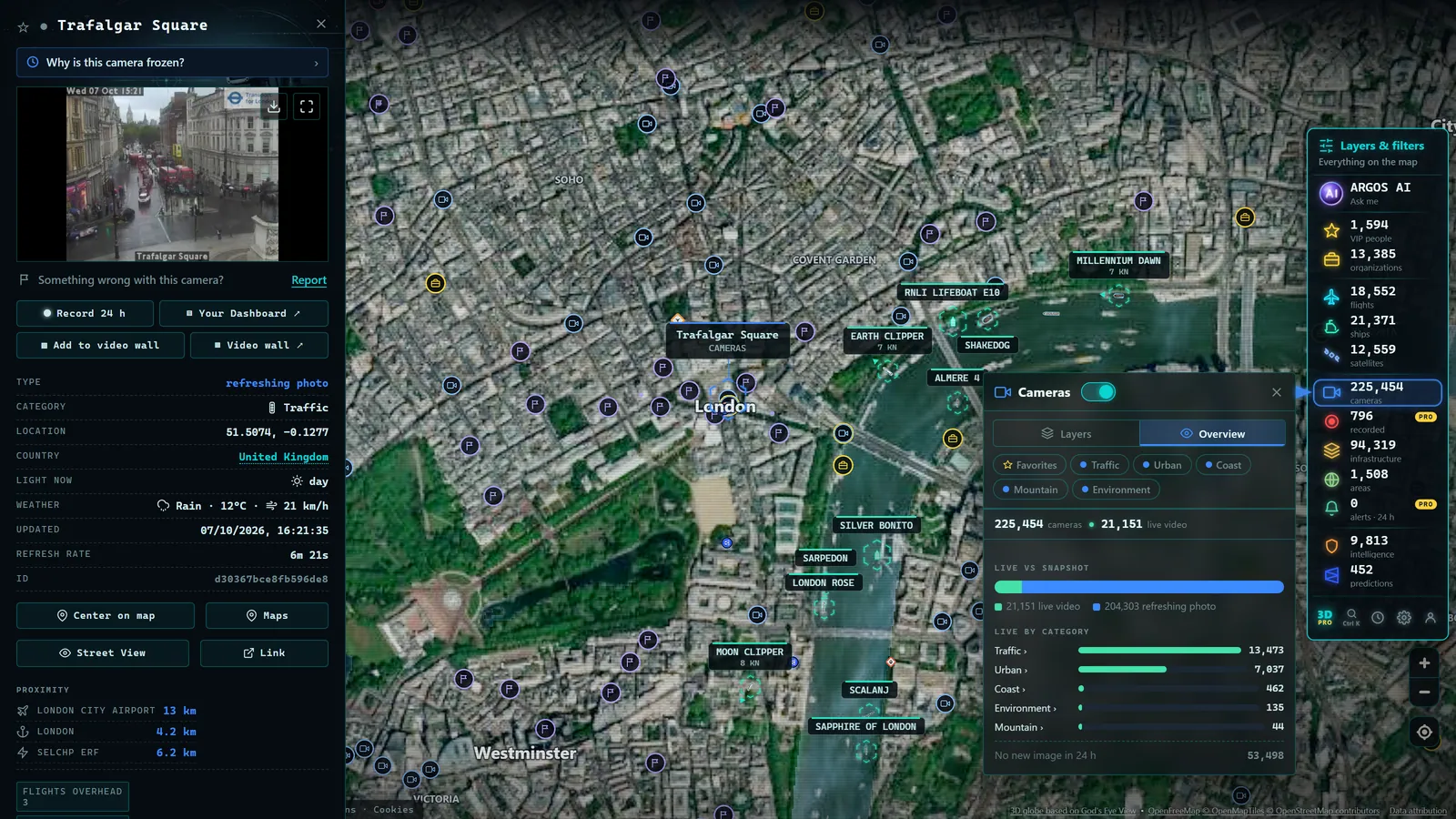
On 12 August 2026 a solar eclipse is visible from Spain, total along a band across the north of the country, late in the afternoon and shortly before sunset. It is the kind of event that does not recur in a lifetime over the same ground, which is precisely why so many people will miss it: too far from the path, working at that hour, cloud overhead, or simply on another continent.
This guide is for all of them. It covers how to follow the eclipse live when you cannot be there: which cameras to look for, what a webcam genuinely shows during an eclipse (and what it does not), how to check the cloud that same afternoon, and why a screen is the only entirely safe way to watch. For the detail of where the path runs, what each region sees and how to plan a trip, we have the full guide to the August 2026 solar eclipse in Spain. This one is about watching it, not travelling to it.
What happens on 12 August, and why the timing complicates everything
The fact that governs everything else is the hour: the eclipse falls late in the afternoon, with the Sun already low. That has three practical consequences worth absorbing before making plans.
First: you need a western horizon. With a low Sun, a hill, a building or a line of trees in the wrong place hides the whole thing. You can be standing under the best sky in Spain and still see nothing if the ridge opposite is in the way.
Second: coastal haze and dust count double. Light travels through far more atmosphere when the Sun is low, so a slightly murky afternoon degrades the view much more than it would at midday.
Third: there is no margin. A midday eclipse lets you wait out a passing cloud. A sunset eclipse does not: if the front arrives late, that is the end of it.
We are deliberately not publishing per-city times or obscuration percentages here. Those figures change kilometre by kilometre and deserve a careful look in the dedicated eclipse guide, not a half-remembered number from a general article.
Four ways to watch the solar eclipse 2026 live
| Option | What you need | What you'll see |
|---|---|---|
| In person inside the path of totality | To travel well in advance, certified eclipse glasses and a clean western horizon | The full experience: light collapsing, sudden quiet, totality with the Sun very low |
| In person outside the path (rest of the country) | Certified glasses and an unobstructed view west | A partly bitten Sun; the light turns strange, but darkness never arrives |
| By webcam on the map | An internet connection and nothing else | The landscape darkening in real time from several points at once, with zero eye risk |
| Cloud contingency | Weather cameras checked that same afternoon | Where it is genuinely clear, so you can decide whether to move or stay |
All four are compatible, and for anyone near the path the sensible combination is the last with the first: check cameras in mid-afternoon and pick your spot with real images in hand.
Safety: the webcam is the only completely safe option
First, the part that is not negotiable. Never look at the Sun without certified protection, not with the disc almost covered, not for "just a second to see if it shows". Retinal damage is painless and can be permanent.
What does not protect you, however often it comes round every eclipse:
- Sunglasses, however dark or polarised.
- Smoked glass, photographic negatives and X-ray film.
- Looking through a phone or camera screen.
- Binoculars or a telescope without a purpose-made solar filter, which concentrate the light and cause immediate harm.
What does work: certified eclipse glasses in good condition (check them for scratches and pinholes) solar filters designed for optical instruments, or indirect projection methods. Inside the path, and only for as long as totality lasts, you can look unfiltered; the instant the first sliver of Sun reappears, the glasses go straight back on. If you are not certain of the exact moment, do not gamble.
Which is the central argument of this article: the webcam carries zero risk. The camera takes the light and you look at a screen. It is safe by definition, and the only version you can hand to children or a large group without a second thought.
From the ARGOS ATLAS channel.
Watching the eclipse online: which cameras to look for
The map holds around 10,900 public cameras in Spain (map count as of August 2026), so the problem is not choice but selection. These are the criteria that work:
- Facing west. With a low Sun, only cameras looking towards the sunset will register the change in light clearly. Ones pointed east will show, at best, an odd atmosphere.
- A clean horizon. Coastline, open country, viewpoints and cameras raised above the rooftops. A traffic camera boxed in by buildings is no use here.
- Inside or near the northern band. The effect is far more dramatic the closer the camera sits to the centreline of totality.
- Several at once. Open three or four spread from west to east. You will watch the shadow travel, which is one of the most striking things about the phenomenon seen collectively.
Now for the honest part. A public webcam will not show you a crescent Sun. They are not built for it: automatic exposure compensates for the loss of light and the Sun appears as a shapeless white blob, if it appears at all. What you will see, and it is well worth it, is something else:
- The landscape darkening in real time, with a light collapse unlike any ordinary sunset.
- Colours turning flat and metallic, shadows losing their edges.
- Near the centreline, a very fast drop in light and an equally abrupt recovery.
- The behaviour of the surroundings: street lighting switching on early, traffic driving with headlights.
In other words: a webcam does not show you the eclipse, it shows you what the eclipse does to the world. Which, for a lot of people, is the part they actually remember.
How to check the cloud that same afternoon
This is the map's highest-value use on the 12th and the one fewest people exploit. In mid-afternoon, before committing to anything:
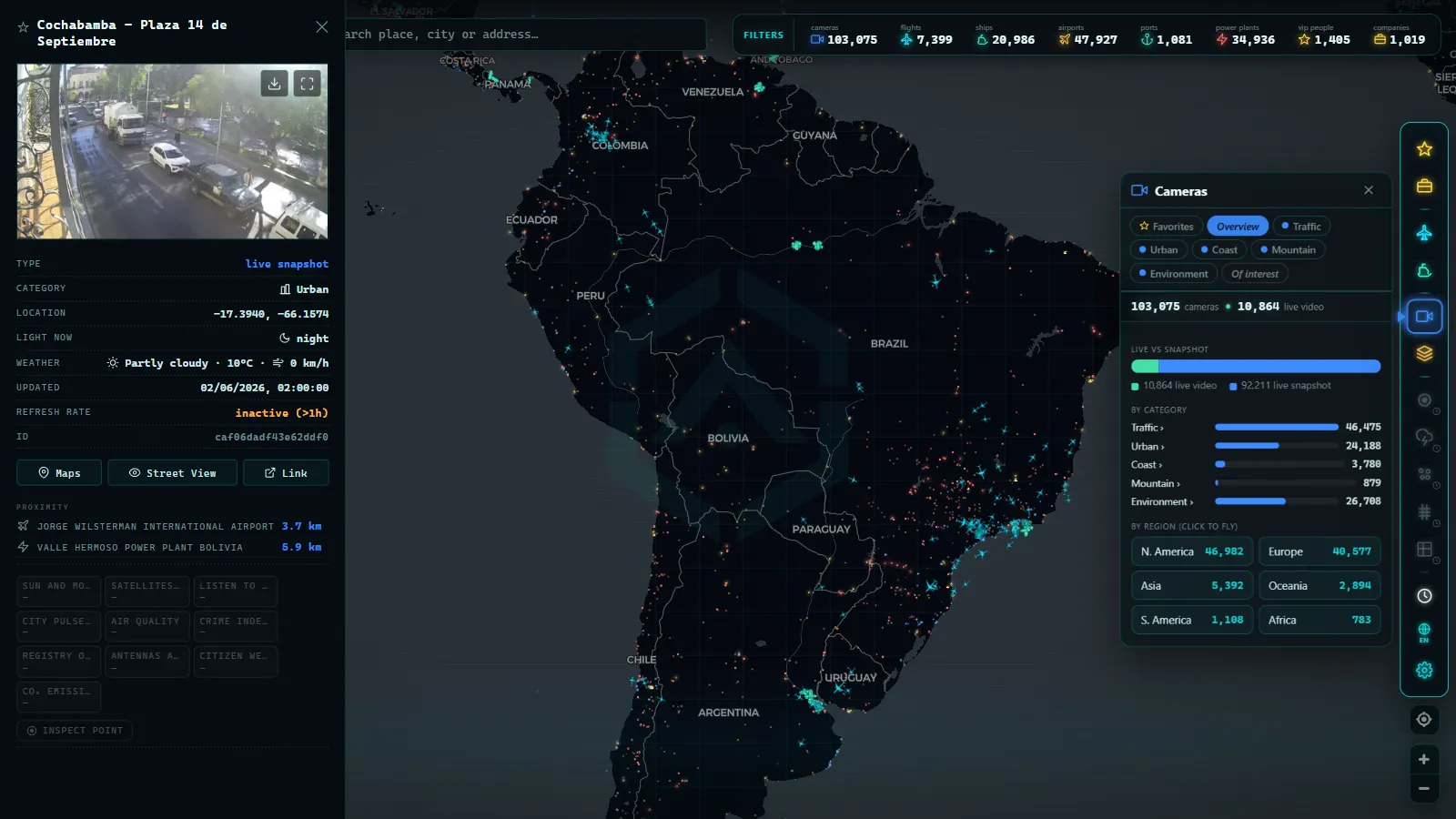
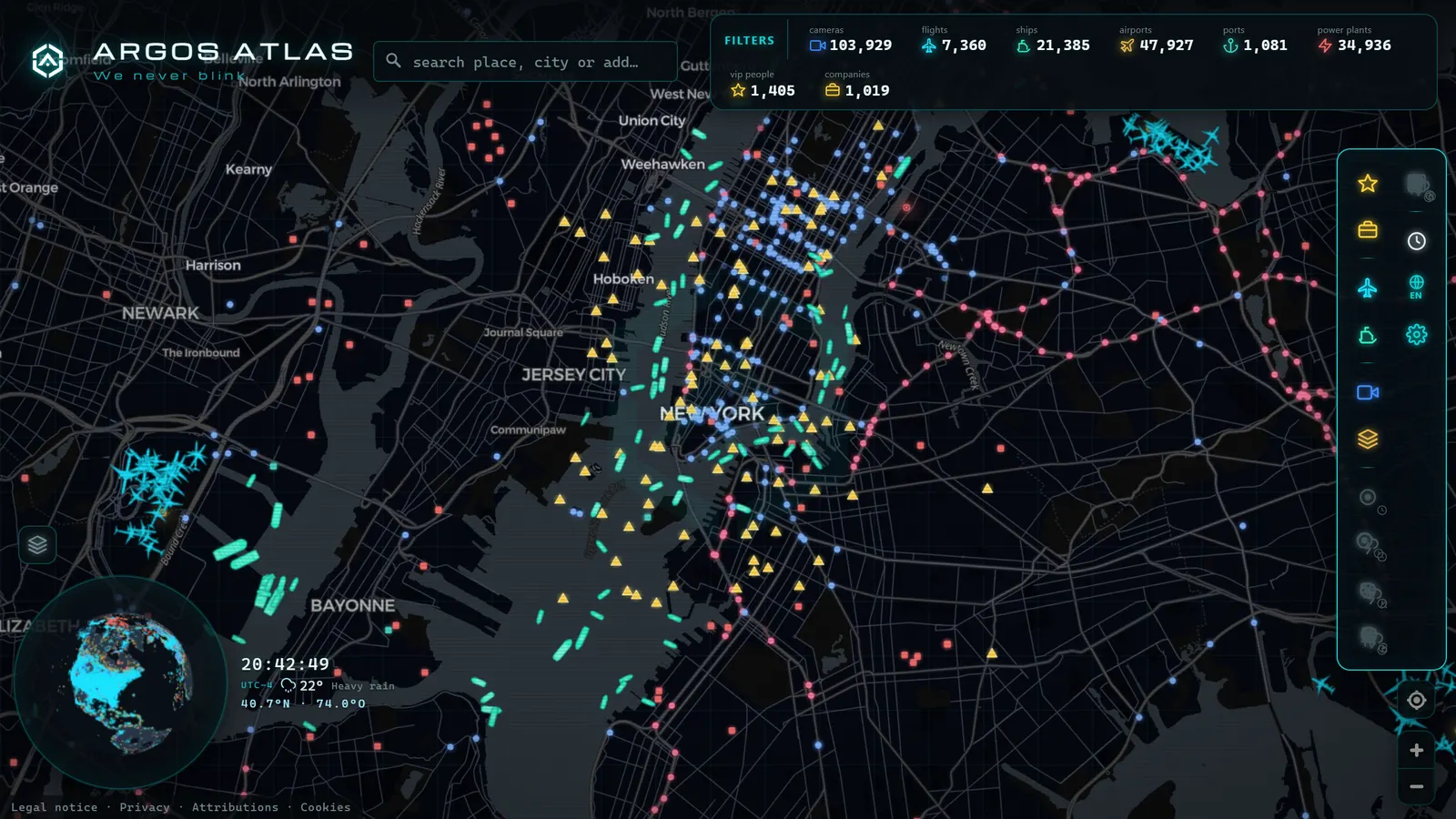
- Open the ARGOS ATLAS map and centre it on the area you were heading for.
- Check two or three cameras some distance apart and compare the sky. A real image beats any forecast icon.
- Look at each timestamp. A camera frozen three hours ago tells you nothing about the sky right now.
- If your spot is covered and there is still time, look for cameras thirty or forty minutes away by car in different directions. In summer the clear patches are local and they move.
We have a guide dedicated to this method, weather webcams for checking conditions live, with the tricks for reading a sky image properly: telling a high layer that lets light through from an overcast one that does not, or spotting a storm building.
If you are outside Spain, or in the Canary Islands
Watching from another country, the map is the direct route: pick cameras in northern Spain with a westward view and follow the light collapse at the right hour, with the advantage of keeping several open side by side.
In the Canary Islands the situation differs from the mainland (the archipelago sits far from the path of totality and keeps its own clock) but it has the densest camera coverage in the country for its size: 642 public cameras spread across the islands, many on open coastline with beautifully clean western horizons, which is exactly what this event needs. Our guide to Canary Islands webcams breaks them down island by island, summit cameras included.
And in the small hours, the Perseids
12 August 2026 does not end with the eclipse. A few hours later, well after midnight, the Perseid meteor shower reaches its maximum, and this year under a new moon, so the sky is genuinely dark. It is a double bill that is hard to beat, and it fits into a single trip if you choose your destination sensibly: clear area, western horizon for the afternoon, little artificial light for the night.
Everything you need is in the guide to the 2026 Perseids and how to watch them live: dates, the best hours, and what to realistically expect from night-time cameras, which is rather less than most people imagine.
A simple plan for 12 August
- Days ahead: study the path and decide whether you are travelling.
- That morning: get hold of, or inspect, certified glasses if you plan to watch directly.
- Mid-afternoon: check the sky on camera and confirm or change your spot.
- Before the eclipse: leave two or three western Spanish cameras open as a backup.
- During: if you are outside the path, watch the screen; if you are inside it, protection on and enjoy.
- After midnight: if the sky holds, stay out for the Perseids.
A total eclipse across northern Spain just before nightfall is, for most people, a once-only event. If you can be there, go. And if you cannot, do not settle for missing it: open the map, line up a handful of cameras facing west and watch the afternoon go out live, free, and without risking your eyesight.
Frequently asked questions
What time is the solar eclipse on 12 August 2026?
It happens late in the afternoon, shortly before sunset. Exact times shift from town to town as the shadow moves, so for local detail it is worth consulting the dedicated eclipse guide rather than trusting a single headline time.
Where will the eclipse be total in Spain?
Totality runs along a band across the north of the country. Outside that band the eclipse appears partial, with a bitten Sun but no full darkness. The difference between being inside and outside the path is enormous, which is why it pays to study the track carefully before choosing a spot.
Can I watch the eclipse live by webcam, free and without registering?
Yes. The public cameras on the ARGOS ATLAS map are free and need no account. It is also the only completely safe way to follow it: the camera does the looking and you watch a screen, with no risk to your eyes at all.
Is it dangerous to look at the eclipse directly?
Yes, without certified protection it is. Ordinary sunglasses, smoked glass, X-ray film and a phone screen do not protect you. Only certified eclipse glasses or a solar filter designed for the job will do, and they should be checked for scratches or pinholes before use.
What if it is cloudy where I am that afternoon?
That is the most likely source of disappointment, so have a plan. You can check the sky on camera the same afternoon and move to a clear area if you are near the path, or follow it through webcams in other regions. And if the afternoon is lost, the Perseids reach their maximum in the small hours that follow.
- Airport Webcams Live: Plane Spotting From Your Screen
- Nepal Live Map: What You Can Actually Track in Real Time
- Antarctica live map: what you can really watch right now
- Guatemala live map: what you can see right now, layer by layer
- ARGOS ATLAS vs WorldCam: 3 Free Cameras a Day vs 45 Seconds
- Live Webcam Maps Compared: 6 Ways to Watch the World (2026)