Blog · World webcams
Public cameras online: what types exist and which ones you can legally watch
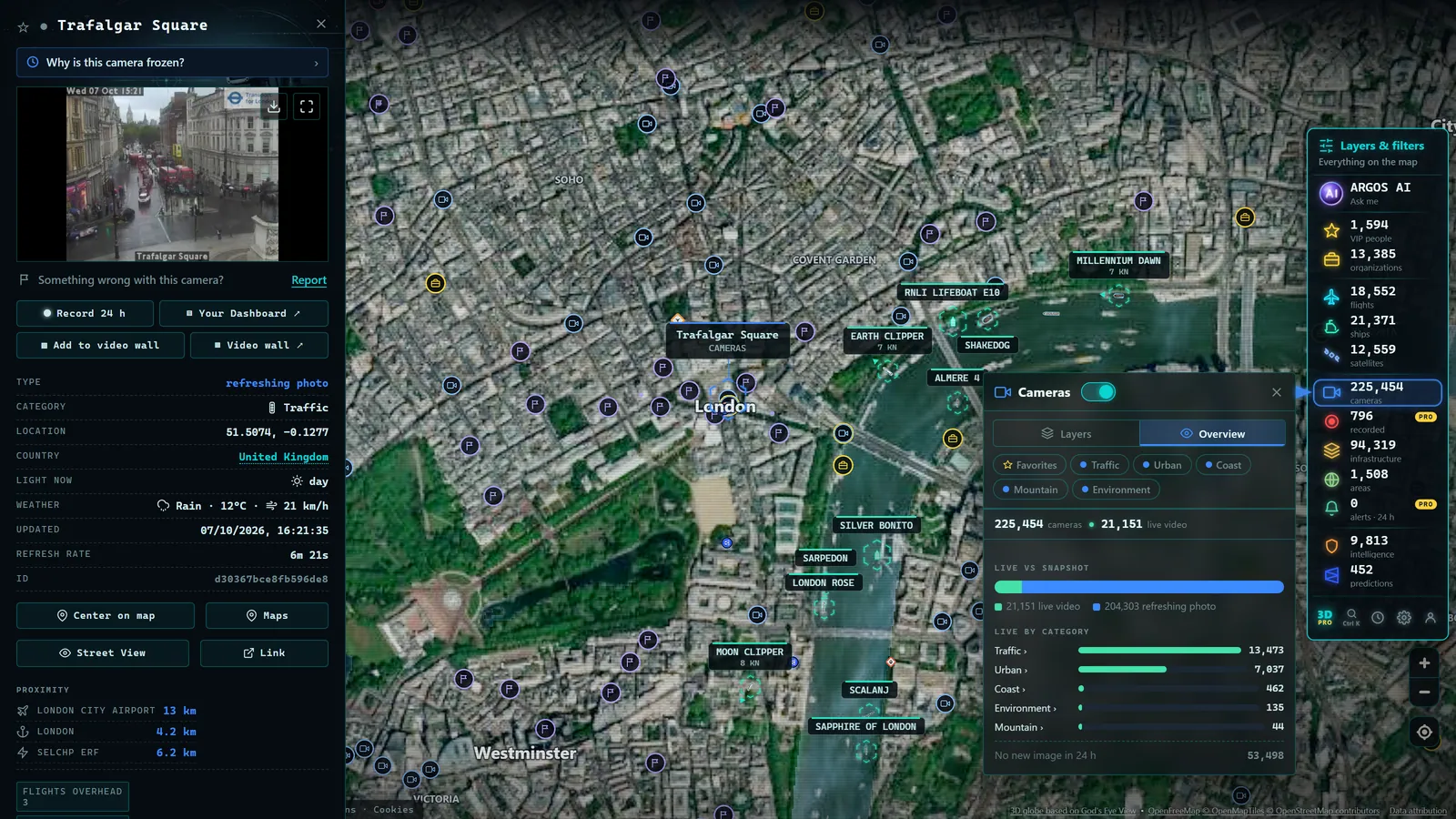
When you search for live public cameras, you encounter everything from an official highway camera run by a national traffic authority to murky directories that claim to show cameras from around the world without ever explaining where their feeds come from. The difference between the two is not a technical detail: it is the boundary between consulting information published on purpose and peering into someone's private life without their consent. This guide brings order to the subject - what we mean by a public camera, which types exist, who publishes them and for what purpose, and where the line sits that no responsible viewer should cross.
What a public camera is - and what it is not
A public camera is one whose owner deliberately publishes in the open so that anyone can view it. The key word is deliberately: there is a conscious decision to broadcast that image, made by someone with the authority to make it.
The owner is almost always an institution: a national or regional traffic authority, a meteorological service, a port authority, a local council, an infrastructure operator. These bodies publish their cameras through their own official channels, with a declared purpose - informing drivers about road conditions, documenting weather, displaying port activity - and they accept corresponding responsibilities: framing designed to avoid encroaching on private spaces, resolutions that do not identify individuals, and the ability to withdraw the feed whenever they see fit.
What a public camera is not: a privately-owned camera that someone finds accessible on the internet because its owner misconfigured it. More on this shortly, because it is the most important point in the entire article.
The taxonomy: major types of public cameras
Legitimate open cameras online fall into a small number of families, each with a typical owner and a typical purpose. Understanding them helps set expectations about what each image can and cannot show.
Inter-urban traffic cameras
These are the most numerous in the world. In the United States, state Departments of Transportation publish feeds on their official sites covering interstate highways, tunnels, mountain passes, and known bottlenecks. The National Highways agency in the UK and Transport for London do the same across the strategic road network and the capital. Their purpose is operational: letting drivers know the real state of the road before they set out. Feeds usually deliver a still frame every few minutes at low resolution, with the location or road identifier displayed.
Urban traffic cameras
Municipal authorities and mobility agencies install these at intersections, ring roads, and city approaches. The purpose is identical - traffic management and public information - but their side effect is a continuous portrait of urban life that draws interest far beyond drivers. If that dimension appeals to you, the article on seeing cities of the world in real time explores it in depth.
Weather and mountain cameras
Meteorological services, environmental agencies, and ski resorts publish cameras aimed at the sky, valleys, and summits. Their purpose is to document real conditions: cloud cover, visibility, snow depth, fog. Mountaineers, skiers, and weather enthusiasts prize these feeds highly, because a recent frame from a summit ridge carries more information than any forecast.
Tourist and landscape cameras
Local authorities and tourism promotion bodies publish panoramic views of beaches, monuments, squares, and viewpoints. Here the purpose is explicitly a showcase: displaying the location both at its best and in its current state. These feeds tend to have the most carefully chosen angles and sometimes deliver continuous video rather than periodic stills.
Port and coastal cameras
Port authorities and maritime agencies publish views of basins, harbour entrances, breakwaters, and stretches of coastline. They serve maritime professionals - checking harbour mouth conditions, berth occupancy - while also documenting port activity for any viewer who chooses to look.
Construction and infrastructure cameras
Less well known but genuinely useful: some public promoters and major infrastructure managers publish cameras overlooking construction sites as a transparency measure and progress record. They let you watch a bridge or a terminal grow week by week.
Each family follows a different logic, but all share what matters: there is an identifiable owner who has decided to publish, and the image is designed to be seen.
The clear boundary: exposed private cameras are not public cameras
This is the point that separates legitimate curiosity from a serious problem, and it deserves to be stated plainly.
Online directories index misconfigured private cameras: home surveillance cameras, shop cameras, indoor cameras that became accessible because their owner never changed the default password or set up remote access incorrectly. These directories sometimes present them as live cameras from around the world, mixing them in with the aesthetic of legitimate webcams.
The fact that something is technically accessible does not make it public. The distinction is the owner's intent: the traffic authority wants you to watch its camera; the homeowner whose living-room camera appears in a directory does not. Watching through an exposed private camera means observing people in private spaces without their knowledge or consent. In the European Union, the GDPR protects personal data - and a person's image qualifies - while national laws in most jurisdictions add further protections for privacy and likeness. Similar protections exist under US state privacy laws, UK data protection law, and broadly equivalent frameworks around the world.
The right question is not "can I access this camera?" but "did its owner intend for me to see it?" If the answer is no, or unclear, the camera is not public: it is exposed. That changes everything.
Directories that make a business of indexing exposed cameras are a different category, whatever language they use to obscure the fact. A responsible viewer - and above all any responsible aggregator - stays well clear of that territory.
From the ARGOS ATLAS channel.
How a responsible atlas is curated
The existence of that boundary is precisely what makes curation important: deciding what enters a camera map and what does not is not a technical detail but the ethical core of the project.
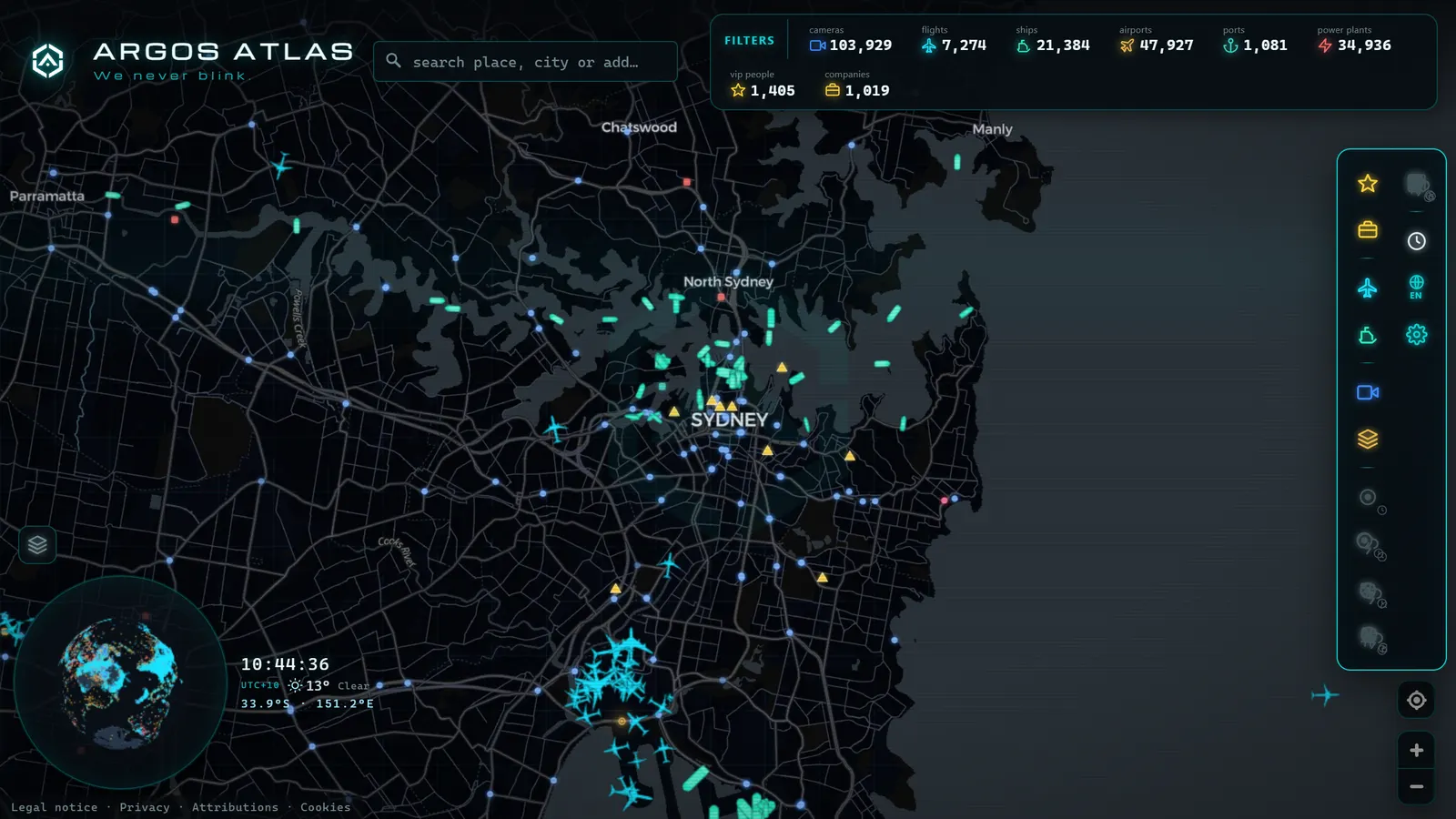
A responsible atlas applies verifiable criteria. That is the approach Argos Atlas declares in its methodology: only official and deliberately open sources, always with attribution to the originating body. In practice this means every camera on the map comes from an identified owner who publishes it deliberately through their own channels, that attribution accompanies the image so you can verify the source, and that exposed private cameras are excluded on principle rather than by accident. Additional commitments apply: storing only the latest frame at low resolution, with no image history, no facial recognition, no licence-plate recognition, and a takedown channel for owners who request it. You can read the full criteria on the sources and methodology page.
This curation has a cost - there are feeds a serious atlas will never show even if other directories do - but that cost is exactly what separates an information tool from a privacy problem. For you as a user, it is the guarantee that everything you open on the map can be viewed with a clear conscience: every image is there because its owner chose to publish it.
What useful information each camera type provides
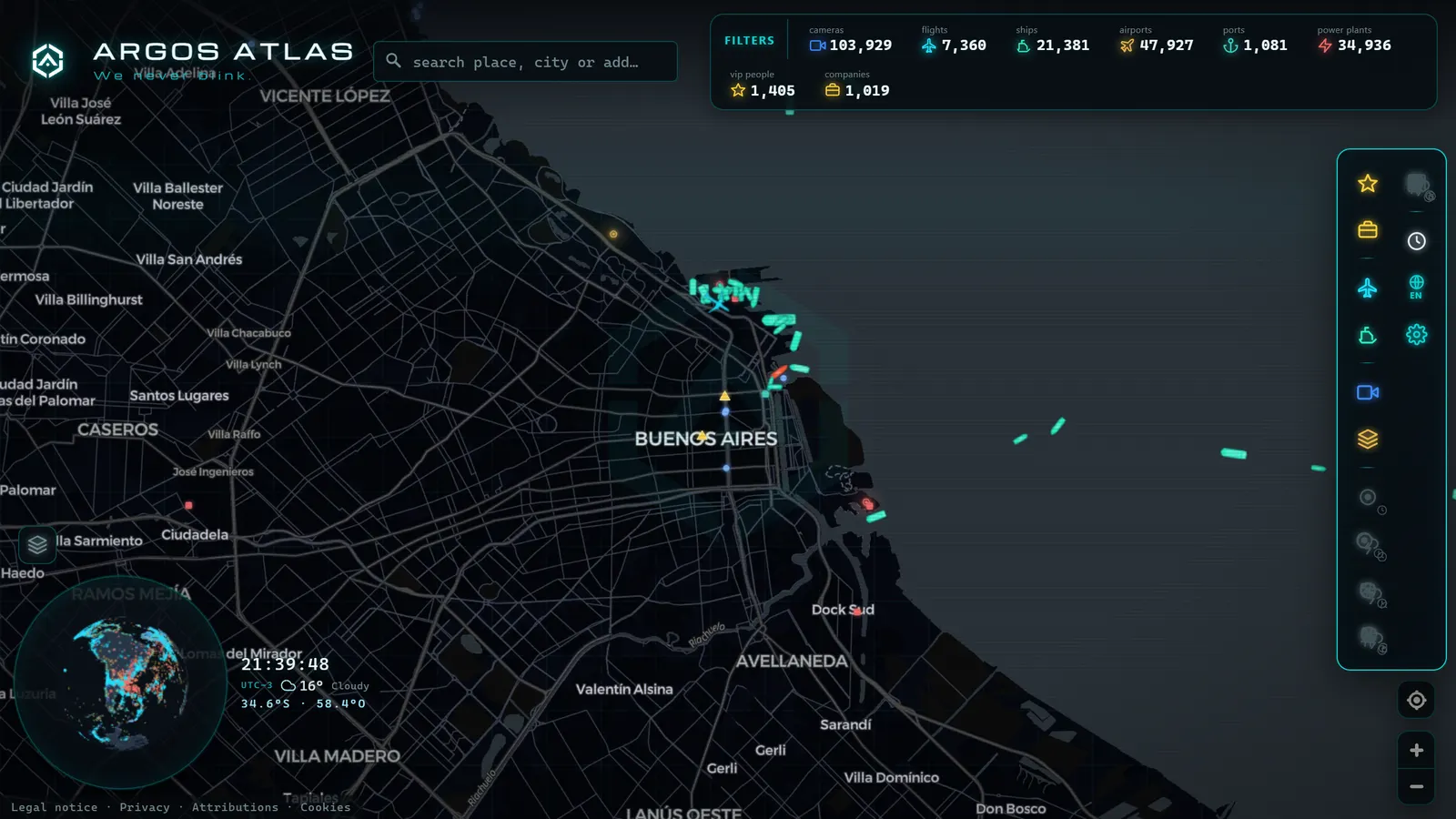
Beyond the taxonomy, here is what you can actually learn from each family of cameras.
- Inter-urban traffic: road surface conditions, traffic density, weather over the road (rain, snow, fog), visible incidents. Essential before a road journey.
- Urban traffic: congestion by district, general city atmosphere, conditions for getting around. Useful too as a measure of activity: an empty avenue at an unusual hour tells a story.
- Weather and mountain: actual cloud cover versus the forecast, visible snowline, summit visibility, state of pistes and access routes. Visual verification of the weather bulletin.
- Tourist and landscape: real-time visitor numbers, sea and beach conditions, how the light falls at every hour of the day. Invaluable for planning a visit.
- Ports and coasts: sea state at the harbour entrance, quay activity, wind conditions visible in flags and cranes.
- Construction and infrastructure: build progress, site activity, visual documentation of the process.
The value multiplies when types are combined: a mountain camera alongside the traffic camera for the approach road gives you the complete picture of whether the journey is worth making today. That combination - and how to find all these scattered cameras in one place - is the subject of the general guide on live webcams from around the world. And if you want to sharpen your ability to tell reliable sources from unreliable ones, the logical next step is learning how to tell whether a webcam is official.
Frequently asked questions
Which public cameras can I legally watch?
All those that their owner publishes deliberately in the open: inter-urban and urban traffic cameras, weather and mountain cameras, tourist cameras, port cameras, and construction cameras broadcast by official bodies through their own channels. Viewing them is not only legal - it is exactly the use for which they are published. The key lies in the owner's intent, not in technical accessibility.
What is the difference between a public camera and an exposed private one?
The intent of whoever operates it. A public camera is published on purpose, by an identifiable owner, with a declared purpose and privacy safeguards built into the framing and resolution. An exposed private camera is accessible only because of a configuration error: its owner does not know anyone can watch and has not consented. Watching through it means observing people without their knowledge, with serious ethical and legal consequences.
Are security cameras openly accessible?
They should not be, and when they are it signals a problem rather than a deliberate publication. Private surveillance and security cameras are closed-circuit systems by design: they record for their owner, not for the general public. If one appears accessible on the internet, it is almost always because a default password was never changed or remote access was poorly configured. That makes it an exposed camera, not a public one.
Who decides what gets published?
The owner of each camera, always. In the case of public cameras, official bodies - national and regional traffic authorities, meteorological services, port authorities, local councils - decide which views they broadcast, at what refresh rate and resolution, and for how long. They can withdraw a feed at any time, and responsible aggregators respect those decisions and maintain takedown channels to handle such requests.
Conclusion
The world of live public cameras is richer and more orderly than it first appears: traffic, weather, mountains, tourism, ports, and construction sites, each family with its owner, its purpose, and its practical value. And it has a clear boundary worth keeping in mind: what is public is what has been published deliberately, and everything else - however technically accessible - falls outside the bounds of fair use. If you want to explore thousands of cameras that sit on the right side of that line, all from officially attributed and deliberately open sources, you can open the map and start with whatever corner of the world calls to you.
Frequently asked questions
Which public cameras can I legally watch?
Those that their owner deliberately publishes in the open: traffic cameras, weather cameras, tourist cameras, port cameras, and construction-site cameras broadcast by official bodies through their own channels. If a camera is published on purpose for the public, viewing it is exactly the intended use.
What is the difference between a public camera and an exposed private one?
The owner's intent. A public camera is published deliberately; an exposed private camera is accessible due to a misconfiguration, without its owner's knowledge or consent. Watching it raises serious ethical and legal issues, because it may violate the privacy of people in private spaces.
Are security cameras openly accessible?
They should not be. Private surveillance and security cameras are closed-circuit systems by design. When one appears accessible on the internet, it is almost always the result of a misconfiguration, not a deliberate decision to publish it.
Who decides what gets published?
The owner of each camera. In the case of public cameras, official bodies - traffic authorities, meteorological services, port authorities, local councils - decide which views they broadcast, at what refresh rate and resolution, and they can withdraw them at any time.
- Weather Webcams: See Real Conditions Before You Go
- Live Webcams from Latin American Cities: Buenos Aires, Mexico City, Bogota, Lima and Santiago
- Live Webcams from European Cities: Paris, Rome, Berlin, Amsterdam, Vienna, Prague and Brussels
- Live Webcams from Caribbean Coasts: Cuba, Dominican Republic, Jamaica, Puerto Rico, Aruba and Barbados
- APRR Webcam Live: Every Camera, One Live Map
- Spain Eclipse Traffic Measures Aug 12: Path & Live Webcams