Blog · Critical infrastructure
Biggest Airports in the US: Ranked List (Live Map)
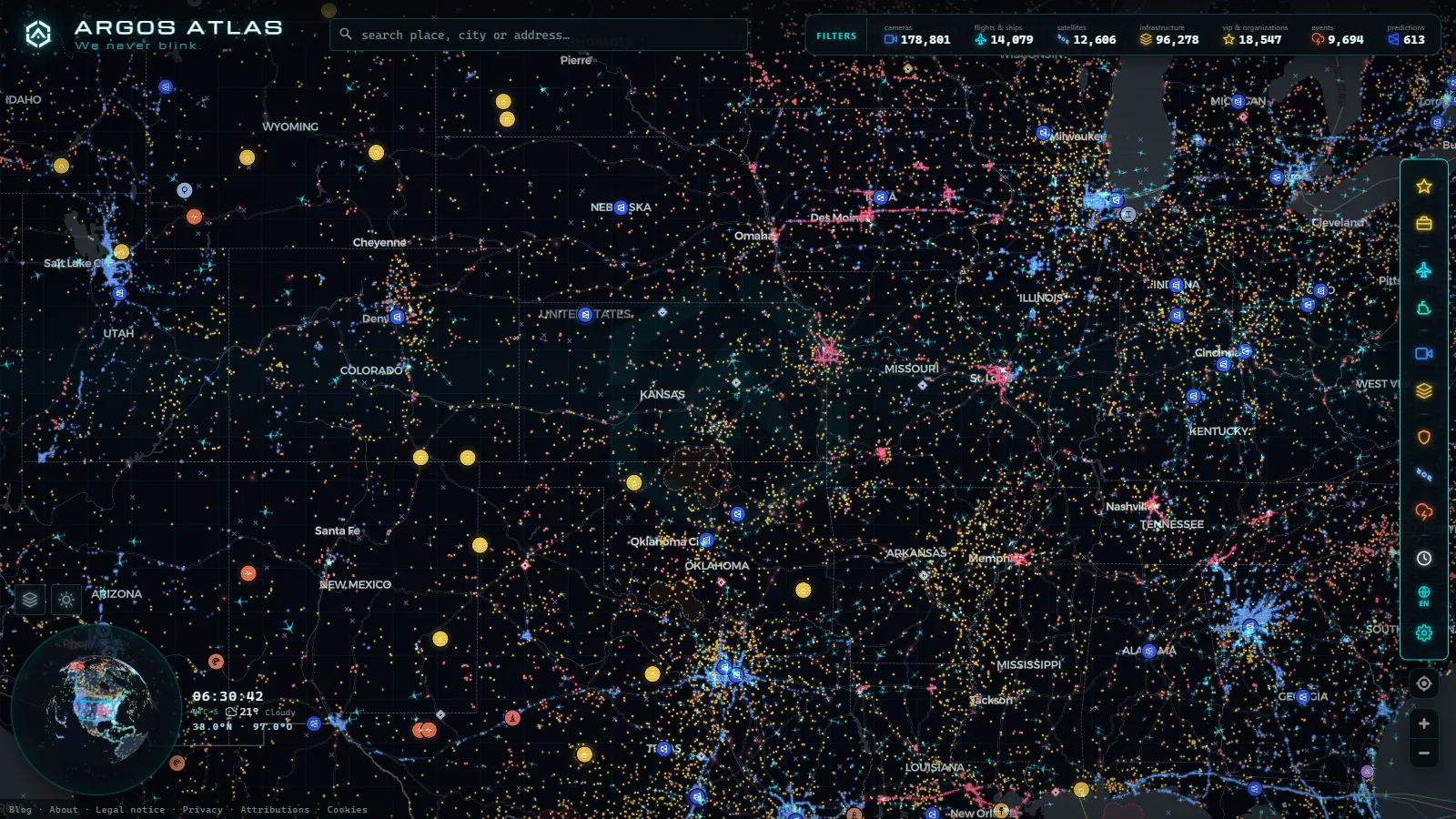
Which are the biggest airports in the United States? By passengers, the list is headed by Atlanta (ATL), the busiest airport in the world for decades running, with Dallas-Fort Worth (DFW), Denver (DEN), Chicago O'Hare (ORD), Los Angeles (LAX) and New York (JFK) completing the elite. By land area, the crown goes instead to Denver and Dallas-Fort Worth, built on immense plots of land.
The United States invented modern commercial aviation as we know it, and its great airports are the proof: veritable cities with runways where an aircraft lands every few seconds at peak times. But "biggest" comes with a twist: the airport with the most passengers is not in the country's most populous city, and some of the largest by land area are not the busiest. The explanation lies in a very specific business model. Let's unpack it, and then watch these giants at work, live.
The essentials, in 20 seconds
- Atlanta (ATL): the world's busiest airport by passengers, a lead held for decades running
- Dallas-Fort Worth (DFW): among the world's largest airports by land area and American Airlines' great hub
- Denver (DEN): the youngest of the giants, built on an immense plain with room to grow for decades
- Chicago O'Hare (ORD): the veteran Midwest node, a simultaneous hub for two major airlines
- Los Angeles (LAX) and New York (JFK): the Pacific and Atlantic gateways completing the elite six
The busiest airports in the United States, at a glance
This table sums up the first division of American air traffic, with the world's busiest at the top:
| Airport | Code | City | Why it matters |
|---|---|---|---|
| Hartsfield-Jackson | ATL | Atlanta | The world's busiest airport by passengers; Delta's historic connecting hub |
| Dallas-Fort Worth | DFW | Dallas-Fort Worth | American Airlines' great hub; among the world's largest by land area; key connector with Latin America |
| Denver | DEN | Denver | The youngest of the giants; the natural node between the two coasts, with room to grow for decades |
| Chicago O'Hare | ORD | Chicago | The veteran Midwest node; a simultaneous hub for two major airlines |
| Los Angeles | LAX | Los Angeles | The great Pacific portal, with enormous weight on routes to Asia and Oceania |
| John F. Kennedy | JFK | New York | America's historic Atlantic gateway and its main long-haul international airport |
Each dominates a region and a role: DFW and ATL the South and domestic connections, DEN the center, ORD the Midwest, LAX the Pacific and JFK the Atlantic. The interesting part is understanding why the map ended up divided this way.
What makes an airport "big": the hub-and-spoke model
The key to America's mega-airports is the hub-and-spoke model: instead of flying from every city to every city, the major airlines concentrate their flights at a few central nodes (the hubs) where passengers connect onward to their final destination. A flight between two mid-sized cities is rarely direct: it goes through Atlanta, Dallas or Chicago.
This design multiplies hub traffic far beyond what their own metro areas would generate. A huge share of Atlanta's passengers never set foot in the city: they land, walk to another gate and take off again. The corridors linking these nodes to each other rank, year after year, among the busiest air routes in the world. That is why the airport ranking does not match the city ranking, and why these nodes are also critical infrastructure: when a hub grinds to a halt in a storm, the domino effect reaches the country's entire air system within hours.
From the ARGOS ATLAS channel.
Atlanta (ATL): the busiest airport in the world
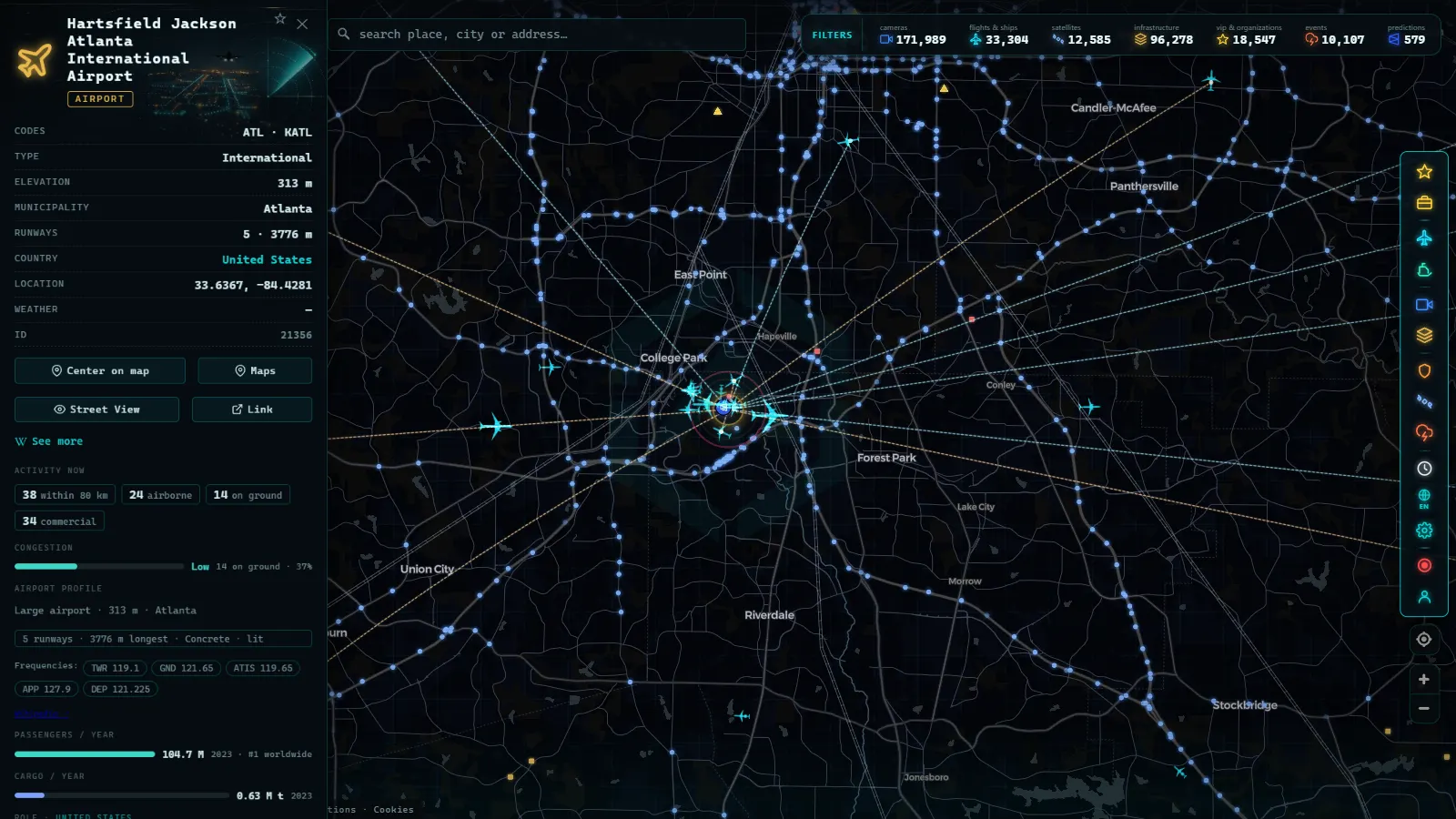
Atlanta's Hartsfield-Jackson (code ATL) is the world's busiest airport by passengers, a lead it has held for decades, a fact so stable it has become almost a constant of aviation. How does a city that is not among the country's largest pull that off? With the perfect combination of the hub's two ingredients: it is the historic connecting hub of Delta, one of the world's largest airlines, and its geography is privileged, from Atlanta, most of the US territory is a short or medium flight away.
ATL is optimized as a connection machine: parallel concourses linked by an underground train, parallel runways allowing simultaneous operations, and a choreography of arrivals and departures in waves, all designed so that thousands of passengers can cross from one aircraft to another in the shortest possible time.
The other giants: DFW, DEN, ORD, LAX and JFK
After Atlanta, five names complete the elite, and each tells a different story about the American map.
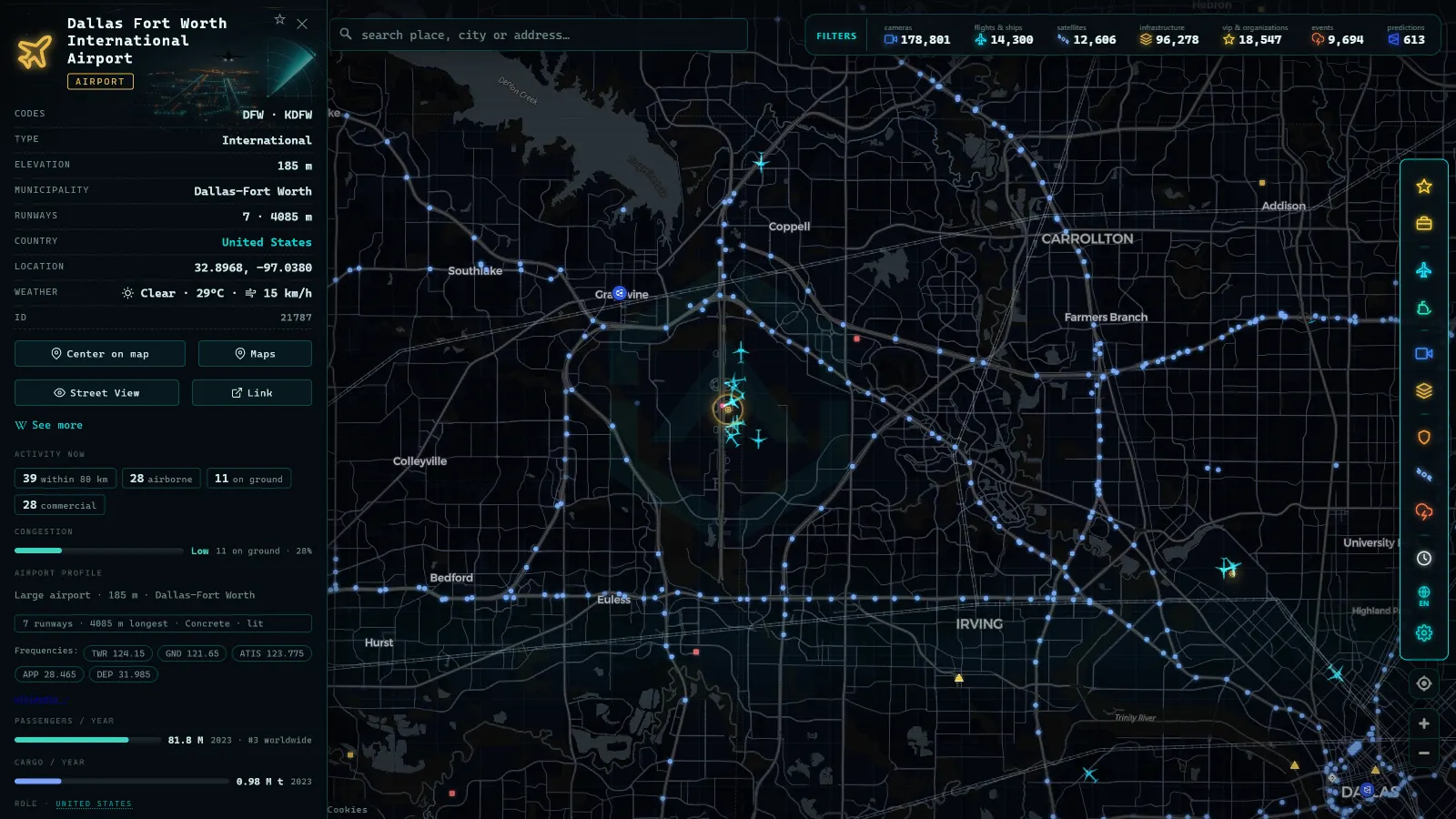
Dallas-Fort Worth (DFW) is American Airlines' great hub and one of the world's largest airports by land area, its terminals arranged in a ring between the runways: the gateway to the South and a key connector with Latin America. Denver (DEN), the youngest of the giants, was built on an immense plain that gives it room to grow for decades; its central position makes it the natural node between the two coasts, and its white-peaked terminal makes it recognizable at a glance. Chicago O'Hare (ORD) is the veteran Midwest node, a simultaneous hub for two major airlines and, for much of the twentieth century, the busiest airport on the planet.
On the West Coast, Los Angeles (LAX) serves as the great Pacific portal, with enormous weight on routes to Asia and Oceania on top of dense domestic traffic, and an iconic Theme Building that makes it unmistakable. And on the East Coast, New York JFK remains America's historic Atlantic gateway and its main long-haul international airport, in permanent competition with the New York area's other two airports.
Biggest by passengers or by land area?
When someone asks which is the biggest airport in the United States, the right response is another question: biggest in what? The two metrics crown different winners:
| Metric | Who stands out |
|---|---|
| Passengers | Atlanta (ATL), the world's busiest for decades running |
| Land area | Denver (DEN) and Dallas-Fort Worth (DFW), built on immense plots |
Neither metric is "the right one". The passenger giants are optimized for connections; the land-area giants bought themselves a future: room for runways and terminals that don't exist yet. That is why this guide treats the six as a set, each one is enormous in its own way.
Codes and cards: how to identify each airport
You will have noticed we speak in acronyms: ATL, DFW, DEN. These are IATA codes, the three-letter standard the industry uses to identify every airport on tickets, baggage and maps. Some are intuitive (DEN, Denver) and others historical: ORD comes from Orchard Field, the old name of the land O'Hare sits on. If you want to master this language (including the four-letter ICAO codes pilots use) we have a complete guide to IATA and ICAO airport codes.
These codes are also your key to exploring: on any serious aviation map, searching "ATL" or "LAX" takes you straight to the airport's card with its information and traffic.
How they compare with Mexico and Europe
The American model is not the only one. In Europe, traffic is spread across more countries and capitals, as we explain in Europe's busiest airports. And just to the south, Mexico runs its own league of major airports, which we cover in the biggest airports in Mexico: comparing it with the US hubs is the best way to grasp how much the hub-and-spoke model shapes an airport's final size.
How to watch each hub's flights in real time
The best way to grasp the scale of these airports is not to read about them but to watch them work. Commercial aircraft broadcast their position via ADS-B, and maps like ARGOS ATLAS show it live: open the map, search for Atlanta or Dallas, and watch the swarm of aircraft converging on the runways in waves. Within minutes you will see the hub-and-spoke model drawn on your screen: dozens of arrivals in a row, a pause, dozens of departures. Early morning and late evening are the best moments to watch, when the connection banks are at their densest.
Each airport's card on ARGOS ATLAS concentrates its live activity, and around it you can switch on other layers (public cameras in the area, which show general views without identifying people) for extra context. If you want to understand the technology behind this tracking, we explain it in how to watch aircraft in real time.
The biggest airports in the United States are not just enormous terminals: they are the central gears of a continental system. And today, for the first time in history, anyone can sit back and watch them turn, live.
Frequently asked questions
What is the biggest airport in the United States?
It depends on the metric. By passengers, Atlanta (ATL) is the busiest not just in the US but in the world, a lead it has held for decades. By land area, Denver (DEN) and Dallas-Fort Worth (DFW) stand out, built on immense plots of land.
Why Atlanta, if it isn't the country's largest city?
Because of the hub-and-spoke model: Atlanta is Delta's great connecting hub and its geographic position lets it reach most of the US in a single hop. A large share of its passengers never leave the airport, they just change planes.
What does it mean for an airport to be a 'hub'?
That an airline uses it as a central node: it concentrates flights from many origins there and redistributes passengers toward many destinations. That multiplies the airport's traffic far beyond what its own city would generate.
Can I watch these airports' flights in real time?
Yes. With a map that receives ADS-B signals, like ARGOS ATLAS, you can open the card for ATL, DFW or LAX and watch the flow of arrivals and departures live, along with other layers such as public cameras in the area.
Is there a free live map of the biggest US airports?
Yes. On the ARGOS ATLAS map you can open the card for ATL, DFW, DEN, ORD, LAX or JFK and watch its traffic in real time, alongside other layers such as public cameras in the area. It runs in any browser, free, with no sign-up.
- The Biggest Airports in the World: 2025 Passenger Ranking
- Iran on a Live Map: Airports, Flights and Hormuz Ships
- Biggest Airports in the Middle East: 6 Hubs, Live Data
- Italy Airports Live Map: 4 Fields and What They Hide
- Mumbai live map: ships, flights and port data in real time
- Philippines Airports Live Map: Manila, Clark, Cebu, Davao