Blog · Energy & grids
Types of power plants: how the electricity you use is generated
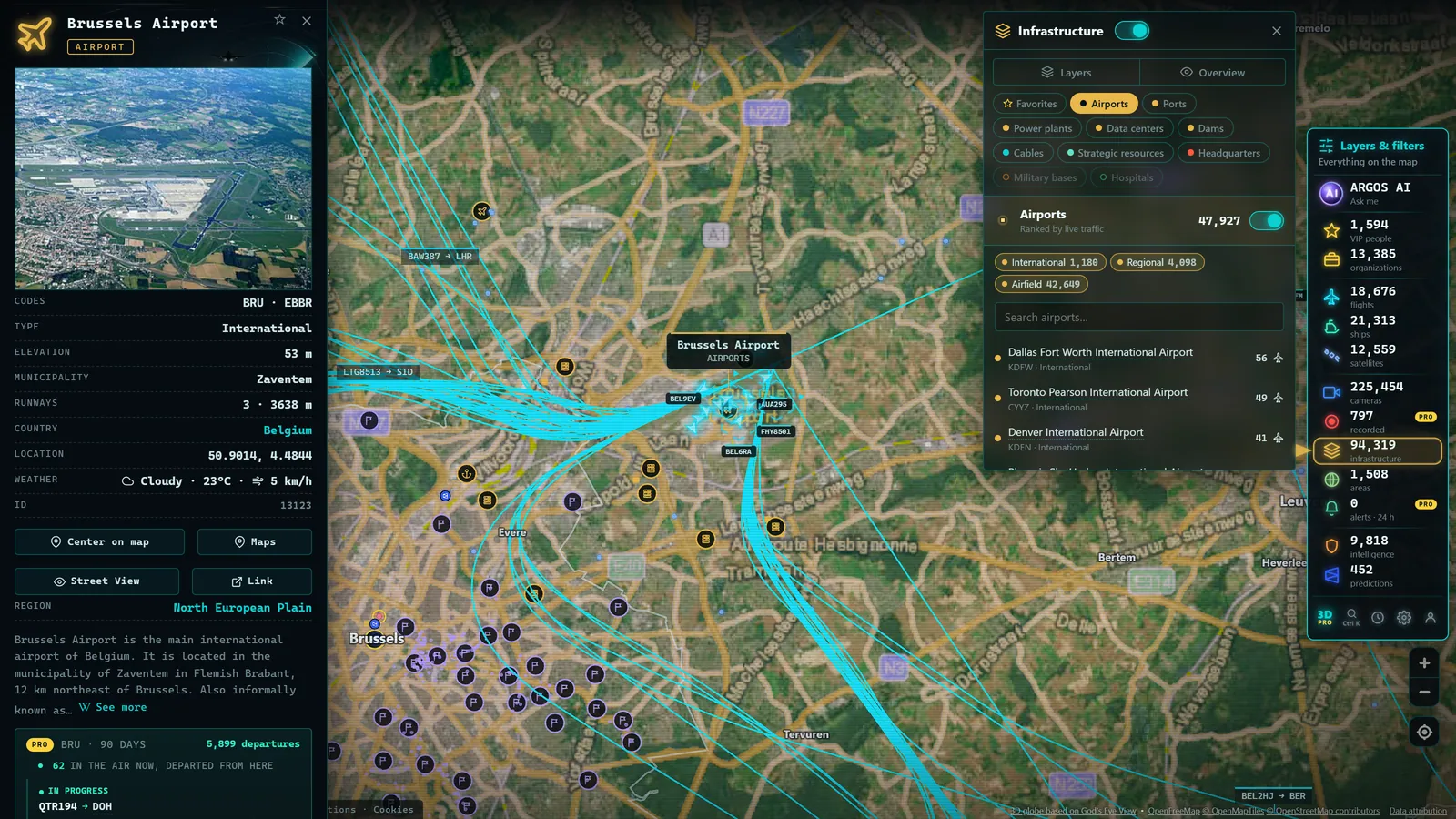
Every time you switch on a light, a machine somewhere is spinning for you. That is, simplifying only slightly, the story behind almost all the electricity in the world. The different types of power plants -- thermal, nuclear, hydroelectric, wind, solar -- can seem like entirely separate worlds, but most share a single underlying trick, and understanding it is the key to understanding the entire electricity system. This article surveys the main generation families, how to recognise each one at a glance, what those megawatt figures really mean, and why each type of plant is built where it is.
The essentials, in 20 seconds
- Turbine and generator: almost every type of power plant spins a turbine to make electricity, the sole exception being solar photovoltaic panels, which have no moving parts.
- CCGT (combined-cycle gas): the most efficient fossil-fuel plants, chaining two turbines so a second one captures the heat the first leaves behind.
- Pumped-storage hydroelectric: the grid's main large-scale battery, pumping water uphill when power is cheap and releasing it downhill to generate when demand rises.
- Nuclear fission: heats water instead of burning fuel, running as stable baseload for months with no CO2 emitted during generation.
- Megawatts vs megawatt-hours: power (MW) is the instant flow rate a plant can deliver, energy (MWh) is the volume actually produced over time, so installed capacity alone doesn't show real output.
The shared trick: almost everything turns a turbine
The vast majority of power plants on the planet do the same thing: spin a turbine connected to a generator, which converts mechanical rotation into electricity through electromagnetic induction. The difference between a coal plant, a nuclear station, and a hydroelectric dam is not in that final step but in the first one: what drives the turbine.
In thermal and nuclear plants, high-pressure steam does the driving -- produced by heating water with some source of heat. In hydroelectric plants, it is falling water. In wind farms, the wind pushes the blades directly. The great exception to this rule is solar photovoltaic, which involves no rotation at all: it converts light into electricity inside the panel material, with no moving parts.
With that idea in mind, the apparent zoo of power plant types arranges itself naturally. Here is each family in turn.
Fossil-fuel thermal plants: burn to boil
Conventional thermal plants burn a fuel -- coal, natural gas, or oil -- to heat water, produce steam, and drive a turbine. Within the family there are meaningful differences.
Coal plants, the historic workhorses of electrification in countries like the United Kingdom, Germany, and the United States, have been in retreat across much of the developed world because of their emissions, though they remain significant in parts of Asia and Africa. Combined-cycle gas turbine (CCGT) plants are the most efficient in the family: they chain two turbines -- one driven by hot combustion gas and a second driven by steam that captures the residual heat -- and because they can ramp up and down relatively quickly, they act as a flexible fallback when wind or solar output drops. Oil-fired plants, a minority, survive mainly in island grids and isolated systems where alternatives are limited.
Recorded straight off the map, no sound.
Nuclear plants: fission that heats water
A nuclear power station is, at its core, a thermal plant with a different heat source: instead of burning fuel, the fission of uranium atoms in the reactor releases heat, that heat produces steam, and the steam drives a turbine. There is no combustion and no CO2 emitted in the generation process.
Their distinguishing features: they run continuously for months, providing a stable baseload to the grid; they require large quantities of cooling water, which is why they are sited along major rivers, reservoirs, or coastlines; and they operate under intense regulatory oversight, with international bodies such as the IAEA responsible for safety standards. The global nuclear fleet -- which countries have it, how it is evolving, and the debates around it -- is a topic in its own right, covered in nuclear power plants around the world.
Hydroelectric plants: water as muscle and as battery
Hydroelectric plants convert the energy of falling water into electricity and come in three distinct forms:
- Reservoir (dam) plants: a dam retains water and releases it on demand through the turbines. These are the great regulators of the power system, capable of ramping up within minutes. The Hoover Dam in the United States and the Itaipu Dam on the Brazil-Paraguay border are well-known examples.
- Run-of-river plants: they turbine whatever flow the river provides, without significant storage capacity. They produce what the river gives.
- Pumped-storage plants: the most interesting case. They have two reservoirs at different elevations; when cheap surplus electricity is available, water is pumped uphill, and when demand rises, the water is released downward through the turbines to generate power. They are, literally, the grid's primary large-scale battery -- the most mature and most widely deployed form of energy storage that exists today. The Bath County Pumped Storage Station in Virginia, US, and the Dinorwig plant in Wales are prominent examples.
In a world with increasing amounts of solar and wind generation, pumped-storage capacity is becoming more valuable: something has to store midday sunshine for the evening peak.
Wind and solar: wind and light
Wind farms group turbines -- those towers with three blades that now form part of the landscape in many countries -- in locations with reliable wind. Onshore installations occupy ridgelines, plains, and wind corridors from Texas to the plains of Denmark; offshore farms, such as those in the North Sea, sit in shallower coastal waters where wind is stronger and more consistent, at the cost of higher installation and maintenance expense.
In the solar family, two very different technologies coexist. Photovoltaic (PV) panels convert light directly into electricity at the material level, with no moving parts; their rapidly falling cost has made them the world's fastest-growing electricity technology, deployed from the Mojave Desert to rooftops across Japan and Germany. Concentrating solar power (CSP), less widespread, follows the classical approach: mirrors focus radiation onto a receiver to heat a fluid, produce steam, and drive a turbine. Some CSP plants store heat in molten salt and can continue generating for hours after sunset.
The cost of both technologies is variability: they produce when the resource is available, not when the grid calls for them. That is what makes storage, cross-border interconnections, and dispatchable backup capacity so important.
Geothermal and biomass: the lesser-known families
Two minority families round out the picture, each with its own niche. Geothermal plants tap the heat of the Earth's interior: in volcanic regions -- Iceland, parts of the western United States, Kenya's Rift Valley -- steam or hot water from underground drives turbines with enviable consistency, day and night, every day of the year. Biomass plants burn organic material -- forestry residues, agricultural waste, or dedicated energy crops -- in a process similar to a conventional thermal plant, with a potentially renewable fuel source if managed responsibly.
How to recognise each plant type at a glance
Knowing the families makes the landscape readable. A few pointers:
- Cooling towers with a plume of white vapour: those wide, hyperbola-shaped towers betray a thermal or nuclear plant. What rises from the top is water vapour from the cooling circuit, not combustion smoke.
- A dam with a building at its base: a reservoir hydroelectric plant. If you see two bodies of water at different elevations connected by infrastructure, suspect a pumped-storage facility.
- Fields of dark, tilted panels: photovoltaics. If instead you see arrays of mirrors pointing at a bright central tower, that is a concentrating solar plant.
- Rows of turbines on a ridgeline or at sea: an onshore or offshore wind farm.
Four rules, and any drive through the countryside -- or any look at the satellite layer of a map -- becomes an energy safari.
Power and energy: flow rate and volume
Here is the concept that generates the most confusion and most rewards understanding. Power, measured in megawatts (MW), is like the flow rate from a tap: how much electricity a plant can deliver at any given instant. Energy, measured in megawatt-hours (MWh), is the volume in the bucket you fill: how much electricity has been produced over a period of time.
The distinction matters because a large plant that is idle produces nothing: plenty of installed capacity, zero energy delivered. Conversely, a modest plant running without interruption can generate more energy in a year than a much larger plant used only occasionally. Comparing plants by installed capacity alone is misleading; you also need to look at how many hours each plant actually runs. A nuclear plant operates for nearly the entire year; a solar farm generates only during daylight hours.
Where each type is built and why
Power plants are not distributed at random: each technology follows its resource. Thermal and nuclear plants seek abundant water for cooling, which is why they line major rivers, reservoirs, and coastlines; coal plants historically were built next to mining basins to minimise fuel transport costs. Hydroelectric plants go where geography permits: deep, narrow valleys with reliable flow and sufficient elevation drop. Wind farms chase wind corridors, and solar plants seek high-irradiance latitudes with available land. All technologies also value proximity to demand and access to transmission infrastructure, because electricity has to get somewhere.
The result is that the map of power plants narrates the physical and economic geography of each country -- a story that becomes immediately apparent in the world energy map.
The electricity mix: a blend that changes every hour
No country operates on a single technology: all combine several sources in what is called the electricity mix, and that blend is not fixed. The weight of each source shifts with the time of day and the weather: on a sunny midday, solar photovoltaic can dominate; on a windy night, wind power takes over; during a still, anticyclonic winter spell, gas, nuclear, and hydro pick up the slack. Grid operators such as the UK's National Grid ESO or the US regional transmission organisations publish this breakdown in real time, and watching it over a couple of days teaches more than many headlines.
A final note on scale: the Three Gorges Dam in China is generally cited as the world's largest power plant by installed capacity, at roughly 22,500 MW. The fact that the record is held by a hydroelectric plant -- and not a nuclear or gas plant -- says a great deal about the scale that falling water can reach when geography cooperates.
Explore them on the map
Everything above becomes clearer when you look at actual territory. In ARGOS ATLAS you can explore the world's power plants on a dedicated map layer, with global rankings ordered by capacity: locate thermal plants in your region, trace the chain of hydroelectric dams along a river basin, or compare generation density between countries. Free, no registration required, with ports, airports, and the rest of the world's infrastructure in the same viewer for full context.
Frequently asked questions
What types of power plants exist?
The main families are: fossil-fuel thermal plants (coal, combined-cycle gas, and oil), nuclear, hydroelectric (reservoir, run-of-river, and pumped-storage), wind (onshore and offshore), solar (photovoltaic and concentrating solar power), geothermal, and biomass. Almost all share the same core principle -- spinning a turbine connected to a generator -- and differ in what drives the turbine: steam, falling water, or wind. The exception is photovoltaics, which convert light into electricity with no moving parts.
Which is the most powerful power plant in the world?
The Three Gorges Dam in China is generally cited as the world's largest plant by installed capacity. This enormous hydroelectric facility on the Yangtze River far exceeds any individual nuclear or thermal plant. Keep in mind the distinction between power and energy: installed capacity states what a plant can deliver, not what it actually produces in a given year, which depends on water availability and operating hours.
What is the difference between power and energy?
Power, in megawatts (MW), is the flow rate: how much electricity an installation can deliver at any given instant. Energy, in megawatt-hours (MWh), is the volume: how much electricity has been produced over time. A large plant sitting idle has substantial capacity and produces zero energy; a smaller plant running continuously can generate more energy in a year than a larger one used sparingly. A proper comparison requires looking at both figures.
Can renewables replace all other sources?
They can cover a growing share of demand, and in many countries already dominate the mix during certain hours. The obstacle is variability: sun and wind cannot be dispatched on schedule, and the system must guarantee supply at all times. For that reason the energy transition relies on storage (with pumped-storage hydro as the current large-scale battery of choice), interconnections between countries, and dispatchable backup capacity. The direction is clear; the pace depends on how quickly and effectively that equation is resolved.
Conclusion
Thermal, nuclear, hydroelectric, wind, solar, geothermal, biomass: seven families and one near-universal principle, the spinning turbine. With the concepts in this article -- what drives each turbine, what distinguishes power from energy, why each plant is located where it is -- you can read the energy landscape as you would a text, and understand why your country's electricity mix shifts with every passing hour and every change in the weather.
The natural next step is to see it on the territory: open the map in Argos Atlas, activate the power plants layer, and start with the facilities nearest to you. Once you identify your first cooling tower or trace your first chain of dams downstream, the theory becomes something you can see.
Frequently asked questions
What types of power plants exist?
The main families are: fossil-fuel thermal plants (coal, gas, oil), nuclear, hydroelectric (reservoir, run-of-river, and pumped-storage), wind (onshore and offshore), solar (photovoltaic and concentrating solar power), geothermal, and biomass. Almost all share the same core principle: spinning a turbine connected to a generator.
Which is the most powerful power plant in the world?
The Three Gorges Dam in China is generally cited as the world's largest power plant by installed capacity. This enormous hydroelectric facility on the Yangtze River far exceeds any individual nuclear or thermal plant in capacity.
What is the difference between power and energy?
Power (in MW) is the flow rate: how much electricity a plant can produce at any given instant. Energy (in MWh) is the volume: how much it has produced over time. A huge plant sitting idle has plenty of installed capacity but generates zero energy.
Can renewables replace all other sources?
They can cover a growing share of demand, and in some countries already dominate the mix during certain hours of the day. The challenge is variability: sun and wind cannot be dispatched on demand, so the grid needs storage, interconnections, and dispatchable backup plants to guarantee supply at all times.
- How Long Do Power Outages Last in Puerto Rico? Causes & Management
- China Power Plants Map: What ARGOS Atlas Actually Shows
- Russia Power Plants Map: 545 Sites, Live Grid View
- Power Plants in the United States: What the Map Actually Shows
- Power plants in Italy map: 4 plants in a 34,936-site layer
- Power Plants in Turkey Map: Dams, Coal, Gas and Nuclear Sites