Blog · Critical infrastructure
Europe's Busiest Airports: Heathrow, Charles de Gaulle, Schiphol, Frankfurt, Istanbul and Madrid-Barajas
Europe's major airports are far more than departure halls and baggage carousels. They are pieces of critical infrastructure, economic engines, logistics platforms, and international gateways that collectively process hundreds of millions of passengers every year. Understanding what distinguishes each one reveals the architectural logic behind how global aviation actually works.
The hub-and-spoke model
Before diving into individual airports, it helps to understand the system they operate within. A hub airport is designed to aggregate traffic from smaller origin cities, redistribute passengers onto long-haul routes, and send them onward to final destinations. This hub-and-spoke model allows airlines to concentrate capacity on high-demand corridors and offer connectivity to markets that would never sustain a direct point-to-point route.
"A hub's true value lies not in the number of gates it has, but in the minimum connection time it can reliably guarantee."
The six airports examined here represent different expressions of this model, some are primarily intercontinental gateways, others serve large domestic markets, and several combine both functions at scale.
Heathrow: the transatlantic anchor
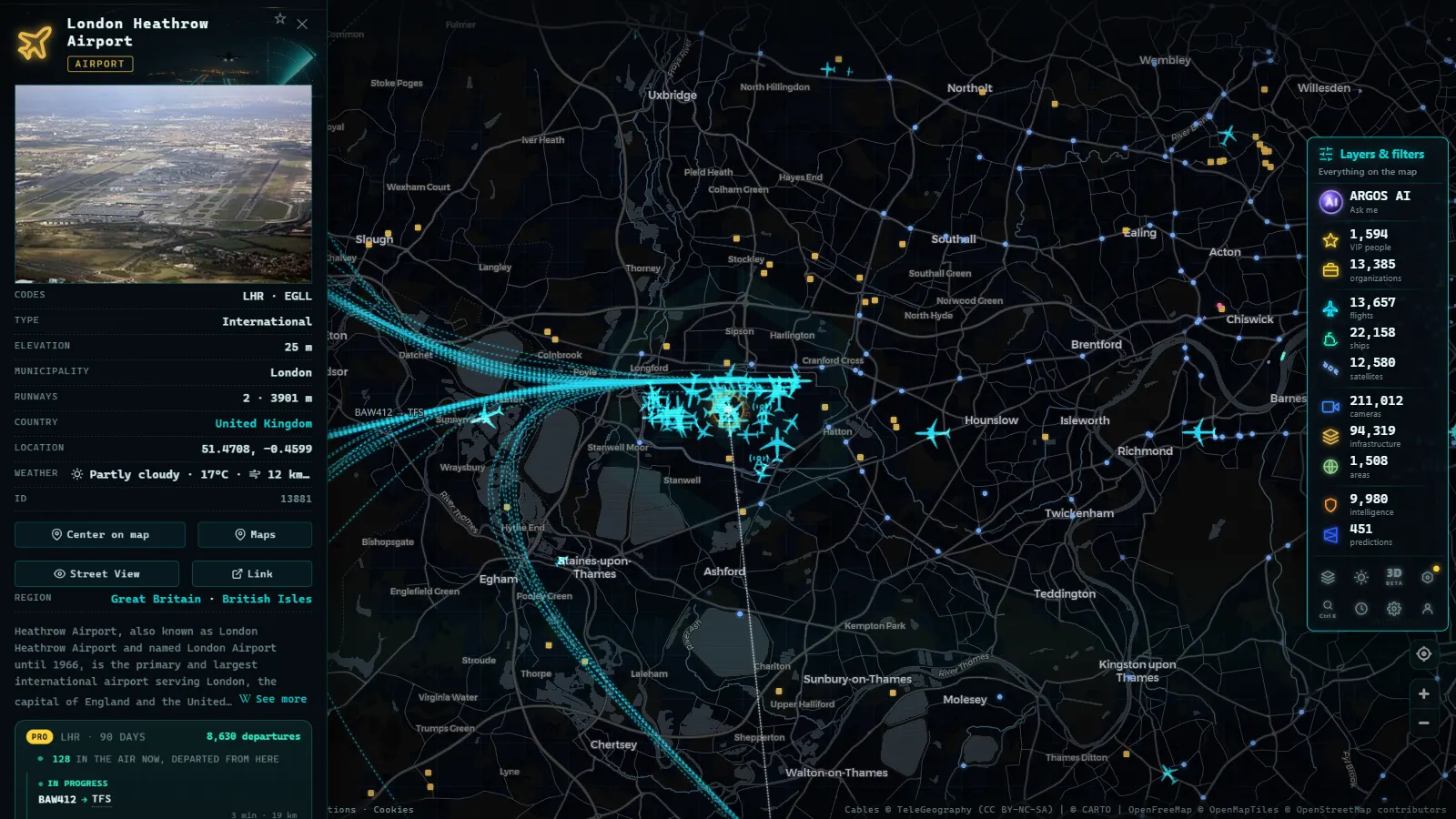
London Heathrow sits west of the capital and has been the dominant crossing point between Europe and North America for decades. Operating five terminals across two runways, it typically handles between 75 and 80 million passengers per year, the highest throughput of any airport in Western Europe.
Operations and constraints
British Airways uses Heathrow as its primary base, anchored in Terminals 3 and 5. Terminal 5 is exclusively BA-operated and is widely regarded as one of the most efficient airport processing environments in the world. The Star Alliance network occupies Terminal 2, known as The Queen's Terminal since its 2014 opening.
Heathrow's two-runway configuration has long been its most contested limitation. Proposals for a third runway have been debated for decades against a backdrop of environmental impact assessments, legal challenges, and political controversy. In the meantime, the airport operates at near-maximum capacity, with takeoff and landing slots traded as high-value commercial assets, a situation that routinely constrains airline scheduling flexibility.
Charles de Gaulle: Paris's global gateway
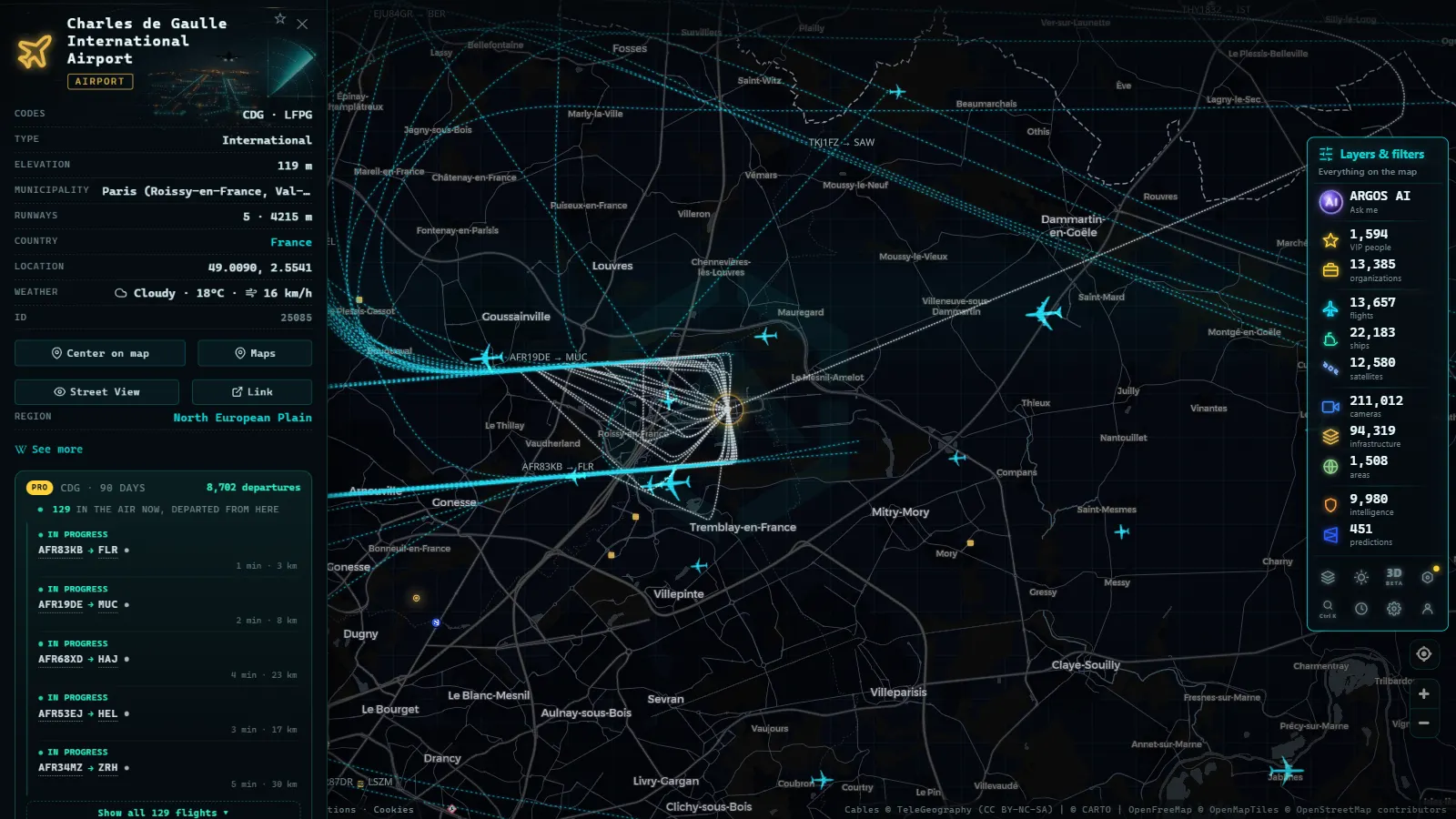
Paris Charles de Gaulle, also known as Roissy, is France's largest airport and Europe's second-busiest by passenger volume. Located 25 kilometres northeast of central Paris, it processes between 65 and 75 million passengers in normal years, though pandemic-related disruption in 2020 caused a sharp contraction from which recovery has been gradual.
Architecture and future expansion
CDG is architecturally distinctive, particularly Terminal 1, designed by Paul Andreu and opened in 1974, with its circular form and translucent tubes connecting satellite gates. Air France operates its main intercontinental hub from Terminal 2, with concourses 2E and 2F handling long-haul routes. Terminal 2G serves primarily low-cost carriers and regional flights.
The airport has published expansion plans targeting 2035 that include a new terminal building and improved rail connections to Paris, including links to the Grand Paris Express network currently under construction.
From the ARGOS ATLAS channel.
Amsterdam Schiphol: the efficient connector
Schiphol occupies a distinctive position in European aviation. Unlike most major airports, it operates as a single terminal complex divided into multiple piers, which significantly reduces the internal distances passengers must cover between connections. This operational efficiency has been central to KLM and Air France-KLM's strategy of positioning Amsterdam as a premium transit hub.
Strategic positioning under regulatory pressure
Schiphol typically handles between 60 and 70 million passengers annually. It competes directly with Frankfurt and Paris for transfer traffic flowing between Asia, North America and Europe. The Netherlands, despite its modest geographic footprint, runs one of the world's most important aviation ecosystems through the combination of KLM, Schiphol and the logistics cluster surrounding the airport.
However, Schiphol has faced mounting regulatory pressure in recent years tied to noise pollution and carbon emissions. Dutch authorities have imposed caps on annual flight movements, creating tension between the airport's commercial ambitions and the environmental concerns of neighbouring communities. This conflict is increasingly representative of a broader European debate about aviation's social license to operate.
Frankfurt: Europe's logistics hub
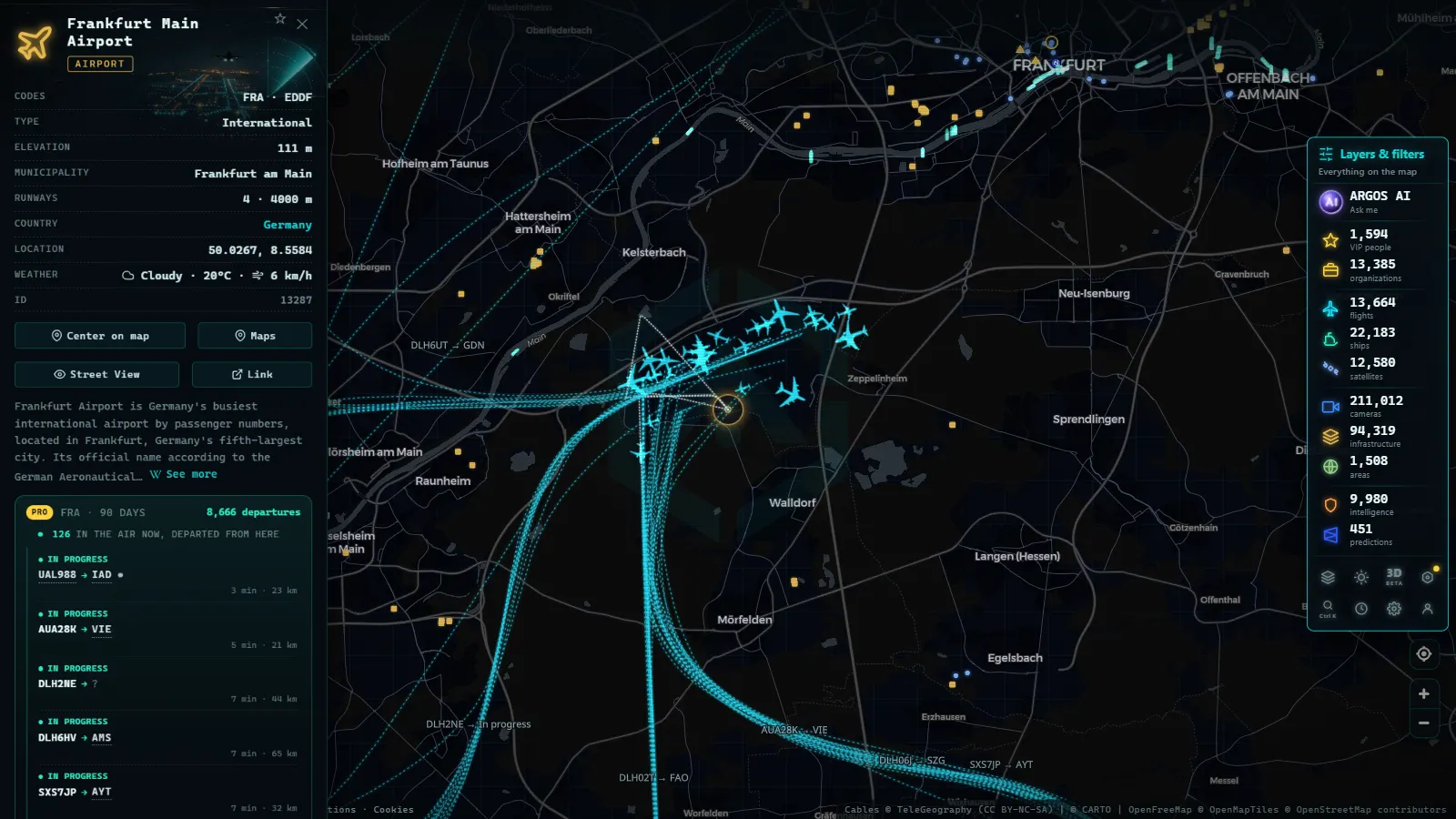
Frankfurt Airport serves as Lufthansa's global hub and one of the most important cargo airports in the world. Located in the geographic centre of Western Europe, it processes between 60 and 70 million passengers annually and operates 24 hours a day, a distinction not all major European airports share.
Cargo and intermodal connectivity
Frankfurt's cargo operations set it apart from its peers. The Lufthansa Cargo Center processes flows of pharmaceuticals, electronics, automotive components and time-sensitive freight that feed global supply chains. Two parallel main runways plus a third runway opened in 2011 give the airport capacity for over 600,000 aircraft movements per year.
The airport's direct connection to Germany's high-speed rail network makes it a genuine intermodal node. Trains link Frankfurt Airport with Cologne, Munich and other major cities in under two hours, enabling passengers to access the airport from a wide catchment area without short-haul feeder flights.
Istanbul: the emerging giant
Istanbul Airport, inaugurated in 2018 and made the city's primary airport following the closure of the former Atatürk facility, is the newest and most ambitious installation in this group. Turkish Airlines uses it as its global hub, and the carrier has built one of the widest route networks in the world.
Capacity and growth trajectory
Designed to ultimately accommodate up to 200 million passengers annually across all construction phases, Istanbul Airport has already surpassed Heathrow in total annual passenger volume in some recent years. Its geographic position (roughly equidistant between Europe, Asia and Africa) makes it a natural transit point for routes that would otherwise require connections through Western European hubs.
Turkish Airlines has pursued aggressive network expansion with a modern fleet, establishing service to an exceptionally large number of countries. This strategy has made Istanbul not just a regional hub but a genuine competitor in the intercontinental transfer market.
Madrid-Barajas: the bridge to Latin America
Adolfo Suárez Madrid-Barajas Airport is Spain's largest airport and the primary hub of Iberia and the IAG group. Its strategic value lies in a characteristic none of the other airports in this group can replicate: it serves as the primary gateway between Europe and Latin America. It typically handles between 50 and 60 million passengers per year.
Terminal 4 and the Ibero-American corridor
Terminal 4, designed by Richard Rogers and Rafael Viñoly and opened in 2006, is among the most modern airport facilities in Europe. Iberia operates long-haul service from here to more than 20 Latin American destinations, leveraging shared language, cultural ties and strong business and tourism flows across the Atlantic.
Post-pandemic recovery at Barajas has been robust, driven by sustained growth in Latin American traffic and a strategic bet on increasing frequencies to long-haul destinations. For airlines connecting Europe with the Spanish-speaking world, Madrid-Barajas functions as an irreplaceable node.
Tracking these hubs in real time
ARGOS ATLAS displays live air traffic over Europe and allows you to observe the patterns that these six airports generate in real time. Activating the flights layer on the map reveals the dense transatlantic corridors converging on Heathrow, the southeastward flows routing through Istanbul, and the arc of routes linking Madrid with destinations across the southern hemisphere.
Beyond annual passenger statistics, what makes these airports strategically significant is their role as critical infrastructure. When one of them is disrupted (by severe weather, industrial action, or technical failure) the effects cascade across hundreds of connecting routes within hours. Watching them from a live map provides a perspective that no annual report can convey.
To explore live flights across Europe and compare traffic density around these six hubs, open ARGOS ATLAS. You can also read more on related topics in our article on how real-time flight tracking works or explore critical infrastructure on the map.
Frequently asked questions
Which is the busiest airport in Europe?
Istanbul Airport has surpassed Heathrow in total annual passengers in recent years, though Heathrow remains the largest hub in Western Europe and the primary transatlantic gateway.
How many passengers does Heathrow handle per year?
Heathrow typically processes between 75 and 80 million passengers annually, making it one of the busiest airports in the world.
Can I track flights from these airports in real time?
Yes. ARGOS ATLAS displays live air traffic over Europe. You can activate the flights layer and watch traffic converging on and departing from all six of these major hubs.
- Canada's Major Seaports: Vancouver, Prince Rupert, Montreal and Halifax
- Spain Airport Codes: IATA & ICAO + Live View
- Biggest Airports in the US: Ranked List (Live Map)
- The Biggest Airports in the World: 2025 Passenger Ranking
- Iran on a Live Map: Airports, Flights and Hormuz Ships
- Biggest Airports in the Middle East: 6 Hubs, Live Data