Blog · Traffic cameras
Spain Summer Traffic Operation 2026: Dates and Live Cameras
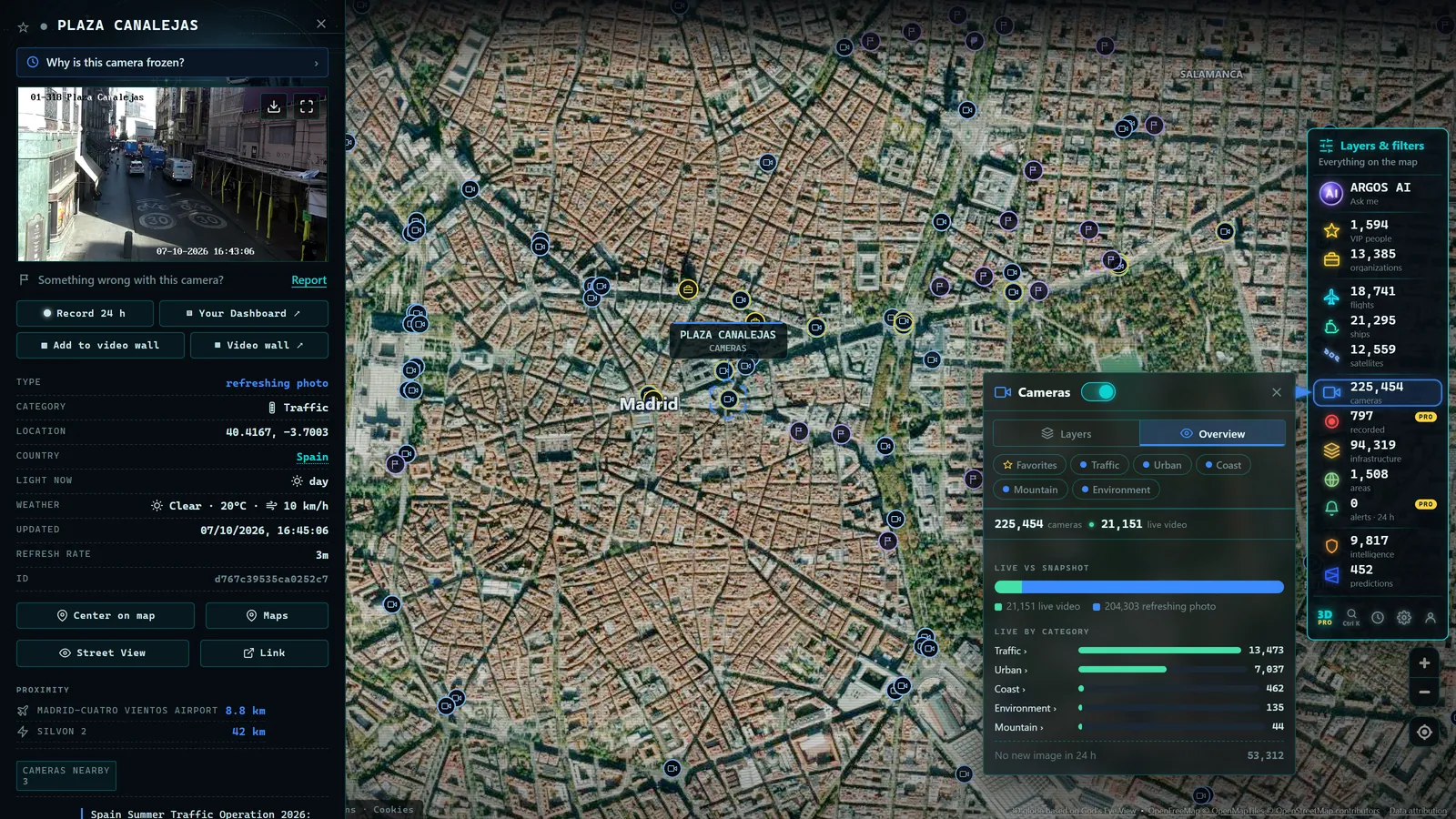
Spain's Operación 1 de Agosto begins this Friday: from July 31 to August 2, the DGT (the national traffic authority) activates its special plan for one of the heaviest traffic weekends of the year. That leaves two days. Two days to decide when you leave, which way you go and (the part almost nobody uses) to watch the road live before you turn the key.
The official forecast commands respect: the DGT expects more than 104 million long-distance journeys this summer, 49.7 million in July and 54.5 million in August. No decree makes the jams vanish; they can only be managed. The good news for anyone driving in Spain, resident or visitor, is that it has never been easier to see trouble coming, because before setting off you can literally look at every stretch of your route. This guide covers the official dates of all the summer operations, the corridors that clog first and the method for picking a better time and route.
Official dates: the four special operations of summer 2026
The DGT's summer plan for 2026 unfolds in four phases. Here is the quick reference for any trip between now and September:
| Operation | Dates | What to expect |
|---|---|---|
| First summer getaway | July 3-5 | The season opener: July holidays begin (already behind us) |
| August 1 operation | July 31 - August 2 | The heaviest weekend: August holidays start while July's holidaymakers head home |
| August 15 operation | August 14-16 | The month's second big peak, around the August 15 public holiday |
| Return operation | August 28-31 | The mass drive back to the cities to close the summer |
The row that matters is the second one. The August 1 operation is historically the toughest, because it crosses two flows on the same motorways: people starting their holidays and people coming back from them, sharing the asphalt for three days. August also concentrates most of the summer's traffic (54.5 of the more than 104 million forecast journeys) so the pattern will repeat, somewhat softened, in mid-month and in the final return. If you can move your trip outside those windows, you have already won half the game; if you can't, keep reading, because the other half can still be played well.
What the operación salida is (and what the DGT deploys)
The operación salida is the special traffic plan the DGT activates for the great holiday migrations. During those days surveillance is reinforced with helicopters and patrols, extra or reversible lanes open on the most conflictive stretches, roadworks and events that could obstruct traffic are limited, and certain heavy transport is restricted during the busiest windows.
The goal is not to eliminate congestion (with that many vehicles at once it is physically impossible) but to spread the traffic, reduce accidents and react quickly when something goes wrong. What never changes from one year to the next is the pattern: Friday evening and Saturday morning concentrate the worst of the exodus, and the end of the month replays the scene in reverse with the return operation of August 28-31.
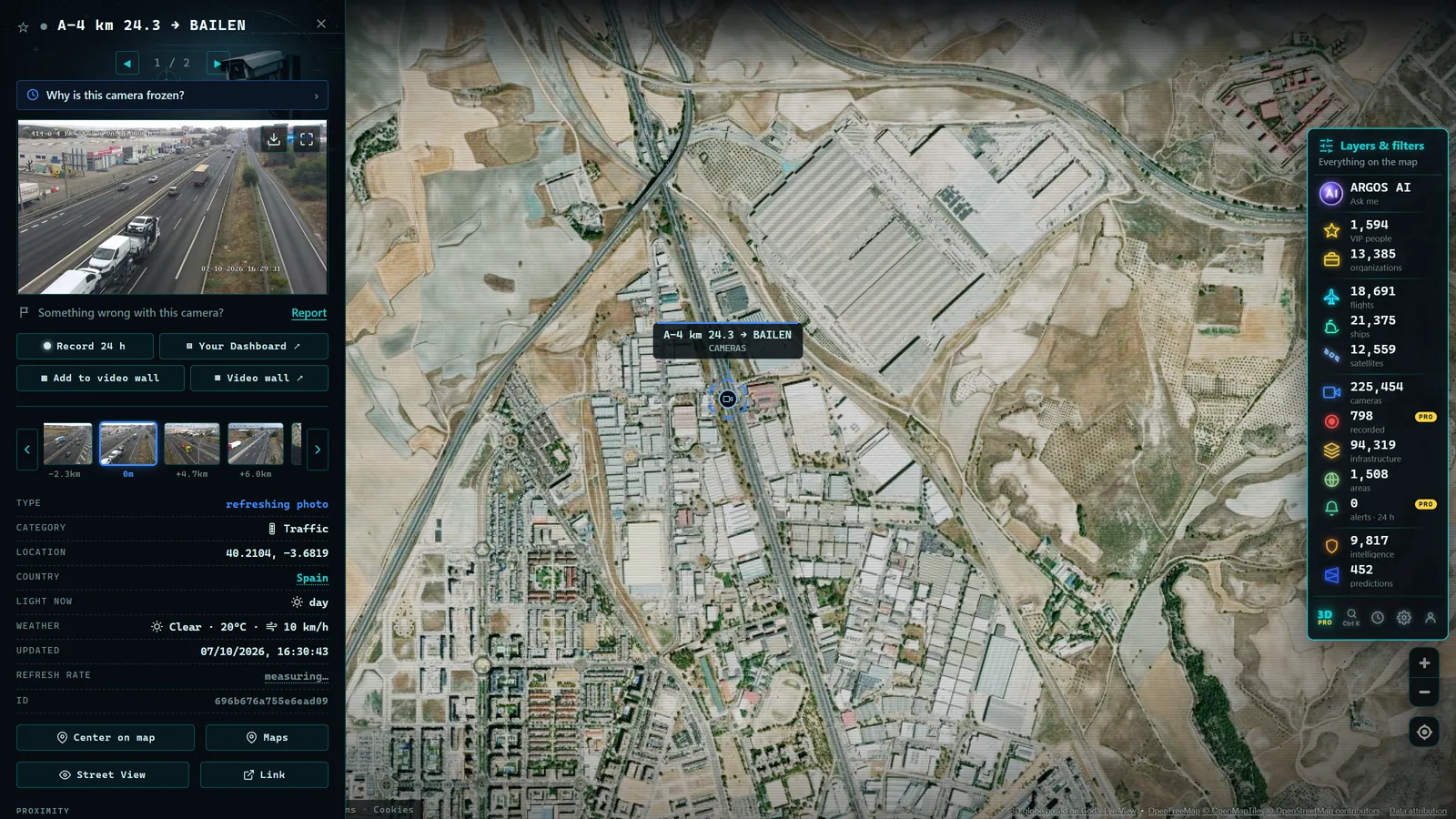
The corridors that suffer most: A-3, A-4, A-5 and AP-7
Not every road jams equally. Decade after decade, the same axes dominate the congestion reports:
- A-3 (Madrid–Valencia): Madrid's natural exit towards the eastern coast. The first kilometres out of the capital and the approaches to Valencia are the usual hot spots.
- A-4 (Madrid–Andalusia): the great southbound corridor. The Despeñaperros pass and the approaches to Córdoba and Seville set the pace of the trip.
- A-5 (Madrid–Extremadura): less famous, but with serious queues leaving Madrid, particularly around Navalcarnero.
- AP-7 (Mediterranean corridor): runs the coast from north to south and combines domestic traffic with international flows entering from France. The Catalonia and Valencia stretches can seize up at any hour of the weekend.
On top of these come the exits and ring roads of the big cities, where the jam often starts before you even reach the motorway. If your route uses any of these corridors, leaving at one hour rather than another can mean a difference of several hours on the road.
From the ARGOS ATLAS channel.
Where to watch DGT cameras live before you leave
Traffic bulletins tell you what has already happened; a camera shows you what is happening right now. That is the advantage of checking live images before setting off: you see with your own eyes whether the A-3 is flowing, whether the AP-7 is dragging a queue, or whether the approach to your destination is gridlocked.
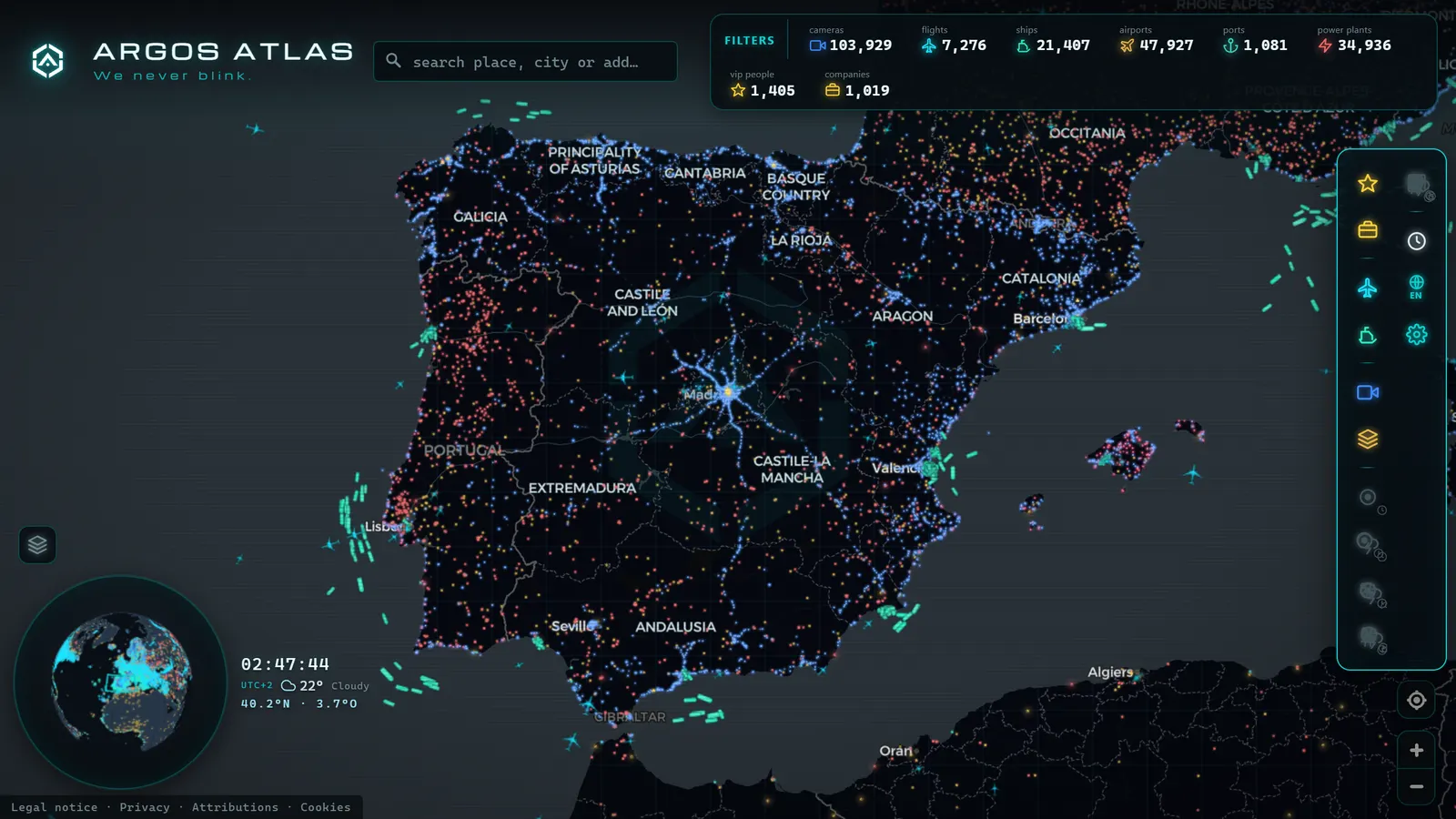
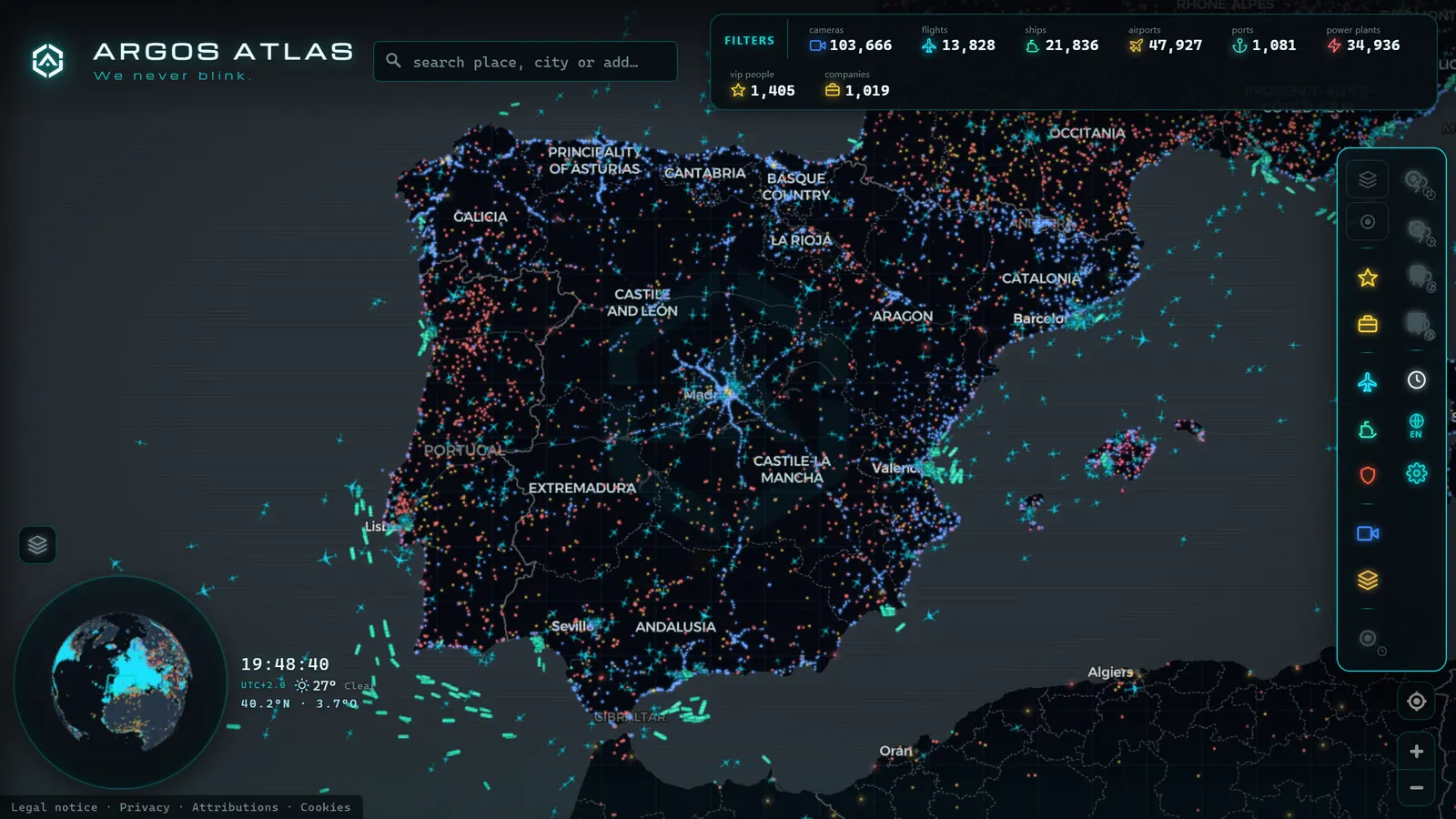
The ARGOS ATLAS map includes around 1,900 DGT cameras across the state network, integrated with other official sources to reach more than 10,000 cameras throughout Spain. You can trace your whole route on the live map, open the cameras at the points that worry you and decide with real information rather than guesswork. For a deeper look at the official network, its coverage and its limits, there is a full guide to Spain's DGT cameras.
The routine that works best is simple: identify the two or three critical points of your trip (your city exit, the historically conflictive stretch, the approach to your destination), check their cameras half an hour before leaving, and check again at rest stops. Combined with a live traffic map, you will have a fairly faithful picture of what awaits.
And if you are heading for the coast (like half the country this weekend) the same map answers the other big question of the trip: what the beach looks like. Spain's beach webcams sit alongside the road cameras on the same screen, so you can check the sand and the access motorway in one go.
New for 2026: the mandatory connected V-16 beacon
There is a new mandatory item in Spanish cars this year: 2026 is the first year of the connected V-16 beacon as compulsory equipment, and the August getaway is its first big test. In a breakdown or accident, the beacon goes on the highest point of the vehicle and, being connected, it transmits the location of the incident so it can be flagged in traffic information systems, no walking along the hard shoulder.
Before you load the boot, take a minute to check the beacon is within reach (glovebox or door pocket, not buried under the luggage) and that it works. In the middle of an August jam, it is the kind of thing you only miss when it is already too late.
Strategy: timing, route and a staggered return
With the dates clear and the information in hand, it is decision time. A few rules that veteran August drivers swear by:
- Avoid the classic peaks: the evening of Friday the 31st and mid-morning on Saturday the 1st concentrate the heaviest demand. Leaving before dawn or very early usually buys you open road.
- Eat off-schedule: stopping for lunch when nobody else does (earlier or later than the usual windows) puts you back on the road just as others leave it.
- Have an alternative studied: if the camera on your critical stretch shows a queue before you leave, weighing a secondary route calmly beats improvising one in the middle of a jam.
- Stagger the return: the return operation (August 28-31) punishes as hard as the getaway, or harder. Coming back a day early, or first thing on Sunday, dodges the evening funnel.
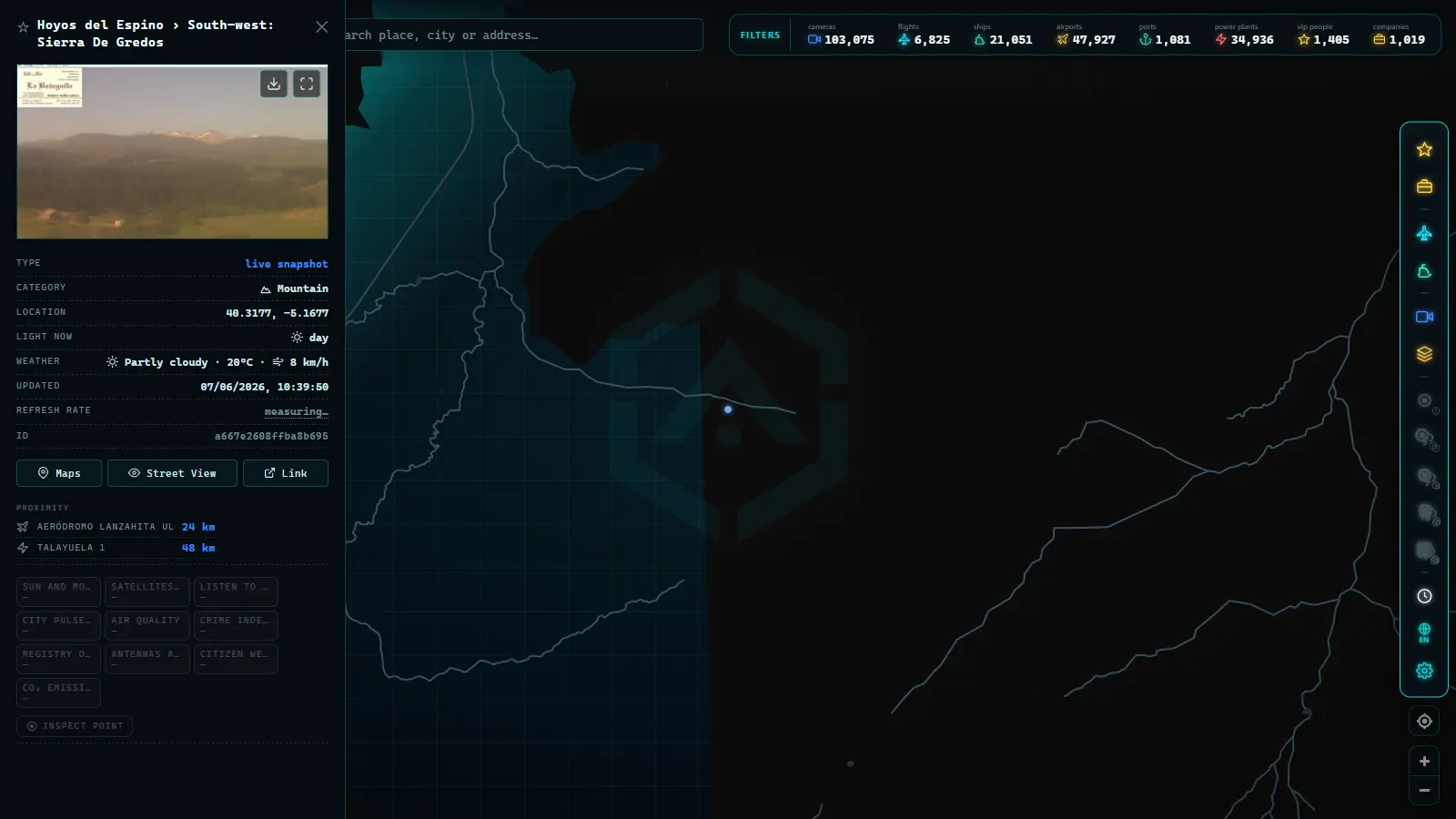
- Watch the mountains too: if your route crosses mountain passes, remember that mountain pass cameras are also on the map and useful all year round, not just in snow, fog, roadworks and slow traffic show up just the same.
No strategy guarantees zero queues on the first weekend of August. But checking before you leave turns a lottery into an informed decision.
Privacy: what the cameras see (and what they don't)
It is worth being clear about what these cameras are. Traffic cameras operated by the DGT and other authorities show wide, general views of the carriageway, designed to assess traffic density, weather and incidents. They do not identify people, they do not read number plates, and they have nothing to do with speed cameras or enforcement cameras, which operate under separate rules. If you are curious about the technical side, read how traffic cameras work.
That is precisely why their images can be published openly: they show the state of the road, not the identity of whoever drives on it.
The August 1 operation of 2026 is here, with the mid-month peak and the great return still to come. Between the driver who sets off "to see what happens" and the one who has checked the cameras on their route, picked their departure time deliberately and keeps the V-16 beacon within reach, the difference is measured in hours of queuing. This weekend, be the second kind.
Frequently asked questions
When does Spain's August 2026 traffic operation start?
The DGT's Operación 1 de Agosto runs from Friday July 31 to Sunday August 2, 2026. It is the second big operation of the summer, after the first getaway of July 3-5, and it will be followed by the August 15 operation (August 14-16) and the return operation (August 28-31).
Where can I watch DGT traffic cameras live?
DGT cameras are published through official channels and also on aggregator maps. The ARGOS ATLAS map includes around 1,900 DGT cameras alongside more than 10,000 cameras across Spain, so you can review your entire route from a single screen.
Which Spanish motorways jam the most in August?
The classic getaway corridors are the A-3 towards Valencia, the A-4 towards Andalusia, the A-5 towards Extremadura and the AP-7 along the Mediterranean coast. Add to those the exits from major cities, especially Madrid and Barcelona, during Friday and Saturday peak hours.
Do DGT cameras record number plates or people?
No. Traffic cameras show wide views of the carriageway to assess traffic flow, and they cannot identify people or read number plates. They are a separate system from speed cameras and enforcement cameras, which operate under their own rules.
Is there a free map to watch Spain's traffic cameras live?
Yes. The ARGOS ATLAS map is free and gathers around 1,900 DGT cameras plus more than 10,000 public cameras across Spain, over 175,000 worldwide. You can trace your whole route, open each camera live and pick your departure time from a single screen.
What is the connected V-16 beacon and why does it matter this summer?
It is the big change of 2026: the connected V-16 beacon is now mandatory in Spain, and this is its first summer on the road. In a breakdown or accident it goes on the highest point of the vehicle and, being connected, it transmits the location of the incident so it is flagged in traffic information systems, without you walking along the carriageway.
- UK Traffic Cameras Live: JamCams, Motorways & More
- FL511 Traffic Cameras: 5,700 Live Feeds, One Map
- NSW Traffic Cameras: Watch Sydney Live on One Map
- California Traffic Cameras: 6,900 Live, Caltrans and More
- Queensland (QLD) Traffic Cameras: Brisbane Live Map
- Perth Traffic Cameras: Watch WA Freeways Live on One Map