Blog · Traffic cameras
Poland Traffic Cameras: Live Views of the A4, A2 and Gdansk
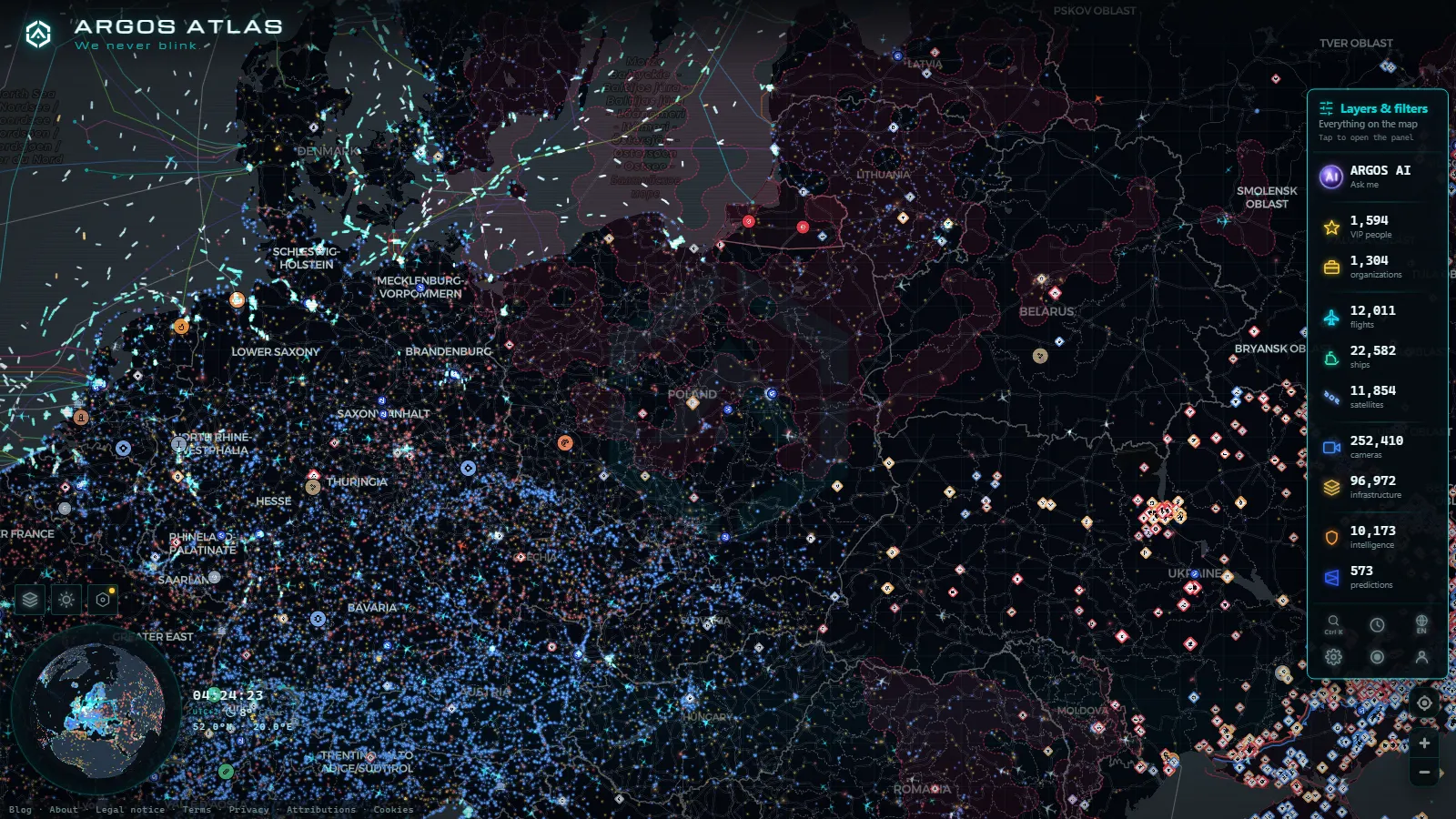
Poland's public traffic cameras are free to watch and already online: refreshed still frames from the national motorway network, junction feeds in Warszawa, Kraków, Wrocław and the Tricity, and webcams pointing at the Baltic front and the southern passes. No account, no app, nothing to install. The catch is that they sit on a dozen different operator sites, most of them in Polish only, and each one refreshes at its own pace.
This is the road level version of the story: which corridors are genuinely covered (the Warszawa approaches, the A4 between Kraków and Wrocław, the Baltic run into Gdansk, the mountain crossings in the south), who publishes each signal, and what those pictures will never show you. The continent wide list lives in our country by country index of European traffic cameras. Everything below is Poland.
The essentials, in 20 seconds
- GDDKiA, the national roads authority, is the main publisher for motorway and expressway views (A1, A2, A4, S7, S8).
- Free, no registration: every feed here comes from a road authority, a city traffic centre or a local webcam owner, never from behind a login.
- Still frames, not video: Polish public cameras push a new image every few seconds to a few minutes.
- 200,000+ cameras worldwide sit on the ARGOS ATLAS map (count as of September 2026), the Polish ones among them.
- Winter is the season that matters: the Zakopianka and the Czech and Slovak crossings are where people actually check the picture before leaving.
Who runs Poland traffic cameras, operator by operator
There is no single national portal showing every camera in the country, and that is the first thing to accept. GDDKiA publishes the views on national roads, usually as a refreshed frame captioned with the road number and a kilometre marker. The cities run their own layer on top: ZDM Warszawa at junctions and bridges in the capital, ZDMK in Kraków, the ITS centre in Wrocław, and TRISTAR, the traffic system shared by Gdansk, Gdynia and Sopot.
Then there is a third layer nobody coordinates: hotels, ski stations, port authorities and councils pointing a webcam at something photogenic. Those are public too, and on some stretches they are the only picture that exists. Knowing which of the three you are looking at decides how much you trust it. An operator feed is maintained and replaced when it fails; a hotel webcam vanishes the day the hotel redesigns its site.
Warszawa: the approaches, the S8 and the bridges
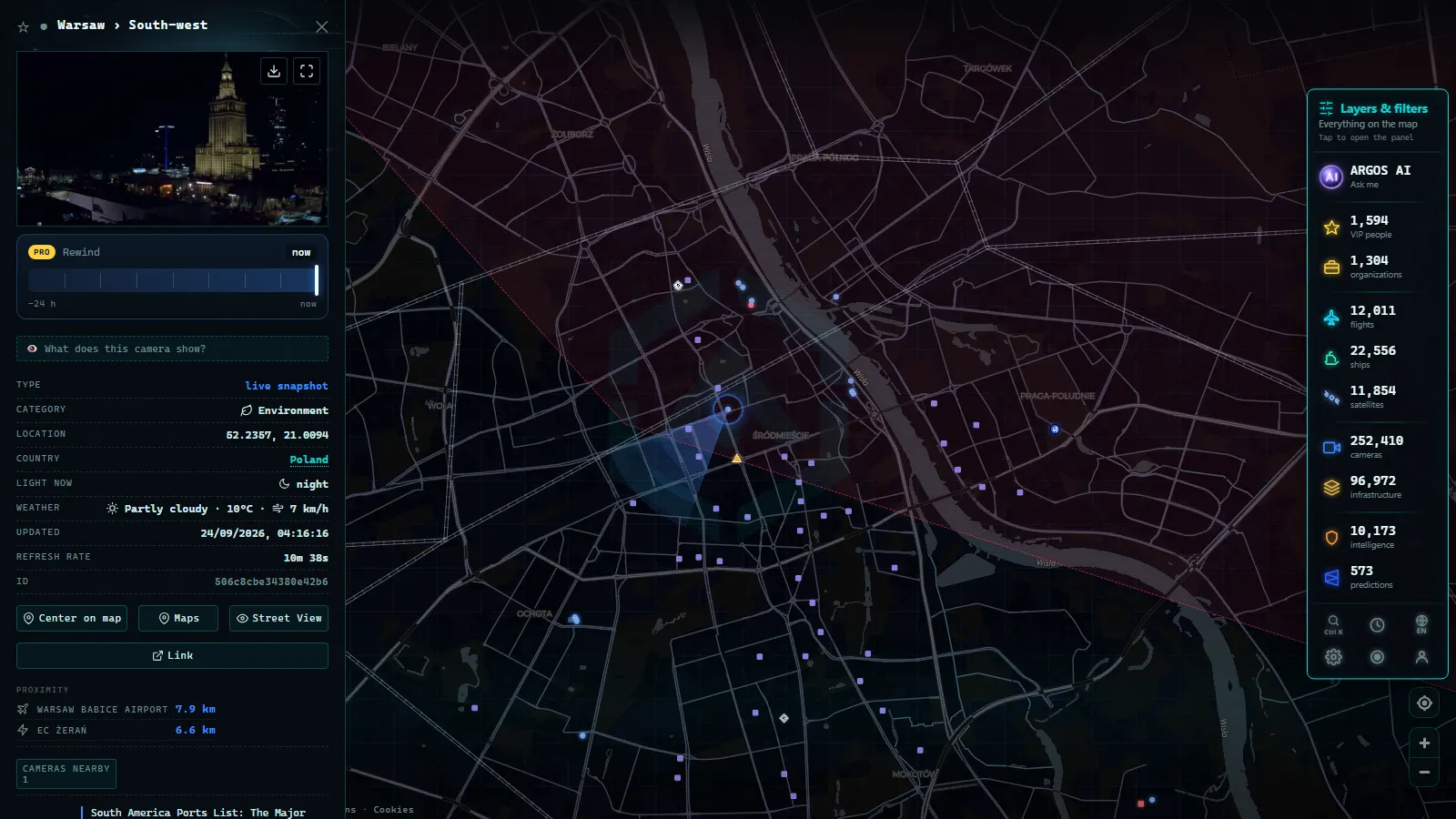
The capital has the densest cluster of Polish road cameras. The S8 crosses the north of the city as the Trasa Armii Krajowej, the S2 southern bypass links the A2 from Poznań with the road towards Lublin, and everything funnels over a short list of Vistula bridges: Most Grota-Roweckiego, Most Siekierkowski, Most Łazienkowski. Those bridge decks are the frames worth opening, because one lane closed on any of them reroutes the whole east side of the city.
City cameras along the Wisłostrada and at signalled junctions are framed for signal timing, not scenery: narrow, angled down, often at a crossing you need a map to identify. Airport traffic leaves the ring by the S79 towards Warsaw Chopin, while the northern run to Modlin uses the S7, the same corridor that carries on to Gdansk.
From the ARGOS ATLAS channel.
The A4 between Kraków and Wrocław
The A4 is Poland's southern spine. It runs from the German border at Jędrzychowice through Wrocław, Opole, Gliwice and the Katowice conurbation to Kraków, then east to Tarnów, Rzeszów and the Ukrainian border at Korczowa. The Katowice to Kraków section is tolled and run by a concession, which is why its cameras look and behave differently from the GDDKiA ones on either side.
Two things make this corridor worth checking before you drive it. The first is fog: the flat ground around Opole produces mornings where visibility collapses for twenty kilometres, and the frames show it at once, a white wall with tail lights inside. The second is roadworks, which on the A4 tend to be long contraflow sections rather than short closures. One camera tells you the lane layout in a glance, which no text alert manages.
The Baltic corridor: Gdansk, Gdynia and the S7
The Tricity is the one Polish metropolitan area where road cameras, port activity and tourist webcams overlap on the same few kilometres. The S6 ring skirts Gdynia and Sopot, the S7 starts its long descent towards Warszawa and Kraków, and the Tunel pod Martwą Wisłą takes port traffic under the river instead of through the centre. TRISTAR frames the urban dual carriageways and tunnel portals.
What changes the traffic here is the water. Cruise calls and ferry departures load the approach roads in bursts, and the waterfront webcams tell you a ship is alongside long before any road feed reacts.
The southern passes and the Czech and Slovak border
South of Kraków the network thins and the weather takes over. The DK47, the road everyone calls the Zakopianka, is the single artery to Zakopane and the Tatras, and on a February Friday it is the most watched stretch of asphalt in the country. Border crossings matter here too: Chyżne and Łysa Polana towards Slovakia, Kudowa-Zdrój on the E67 facing Náchod, Jakuszyce in the Karkonosze.
Polish coverage at those crossings is patchy, so the useful trick is to look at the picture from the other side of the line, where Czech cameras on the D1, D5 and D8 and their border approaches are often better placed. If snow is the reason you are looking, the method is the same one we describe for mountain pass cameras before a winter drive: check the road surface, not the sky.
City webcams are not Poland traffic cameras
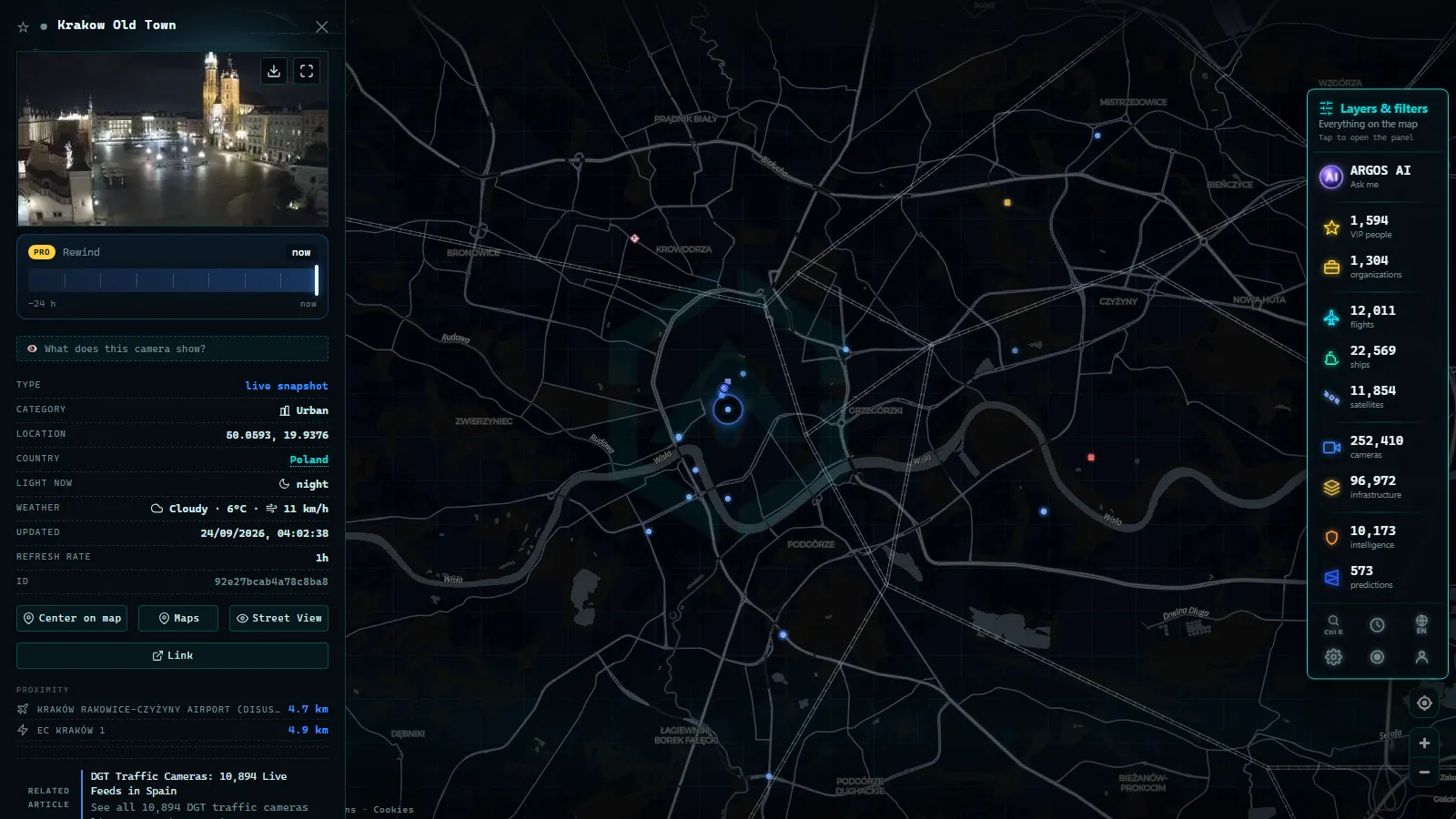
This is the distinction that saves the most time. A road camera points at a carriageway and is framed so you can count lanes and see the queue. A city webcam points at a square, a tower or a river, and it is beautiful and useless for traffic. Both appear on the same map, and both are legitimate public feeds, but they answer different questions.
Use the square cameras for weather, light and how crowded a place is right now. Use the road feeds for whether to leave. In Kraków, the view over Rynek Główny tells you it is raining on the Old Town; it tells you nothing about the A4.
Which Poland traffic cameras to open, and when
| Corridor | Who publishes | What the picture shows | When to open it |
|---|---|---|---|
| A2 west to Poznań | GDDKiA | Carriageway and shoulder from a mast | Before a drive west, or when a closure is reported |
| A4 Wrocław to Kraków | GDDKiA and the toll concession | Lane occupancy, fog banks near Opole | Autumn mornings, when visibility collapses |
| S7 Gdansk to Kraków | GDDKiA | Long straight views, roadworks layouts | Holiday weekends and the Tatra run |
| S8 across Warszawa | ZDM Warszawa, GDDKiA | Junctions, ramps, bridge decks | Weekday rush, to see if the queue cleared |
| Tricity ring and tunnel | TRISTAR | Urban dual carriageways, tunnel portals | Ferry and cruise arrivals in Gdansk |
| DK47 Zakopianka | GDDKiA | Snow cover, one lane each way | Ski weekends, before leaving Kraków |
| City squares | Councils and hotels | Pedestrians, weather, daylight | To judge conditions, never traffic |
The points in this guide
50 km
What you won't see
- No continuous video. Almost every Polish public feed is a still image that refreshes, so you get a sequence of photographs, not a stream.
- No identifiable people or plates. The resolution and framing are deliberately short of it, and enforcement images are a separate, closed system.
- No reliable night picture outside lit sections. Rural frames go black or blur into headlights until sunrise.
- No full coverage of local roads. The DK and voivodeship network is largely unwatched; cameras follow motorways, expressways and city centres.
- No archive. You see now, not last Tuesday. Nothing is stored for you to replay.
- No guarantee a camera is alive. Feeds break, freeze and get rebuilt, as explained in why a traffic camera stops working.
Opening the map on Poland
The practical route is to skip the operator sites and use one surface. On the live map of public cameras, zoom to Poland, and the dots resolve into individual cameras as you go in. Click one and the card gives you the latest frame plus the name of whoever publishes it, which is the field that tells you whether you are looking at GDDKiA, a city system or somebody's hotel.
A useful habit: check two frames a minute apart before you believe either. A single image can be a stale cache, and the second one settles it. If both are identical down to the shadows, treat that camera as down and move to the next dot on the same road.
Frequently asked questions
Are Poland traffic cameras free to watch?
Yes. Every feed in this guide is published by a road authority, a city traffic centre or a local webcam owner, with no account, no app and no payment. On ARGOS ATLAS you open the map, click a dot and the frame loads. The Polish operator sites are free too, though most of them are in Polish only.
Who owns the cameras on Polish motorways?
GDDKiA, the national roads authority, runs the views on motorways and expressways such as the A2, A4, S7 and S8. The cities run their own systems: ZDM in Warszawa, ZDMK in Kraków, the ITS centre in Wrocław and TRISTAR across Gdansk, Gdynia and Sopot. Tourist webcams belong to hotels, ski stations and councils.
Can I watch live video of the A4?
No, not as continuous video. Polish public cameras publish still frames that refresh every few seconds to a few minutes, so you get a sequence of photographs rather than a stream. That is enough to judge whether the A4 is moving, whether fog has settled near Opole and how deep a queue runs, but not to follow one vehicle.
Do Polish traffic cameras work at night?
Some do, many do not. Cameras on lit motorway sections and at city junctions stay usable after dark, but unlit rural stretches go black or turn into a smear of headlights. Mountain cameras in the Tatras are daytime instruments in practice. If a night frame looks frozen, it is usually the light, not a fault.
Are these the same as speed cameras?
No. These are traffic observation feeds, published so drivers can see conditions. Speed enforcement in Poland runs through a separate system operated by the road transport inspectorate, and those images are never public. You cannot read a plate, identify a driver or request footage from any of the feeds shown on the map.
- Connecticut Traffic Cameras: Live Stills on I-91 and I-691
- Maine Turnpike cameras: every exit from Kittery to Augusta
- How Traffic Cameras Work (And Why They Are Public)
- DGT Traffic Cameras: 10,894 Live Feeds in Spain
- Watch Live Traffic: Every Way to Check Road Conditions in Real Time
- Traffic cameras and privacy: what they capture, what they don't, and what the law says