Blog · Traffic cameras
Live Traffic Cameras: How to Monitor Global Road Conditions
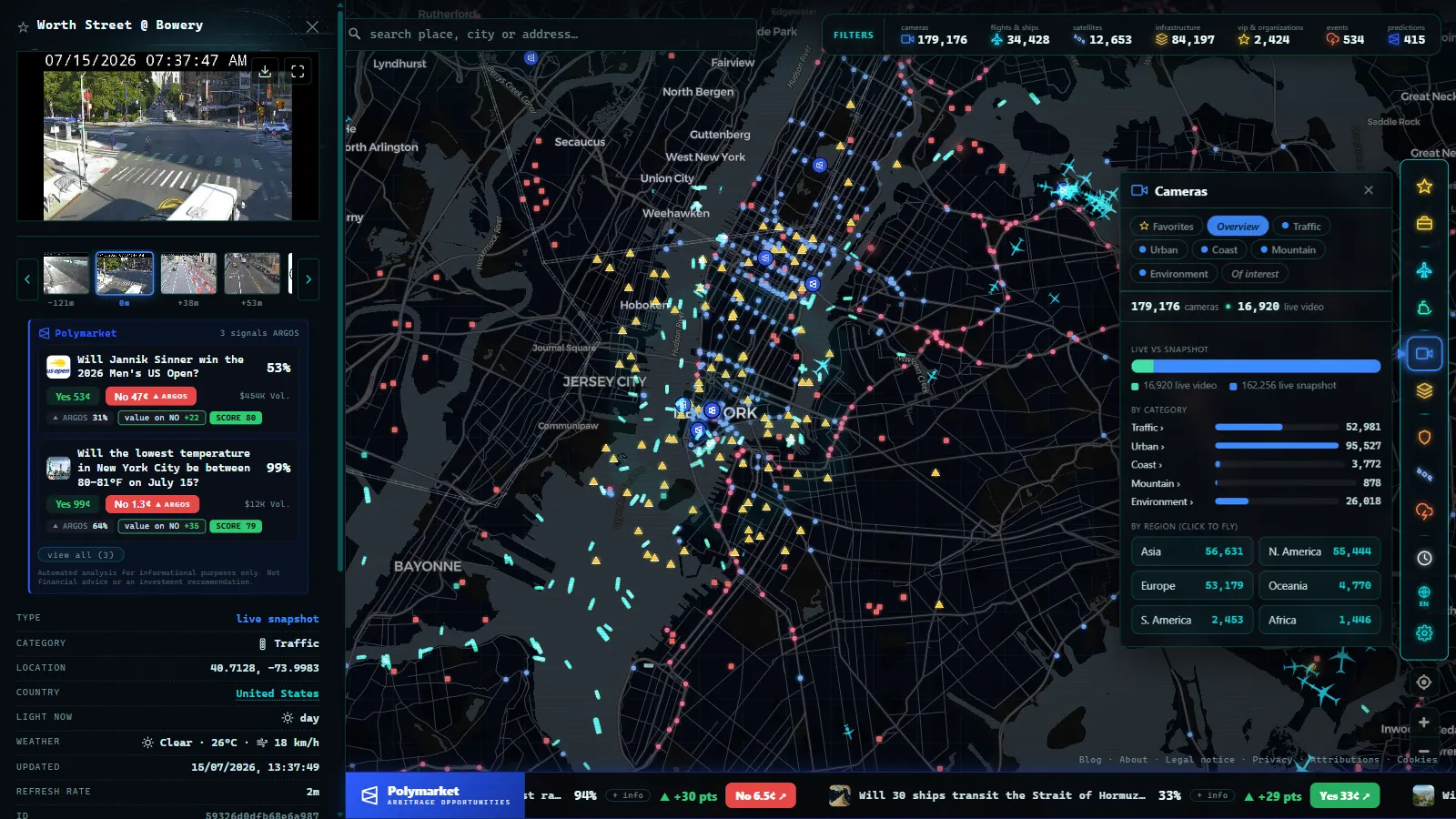
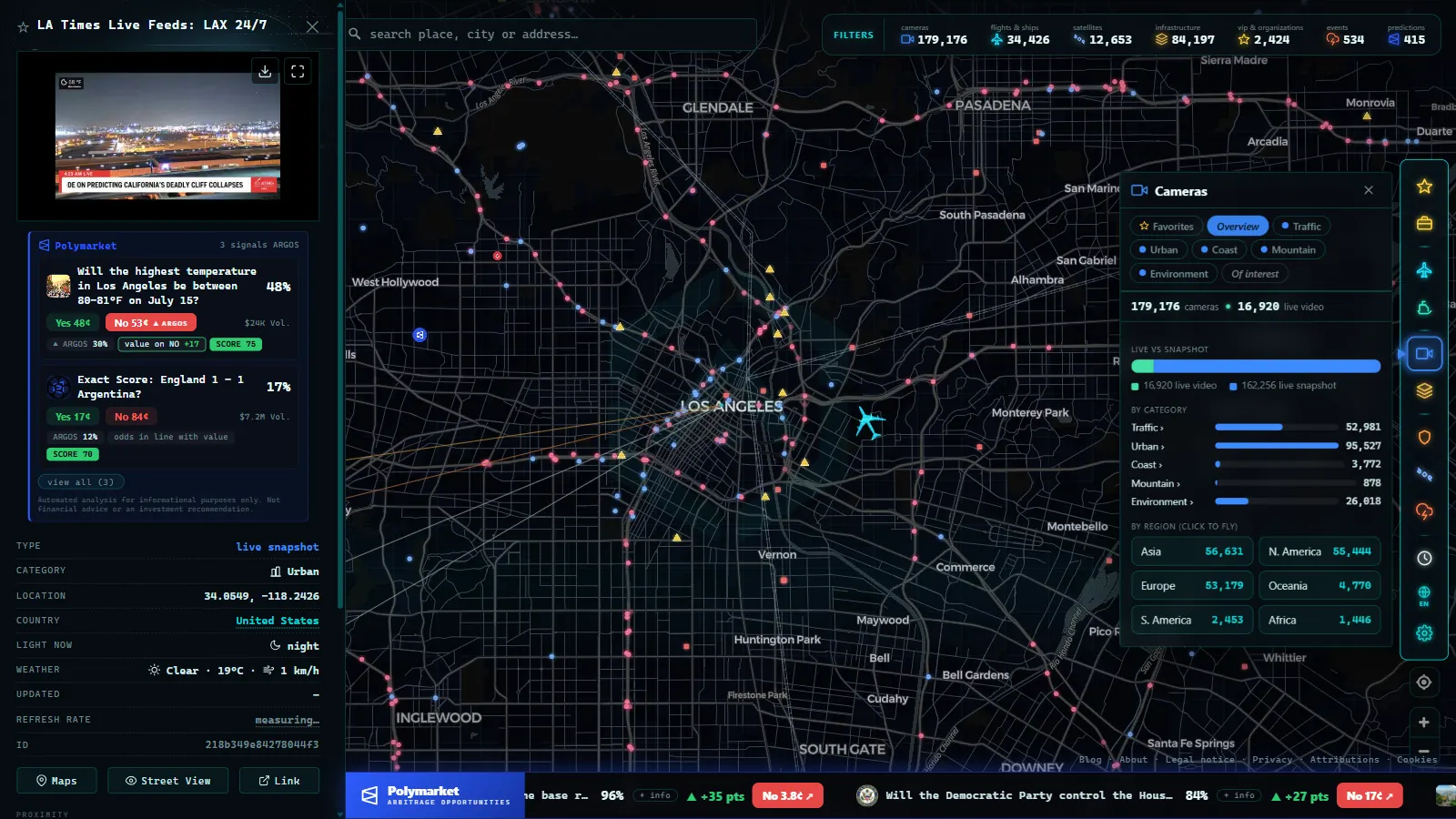
Live traffic cameras are geospatial intelligence tools that allow you to visualize road conditions, vehicle density, and weather in real time. These monitoring networks, mostly managed by government entities, offer a strategic advantage for route planning and emergency management. At Argos Atlas, we integrate these sources to provide a unified global view of urban and interurban mobility.
What Are Live Traffic Cameras and How Do They Work?
Live traffic cameras are image capture devices installed at critical points of road infrastructure, such as intersections, tunnels, toll booths, and high-accident zones. Unlike conventional security cameras, their primary goal is not to identify individuals but to observe the flow of vehicles.
There are two main types of transmission in these networks:
- Continuous Video Streaming: Allows you to see movement in real time. This is common on private toll roads or urban centers with high technological capacity.
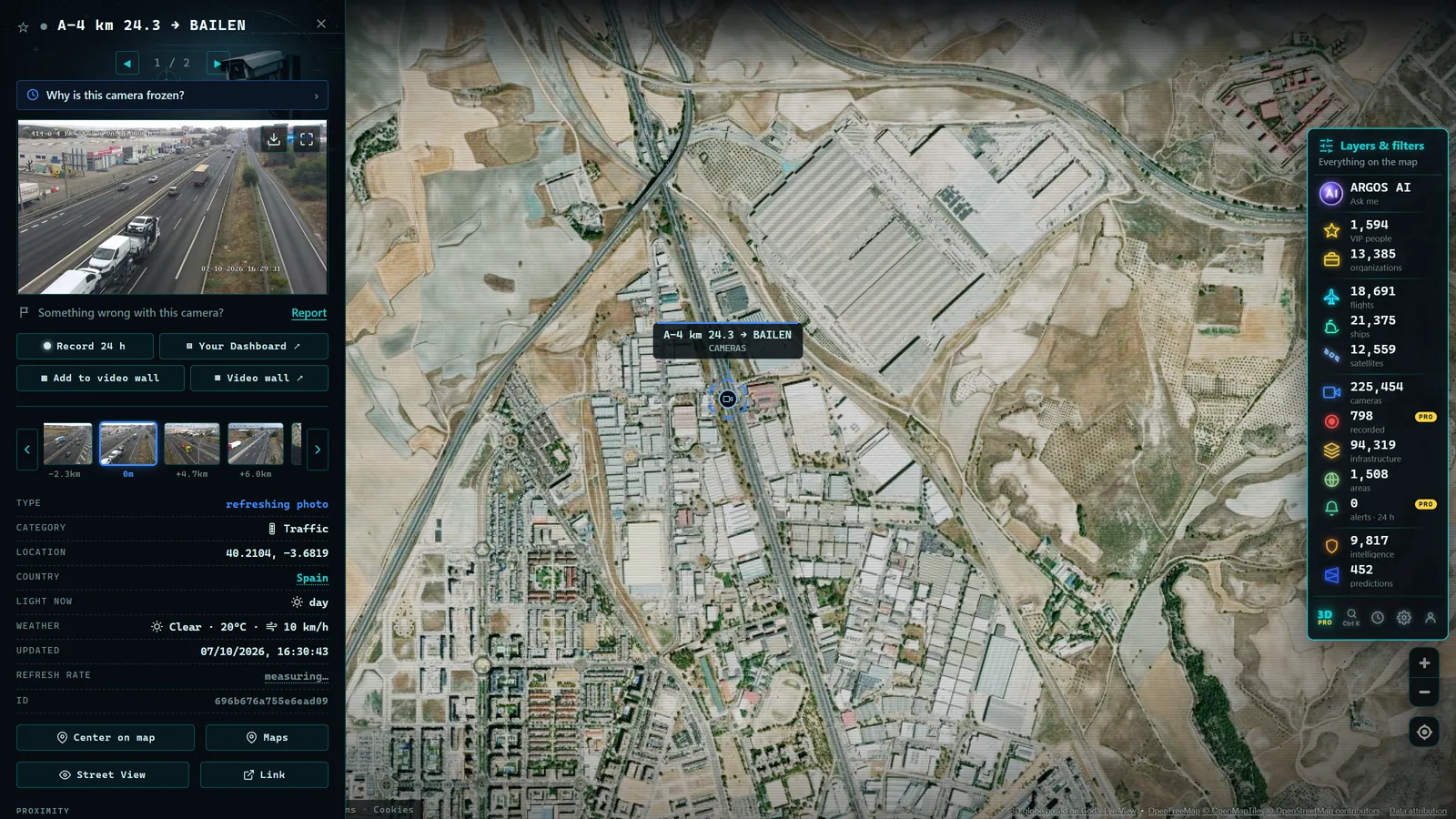
- Frame Refresh (Snapshots): The camera captures an image at set intervals (e.g., every 2 minutes). This is the most widespread method due to its low maintenance cost and lower data consumption.
To better understand the infrastructure behind these devices, you can check how traffic cameras work, where we detail sensor technology and data transmission.
Official Sources for Live Traffic Monitoring
The reliability of a traffic camera depends directly on its source. The most accurate data always comes from the transport authorities of each country or region. These entities maintain Traffic Control Centers (TCC) that process information before publishing it.
Road Management Agencies by Region
- United States: Each state has its own Department of Transportation (DOT), such as Caltrans in California or NYSDOT in New York, offering interactive maps with hundreds of cameras.
- Spain: The Directorate-General for Traffic (DGT) manages one of the densest networks in Europe. For a detailed analysis of this territory, we have a complete DGT camera guide.
- Latin America: Management usually falls to municipalities or ministries of public works. For example, in Chile, the Traffic Control Operations Unit (UOCT) is the primary reference.
- Europe: Countries like France (Bison Futé) or Germany (Autobahn GmbH) lead the way in open road data on the continent.
The Importance of Cameras in Road Safety
Accessing live traffic cameras is not just a matter of convenience to avoid traffic jams; it is a critical component of road safety. The ability to remotely observe if a mountain pass is snowy or if an accident is blocking a lane allows for informed decision-making before starting a trip.
Practical Applications of Live Monitoring
- Weather Prevention: Especially useful in winter. Seeing the asphalt condition in real time is more reliable than any numerical forecast. For this, mountain pass cameras are essential.
- Logistics and Transport: Transport companies use these cameras to reroute fleets in case of prolonged blockages, optimizing time and fuel consumption.
- Incident Verification: In the field of OSINT (Open Source Intelligence), traffic cameras serve to confirm events reported on social media, providing objective visual proof.
From the ARGOS ATLAS channel.
How to Find Traffic Cameras in Any City
Locating a specific camera can be complex due to fragmented sources. However, there are methodologies to find them efficiently:
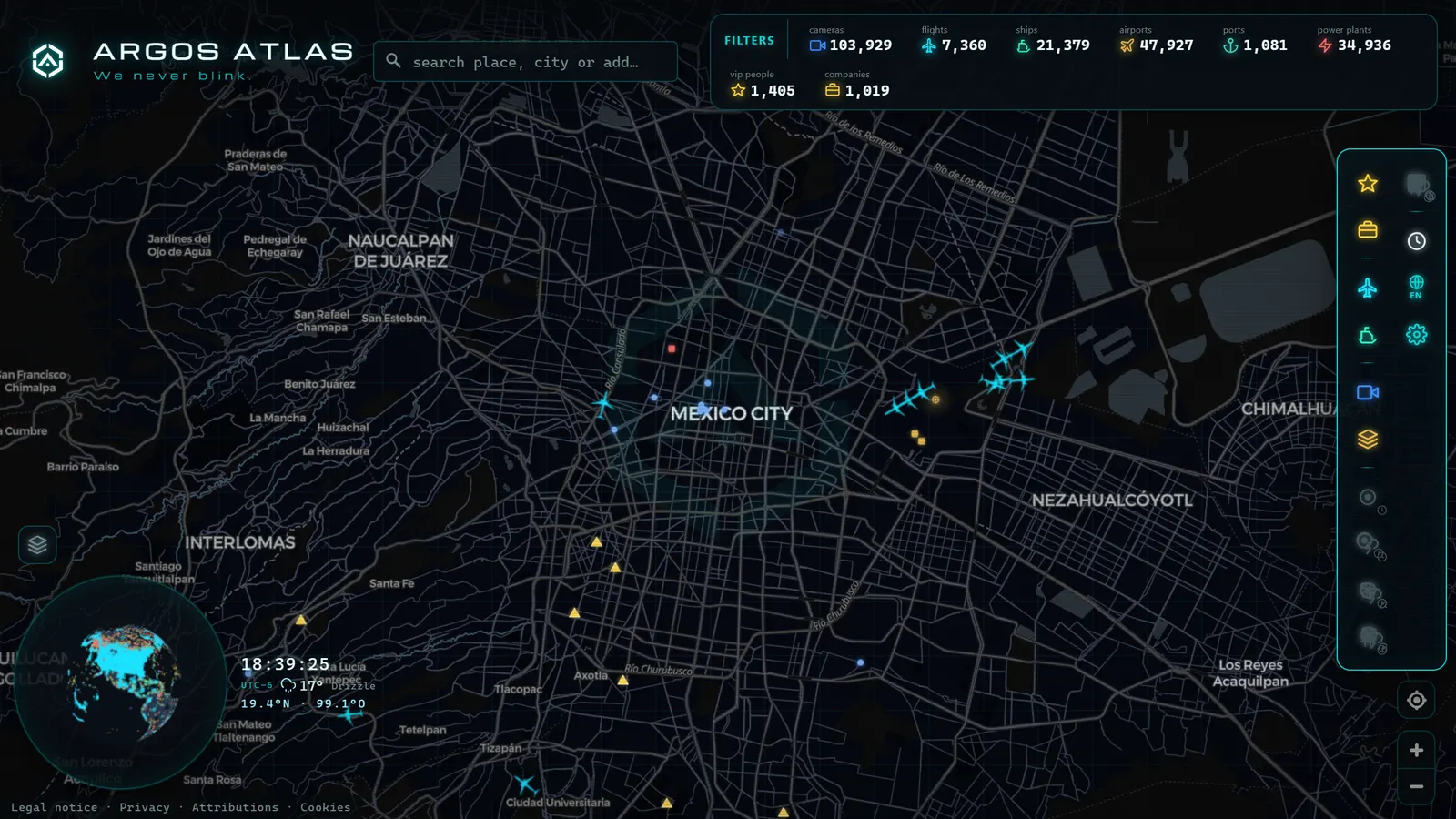
- Intelligence Maps: Platforms like Argos Atlas centralize data layers from multiple countries, allowing you to jump from a camera in London to one in Mexico City without changing the interface.
- Geolocation Searches: Using search terms that include the specific highway (e.g., "I-95 exit 20 cameras") usually leads to the image servers of the relevant authority.
- Navigation Apps: While apps like Google Maps or Waze show traffic flow (red/green colors), they often do not offer the direct video feed due to licensing agreements.
Limitations and Privacy in Public Cameras
It is essential to understand that live traffic cameras accessible to the public have deliberate technical and legal limitations. Resolution is often limited to prevent license plate reading or long-distance facial recognition, complying with data protection regulations.
| Feature | Public Traffic Camera | Police Surveillance Camera |
|---|---|---|
| Access | Open to citizens | Restricted to authorities |
| Resolution | Medium/Low (vehicle flow) | High (identification) |
| Purpose | Mobility management | Crime prevention |
| Storage | Public feeds are rarely recorded | Continuous 24/7 recording |
If you are concerned about how this data is managed, we recommend reading about traffic cameras and privacy, where the legal limits of what can and cannot be recorded on public roads are explained.
The Future of Road Monitoring: AI and Computer Vision
The current trend is moving away from simple human observation. New live traffic camera systems incorporate computer vision algorithms that count vehicles, detect pedestrians, and automatically alert for wrong-way drivers or unauthorized stops on the shoulder.
This processed data becomes metadata that feeds the real-time traffic maps we consult on our phones. The camera is no longer just an eye, but an intelligent sensor that translates images into statistics on flow, density, and average speed.
To explore these networks and see the world in motion, we invite you to browse our interactive map, where geospatial information is updated to offer you a direct window into global reality.
Frequently asked questions
Where can I watch live traffic cameras for free?
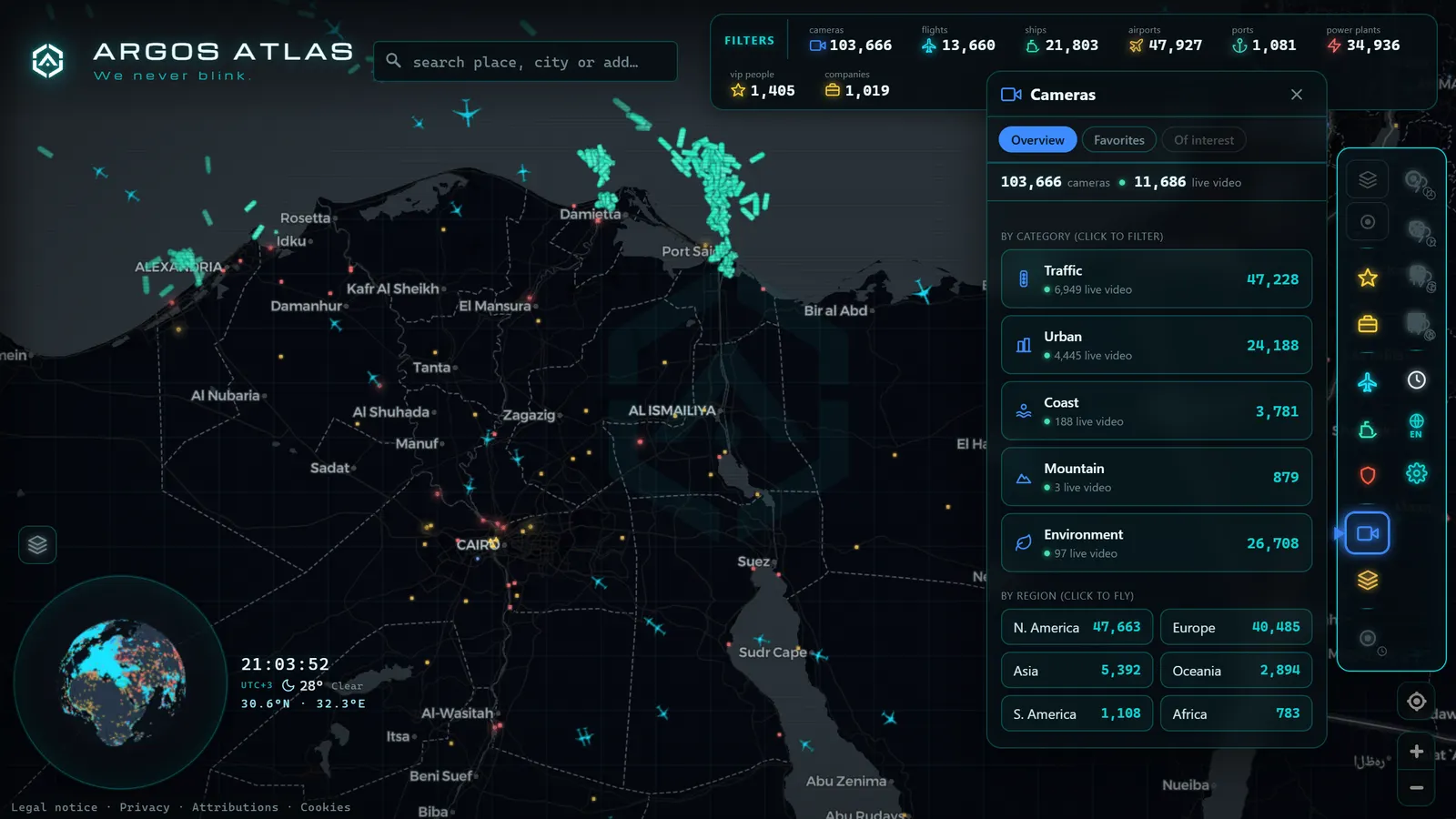
Most live traffic cameras are managed by public agencies such as the DOT in the United States, the DGT in Spain, or local mobility departments. They are offered for free through official government portals or integrated maps like Argos Atlas.
Why do some traffic cameras show static images instead of video?
Many traffic cameras do not broadcast continuous video to save bandwidth and protect privacy. Instead, they update a still image every 1, 5, or 10 minutes, which is sufficient for assessing vehicle congestion.
Is it legal to access traffic cameras online?
Yes, it is legal as long as you access them through public and official sources enabled for citizen consultation. These cameras are designed for traffic management rather than detailed personal surveillance.
What should I do if a traffic camera is out of service?
If a camera fails to load, it is usually due to maintenance, extreme weather affecting connectivity, or a server outage. In these cases, it is best to check the nearest camera on the same route.
- Local Traffic Updates: See Any Road Live on One Map (Free)
- US Traffic Cameras: All 511 Feeds on One Live Map
- Spain Summer Traffic Operation 2026: Dates and Live Cameras
- UK Traffic Cameras Live: JamCams, Motorways & More
- FL511 Traffic Cameras: 5,700 Live Feeds, One Map
- NSW Traffic Cameras: Watch Sydney Live on One Map