Blog · Energy & grids
Nuclear power plants around the world: where they are and how they are monitored
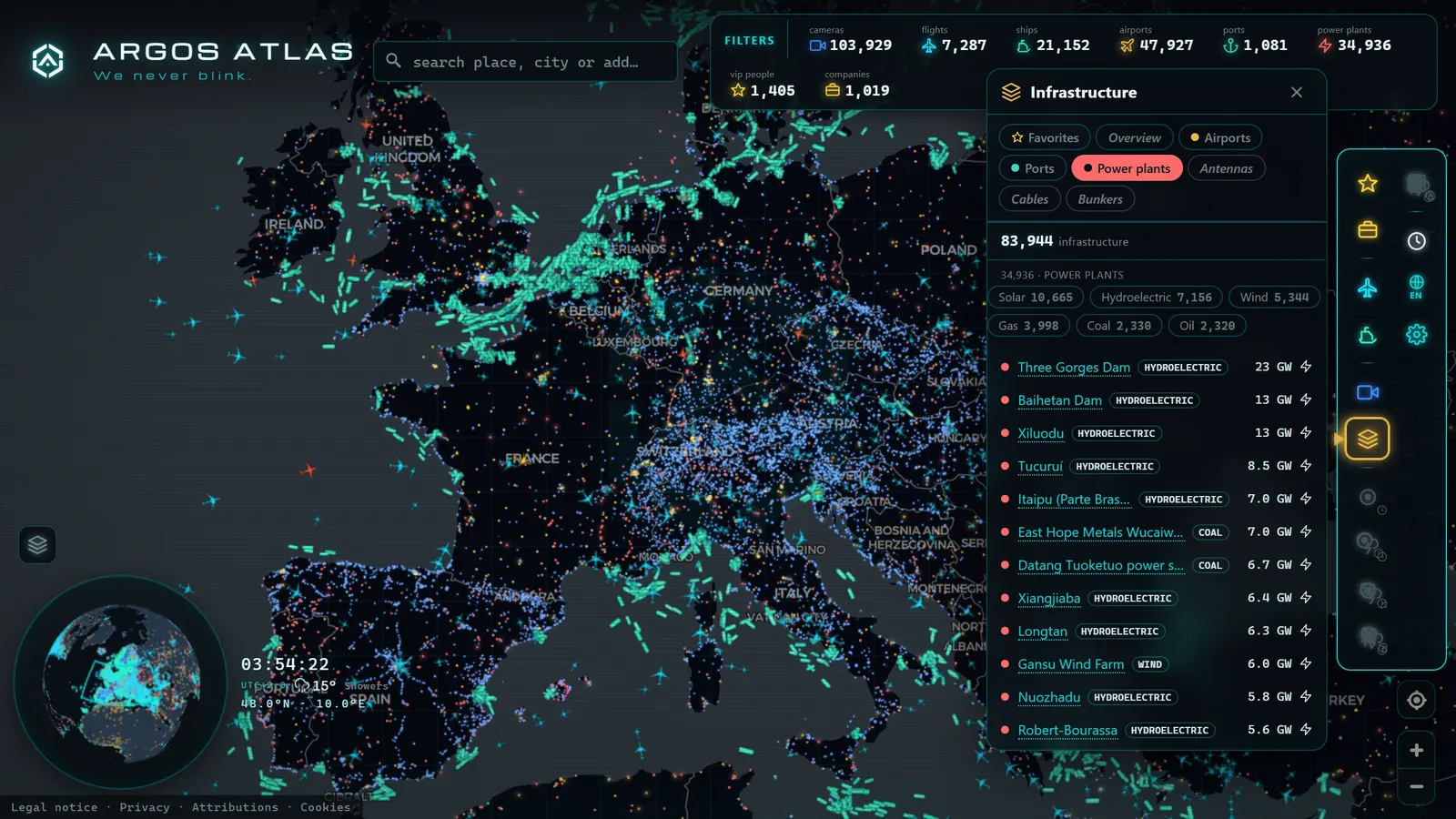
Few pieces of infrastructure attract as much curiosity (and as much debate) as nuclear power plants. They are vast installations, visible for miles thanks to their cooling towers, yet surrounded by an aura of secrecy that does not always match reality: their locations are public, their operators answer to independent regulators, and an international body keeps open records of every reactor on the planet. This guide reviews how many there are, which countries lead, why plants are built where they are, and how the layered oversight system works, in plain language, without taking sides.
The big picture: roughly four hundred reactors across thirty countries
The most useful starting point is the order of magnitude. According to public records maintained by the IAEA (International Atomic Energy Agency), approximately four hundred power reactors are currently operating in around thirty countries. Beyond those, several dozen more are under construction, and a growing number of retired units are progressing through decommissioning.
The exact count shifts constantly: reactors connect to the grid every year, and others shut down permanently, so any fixed number quickly becomes outdated. The intellectually honest approach is to think in terms of scale (hundreds of reactors, dozens of countries) and consult the official registries when a precise, current figure is needed.
It is also worth distinguishing between a plant and a reactor: a single nuclear power plant can house multiple reactors, just as an airport has multiple runways. International statistics count reactors as the precise technical unit, even though everyday language tends to refer to plants.
Who has the most: the global nuclear map
The worldwide distribution of nuclear capacity is far from uniform. The United States operates the largest fleet of power reactors on the planet, the result of an intensive expansion in the 1970s and 1980s followed by life-extension programmes for existing units. Today the US has around 90 operating reactors, generating roughly 20 percent of the country's electricity.
France presents the most striking case in terms of energy mix rather than sheer numbers: it is not the country with the most reactors, but it is the one where nuclear energy accounts for the largest share of electricity generation, historically a majority of its power output. That strategic choice dates to the oil crises of the 1970s and has been maintained for decades.
The third major pole is Asia, where the most active construction programmes are concentrated. China, South Korea, and India are building reactors at a pace the rest of the world largely abandoned decades ago, combining domestic designs with imported technology. In Europe, the picture is mixed: the UK is investing in new large-scale projects such as Hinkley Point C; Finland recently connected the Olkiluoto-3 reactor after a long construction saga; Germany completed its nuclear phase-out in 2023; and several Eastern European countries are either building or planning new capacity. The United States, meanwhile, is exploring a new generation of small modular reactors (SMRs) alongside efforts to extend the operating licences of existing plants well past 60 years.
Why plants are located where they are: water, stable ground, and proximity to demand
If you plot nuclear power plants on a map, their placement is not random. Three factors explain almost every location.
- Abundant water for cooling. A reactor generates heat continuously and must dissipate it, so plants are built next to coastlines, large rivers, or reservoirs. The iconic cooling towers are part of that heat-rejection system: what rises from them is water vapour, not smoke. In the US, plants along the Mississippi, Ohio, and Great Lakes corridors follow this logic precisely. In France, the Loire and Rhône valleys are dotted with reactors for the same reason.
- Low seismicity or reinforced design. Sites are selected after exhaustive geological surveys in search of stable ground. Where seismic risk exists (as in Japan) reactors are designed and reinforced to withstand earthquakes well beyond anything recorded locally, and regulators require periodic reassessment of those safety margins.
- Reasonable proximity to demand. Transmitting electricity over very long distances incurs losses and costs, so plants tend to be located within manageable reach of major consumption centres, connected to the high-voltage transmission network.
The result is a recognisable pattern: industrial coastlines, major river valleys, and regions with dense electrical grids. To understand how nuclear fits alongside other generation technologies, the overview of types of power plants places each one in its role within the broader energy system.
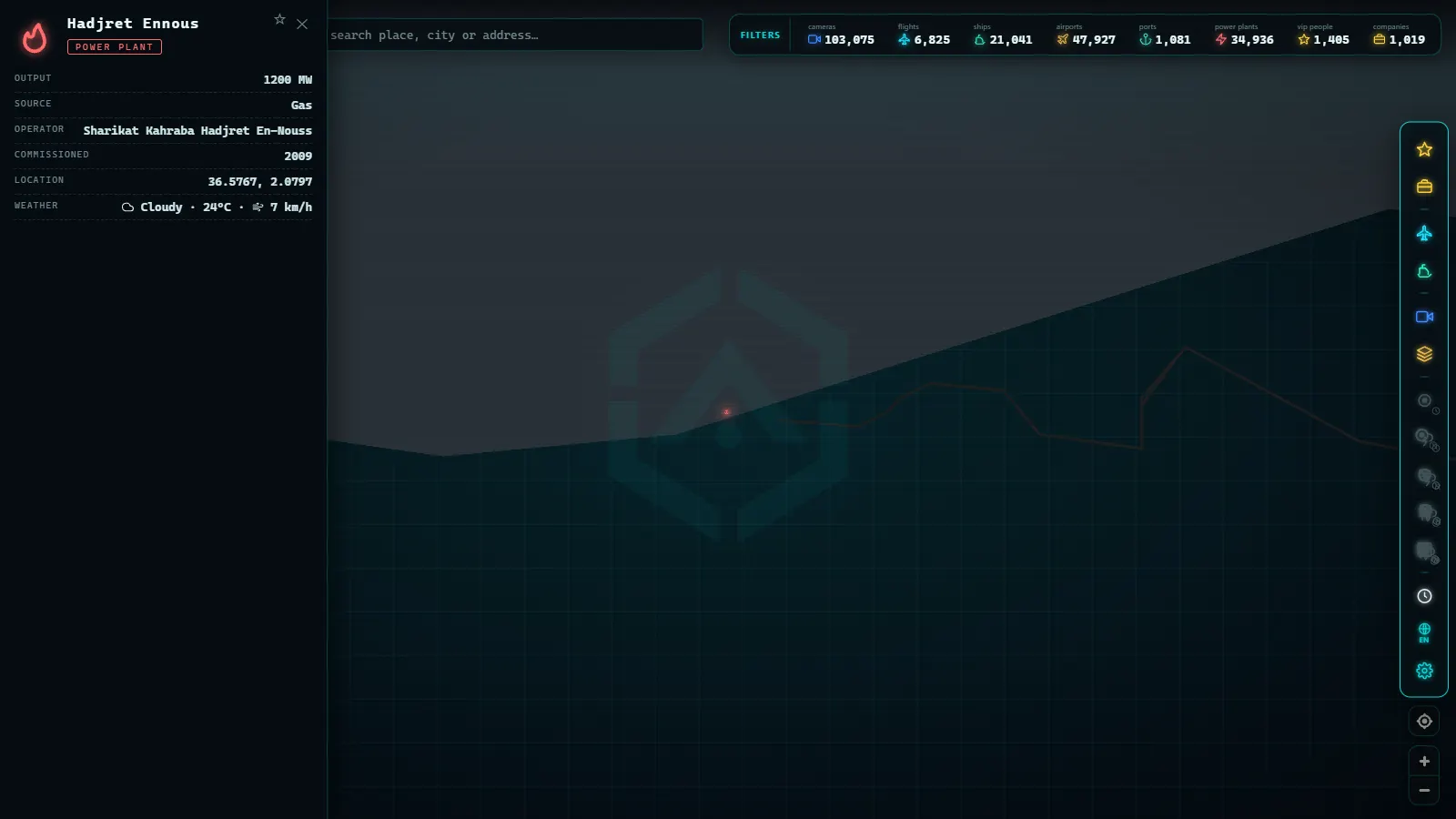
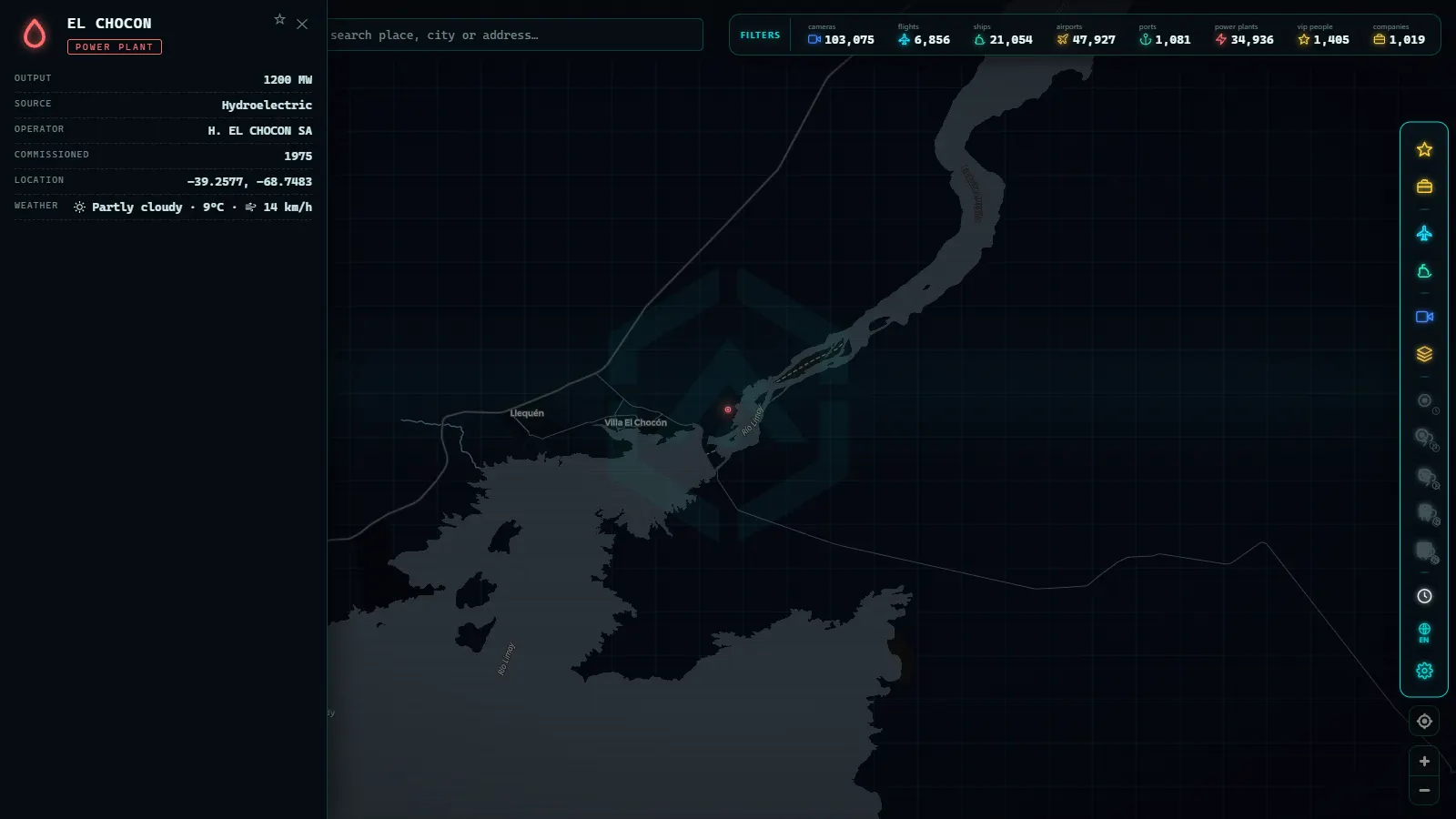
Recorded straight off the map, no sound.
How oversight works: national regulators and IAEA safeguards
Nuclear oversight operates in layers, and understanding them helps calibrate both confidence and criticism.
The first layer is national. Every country with a nuclear programme has an independent regulator that grants operating licences, conducts continuous inspections (in many cases with resident inspectors stationed at the plants themselves) and has the authority to demand upgrades or order shutdowns. In the United States this is the Nuclear Regulatory Commission (NRC); in the United Kingdom, the Office for Nuclear Regulation (ONR); in France, the Autorité de sûreté nucléaire (ASN); in Canada, the Canadian Nuclear Safety Commission (CNSC). These bodies operate independently of government ministries and publish their inspection findings publicly.
The second layer is international. The IAEA applies what are known as safeguards: a system of inspections and nuclear material accounting designed to verify that fissile material is used exclusively for peaceful purposes. The agency also produces safety standards that serve as a global reference and conducts peer-review missions at the request of member states.
The third layer is perhaps the least well known: peer reviews. International teams of experts (drawn from public bodies and from industry associations) visit plants in other countries, assess their practices, and issue recommendations. This culture of cross-scrutiny was significantly reinforced after the major accidents in nuclear history (Three Mile Island in 1979, Chernobyl in 1986, and Fukushima in 2011) each of which acted as a regulatory inflection point worldwide.
Transparency: more public data than you might expect
Against the perception of secrecy, the civil nuclear sector is reasonably transparent in the essentials. The IAEA maintains public registries of the world's reactors, with their operational status, type, and capacity. National regulators publish inspection reports, official meeting records, and summaries of reported events, and significant incidents are communicated through international scales designed to help the public gauge their severity, most notably the INES (International Nuclear Event Scale), which runs from 0 to 7.
Does that mean everything is public? No: physical security details (how a plant is protected against intrusion) remain confidential, as they do for any critical infrastructure. But the structural information (where plants are, what their capacity is, what their operational status is) is accessible to any citizen who wants to look it up. That openness is deliberate: public confidence in technology of this kind is built on verifiable data, not opacity.
An honest debate: the arguments for and against
Nuclear energy divides opinion, and a rigorous account must present both sides without caricature.
The case for rests primarily on nuclear being a source of firm, low-carbon generation: it produces electricity continuously, independent of wind or sunshine, and emits no CO₂ during operation. For its proponents this makes it a natural ally of both decarbonisation and grid stability, a point increasingly raised in policy debates in the US, UK, and across Europe as countries wrestle with meeting climate targets while maintaining reliable baseload power.
The case against rests on three classic arguments: high-level radioactive waste, which requires safe management over extraordinarily long timescales and for which permanent disposal solutions remain elusive in most countries; the cost and schedule overruns seen in several recent Western construction projects, from Flamanville in France to Vogtle Units 3 and 4 in Georgia, US; and risk perception, shaped by historical accidents, which conditions social acceptance even when comparative safety statistics are framed differently.
Neither position is irrational, and the final decision is as political as it is technical: each country weighs these factors against its own geography, economy, and history. The intellectually honest stance is to acknowledge that real trade-offs exist in both directions.
The life cycle: generations from groundbreaking to final closure
A nuclear power plant is a generational-scale project. Construction is lengthy: from final investment decision to grid connection, many years typically elapse, sometimes more than a decade for recent Western projects. Operation extends for decades (licences are granted for long initial periods and often renewed after exhaustive reviews) making many plants infrastructure that outlasts several generations of workers. Several US plants have applied for 80-year operating licences, and the UK's Sizewell B is being prepared for a long-term future.
And at the end comes decommissioning: a years-long process of removing spent fuel, decontaminating structures, and managing each material stream according to its radioactivity level, until the site is released. It is a phase as heavily regulated as operation, funded through provisions accumulated during the plant's working life. In the US, the NRC maintains strict requirements for decommissioning funds; in the UK, the Nuclear Decommissioning Authority (NDA) oversees a programme spanning many decades.
Seeing them on a map: from official registries to visual exploration
All of this information gains another dimension when projected onto a map. ARGOS ATLAS includes a world power plants layer showing major generation facilities geolocated (including nuclear plants) alongside global rankings by installed capacity. It is a direct way to verify with your own eyes the patterns described above: reactors aligned along rivers and coastlines, the nuclear density of the US and France contrasted with the vast construction activity in Asia, the patchwork of Europe where some countries extend ageing fleets while others have switched them off entirely. If you want the full context for that layer, the article on the world energy map and its power plants explains what it shows and where the data comes from.
Frequently asked questions
How many nuclear power plants are there in the world?
According to public IAEA records, roughly four hundred power reactors are currently operating across about thirty countries, with several dozen more under construction. The exact number changes with every connection or permanent shutdown, so it is best to think in terms of scale and consult official registries for an up-to-date figure. Remember that a single plant may house more than one reactor.
Which country has the most reactors?
The United States operates the largest fleet of power reactors in the world. France is a distinct but equally cited case: it does not lead in absolute numbers, but it is the country where nuclear power accounts for the greatest share of electricity in the grid. The most active construction programmes today are concentrated in Asia, particularly in China.
Who monitors nuclear power plants?
Oversight is multilayered. Every country with a nuclear programme has an independent national regulator (such as the NRC in the US, the ONR in the UK, or the ASN in France) which licences, continuously inspects, and can order shutdowns. The IAEA adds the international layer through its safeguards, which verify the peaceful use of nuclear material, and through safety standards that serve as a global benchmark. Peer reviews, in which international expert teams assess the practices of plants in other countries, complete the picture.
Can anyone find out where each nuclear plant is located?
Yes, and it is deliberately public information. The IAEA maintains open registries of the world's reactors and national regulators publish reports on their licensed facilities. What remains confidential is physical security detail, as with any critical infrastructure. Tools such as the ARGOS ATLAS map let you see power plants geolocated and compare them by capacity.
Conclusion
Nuclear power plants are less mysterious than their reputation suggests: we know approximately how many there are, where they are, who monitors them, and under what rules they operate, because much of that information is public by design. The debate about their future will remain open (and rightly so) but it is a debate better conducted with data than with myths. If you want to put geography to everything you have just read, open the map and explore the power plants layer: seeing reactors alongside their rivers and coastlines tells you more than any paragraph can.
Frequently asked questions
How many nuclear power plants are there in the world?
According to public IAEA records, roughly four hundred power reactors are in operation across about thirty countries. The precise figure changes constantly as new reactors come online and others are permanently shut down, so it is best to treat these as orders of magnitude and consult official registries for the latest count.
Which country has the most reactors?
The United States operates the largest fleet of nuclear reactors in the world. France, for its part, is the country where nuclear energy accounts for the greatest share of electricity generation. In Asia, several countries are running the most active construction programmes of the current era.
Who monitors nuclear power plants?
Oversight works in layers. Each country has an independent national regulator (such as the NRC in the US or the ONR in the UK) that licenses, inspects, and can order shutdowns. Internationally, the IAEA applies safeguards to verify peaceful use of nuclear material and coordinates peer reviews between nations.
Can anyone find out where each nuclear plant is located?
Yes. The location of nuclear power plants is publicly available information. The IAEA maintains open registries of reactors worldwide and national regulators publish inspection reports and facility data. Maps such as those in ARGOS ATLAS let you see them geolocated alongside all other major power plants.
- How Long Do Power Outages Last in Puerto Rico? Causes & Management
- China Power Plants Map: What ARGOS Atlas Actually Shows
- Russia Power Plants Map: 545 Sites, Live Grid View
- Power Plants in the United States: What the Map Actually Shows
- Power plants in Italy map: 4 plants in a 34,936-site layer
- Power Plants in Turkey Map: Dams, Coal, Gas and Nuclear Sites