Blog · Prediction markets
How to Deposit Money on Polymarket: USDC, Cards and Options

You have created your account, found a market you actually understand, and now comes the step that intimidates anyone arriving from the banking world: the Polymarket deposit. There is no IBAN or wire transfer in sight, instead, two words that may mean nothing to you yet: USDC and Polygon. The good news is that the concept is far simpler than it looks, and with three basic precautions the process becomes routine.
In this guide we explain in plain English what USDC is, what role the Polygon network plays, which options you have to convert your money and get it into your account, and the classic mistakes worth dodging. One important notice up front: the exact deposit methods change over time (new integrations arrive, providers come and go) so treat this guide as the conceptual map and the official site as the source for current details.
What USDC is, without the jargon
USDC is a digital dollar: a cryptocurrency designed to always be worth one US dollar, a so-called stablecoin. Unlike Bitcoin or Ethereum, it is not meant to go up or down: it is stable money in crypto form, backed by reserves and issued by a regulated company.
Why does Polymarket use it? Because it needs a stable unit of account: if you buy a share at $0.40 and the market takes a month to resolve, nobody wants the currency you traded in to have changed value along the way. Every share trades between 0 and 1 USDC, and each winning share pays exactly 1 USDC, the price-equals-probability mechanic we cover in what is Polymarket and how does it work depends on that stability.
For everyday purposes, think of USDC as dollars in a digital account: 100 USDC is $100 for all practical purposes inside the platform.
And where does Polygon fit in?
If USDC is the money, Polygon is the road it travels on. It is a blockchain network compatible with Ethereum but with very low transaction fees and fast confirmations, which is why Polymarket chose it. Every purchase, sale and deposit is recorded on that network, and that is where one of the platform's most striking properties comes from: positions are public and auditable; anyone can verify them on-chain.
The only thing you need to retain operationally: when you move USDC toward Polymarket, it must travel over the network the platform specifies (Polygon). The same USDC exists on several networks, and sending it over the wrong one is the most expensive mistake in this entire process. Always verify the network on the official site before transferring.

The usual deposit options
The concrete routes evolve, but they fall into two stable families:
- Buying inside the platform (on-ramps): at different points in time Polymarket has integrated providers that let you buy USDC directly with a card or other traditional payment methods. It is the most convenient route if you are not coming from crypto: you pay, and the USDC shows up in your account. In exchange, these providers usually apply their own fees and verification steps.
- Sending crypto you already own: if you use an exchange or your own wallet, you can buy USDC there and transfer it to your Polymarket deposit address over the correct network. This tends to be the preferred route for people already in crypto, and the one giving you the most control over costs.
Which one suits you? If it is your first time, the integrated route: fewer steps, less room for error. If you already have an exchange account, a direct USDC transfer usually wins. Either way, the available methods, their minimums and their fees have changed over time and will change again: the current list always lives on the official site, which you can check when you open Polymarket.
Recorded straight off the map, no sound.
The mistakes that cost real money (and how to dodge them)
The deposit blacklist, ordered by frequency:
- Wrong network. The classic. USDC sent over a network the platform does not expect can be lost or require complicated recovery. Check the network twice.
- Wrong token. Send USDC, not another stablecoin or a "similar" cryptocurrency. The deposit address expects one specific asset.
- Everything at once, no test. Your first transfer should be small: confirm it arrives, learn the timing and the fees, and only then move the rest. The cost of the test is trivial compared to the headache it prevents.
- Half-copied addresses. Copy and paste the full address and double-check the first and last characters. Never type it by hand.
- Depositing more than you should. A deposit is not a goal, it is ammunition. Remember the number we repeat across this blog: 2026 on-chain analysis suggests only about 7-8% of wallets are profitable. Deposit your acceptable-loss budget, not one dollar more.
Funds are in: now what?
With USDC in your account, the interesting part begins: deciding where and when to trade. If you have not walked through it yet, the full first-steps process (picking a market, placing a first order, using limit orders) is in our step-by-step guide to getting started on Polymarket.
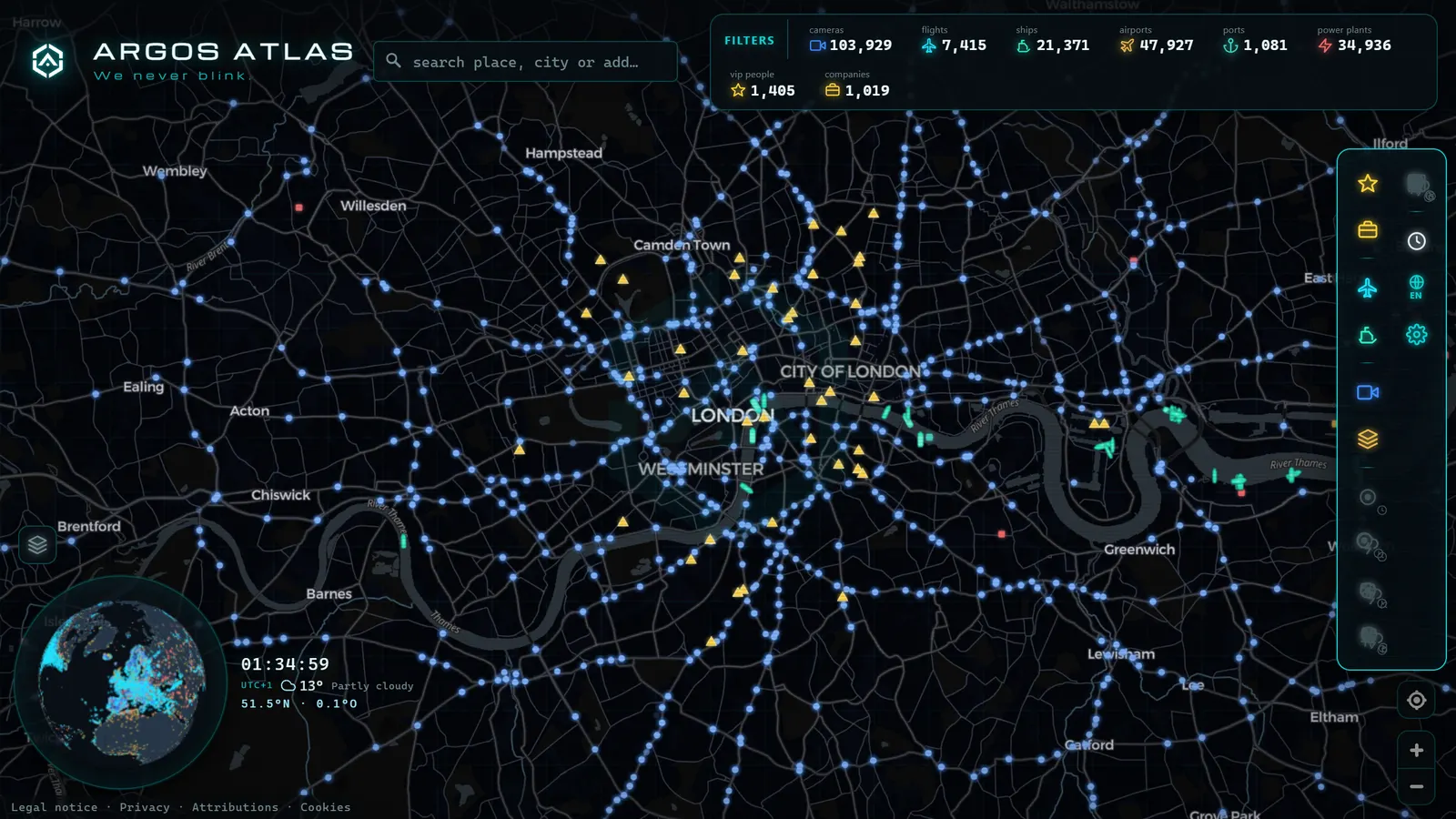
And to decide with context instead of flying blind, look at markets on the ground: the geolocated predictions of Argos Atlas show Polymarket markets placed at the exact point on the map where each event is happening (the summit city, the country holding elections, the coastline in a hurricane's path) next to the map's real-time intelligence layers. Each market also carries the ARGOS signal, which compares the market price with an independent estimate of the event: an automatic second opinion before you commit your freshly arrived USDC.
The day you want to make the reverse trip and take your funds out, that process has its own steps and its own traps: we walk through them in how to withdraw money from Polymarket. Read it before you need it.
This content is informational and does not constitute financial advice or an investment recommendation.
Frequently asked questions
Can I deposit dollars or euros directly on Polymarket?
Not as bank money: the platform runs on USDC, a dollar-pegged stablecoin. The usual route is converting your money into USDC along the way, either on an exchange or through the purchase methods the platform integrates. The exact methods change; check the official site.
Which network should I use to send USDC?
Polymarket runs on the Polygon network, so your USDC must arrive through it. Sending over a different network than the one the platform expects is the most expensive mistake in this whole process, always verify the network shown on the official site before transferring.
Is there a minimum deposit?
The specific conditions (minimums, methods and fees) have changed over time, so check the official page. For your own safety the rule is different anyway: make your first transfer small, treat it as a test, and only move the rest once it arrives.
Is it safe to keep money on Polymarket?
Positions are public and auditable because everything runs on-chain, which is unusually transparent. But it is not a bank: there is no deposit insurance, software can fail, and your positions can go to zero. Only deposit what you can afford to lose.
- Is Polymarket Legal? Availability and Regulation by Country
- Is Polymarket Safe? Security, Custody and On-Chain Transparency
- Polymarket Fees: What Trading Really Costs
- How to Use Polymarket Without Knowing Anything About Crypto
- Prediction Markets Glossary: 25 Terms You Need to Know
- Who Decides the Outcome: How Polymarket Markets Resolve