Blog · Prediction markets
How to Get Started on Polymarket, Step by Step (2026 Guide)

If you already know what a prediction market is and want to move from theory to practice, this guide is the bridge. We will walk the full path of the Polymarket sign up and get you to your first trade with actual judgment: registration, funding, market selection and your first order. No hype, and one honest warning up front: most people lose money at this, 2026 on-chain data suggests only about 7-8% of wallets are profitable. Starting well does not guarantee you will win, but starting badly practically guarantees you won't.
One note before we begin: the exact interface details (buttons, screens, specific methods) change with platform updates. What we give you here is the process and the criteria, which do not expire; for the fine detail of each screen, the official site is always the reference. And if the whole system of shares and probabilities is still fuzzy, start with what is Polymarket and how does it work.
Step 0: check your jurisdiction and set your budget
Before creating anything, two pieces of homework almost everyone skips:
- Legal availability: it varies by jurisdiction and has changed over time. Review Polymarket's official terms and your country's rules. This step is not optional.
- Loss budget: decide how much money you could lose entirely without it affecting your life. That figure (and no other) is your playing capital. Write it down before you look at your first market, because afterwards you will already be biased.
With those two things settled, the rest is mechanics.
Step 1: create the account
Registration is the easy part: you can create a Polymarket account with an email address, or by connecting a crypto wallet if you already have one. Under the hood the platform generates a wallet on the Polygon network for you; if you sign up by email there is nothing to set up on your own.
Three basic hygiene tips that apply to any platform holding money:
- Use a dedicated email, or at minimum one with two-factor authentication enabled.
- Store credentials and any recovery phrase outside the browser.
- Distrust links arriving via social media or messaging: always type the official address yourself.
Step 2: fund the account
Polymarket trades in USDC, a dollar-pegged stablecoin, on the Polygon network. To trade, you need to turn your money into USDC and get it into your account. The usual routes: sending USDC from an exchange or wallet you already use, or the purchase methods the platform integrates at any given time (cards and other on-ramps). The exact methods change over time, so check the official site before moving money.
This step has enough depth (networks, expensive mistakes, test amounts) to deserve its own guide: you will find it in how to deposit money on Polymarket. The compressed rule: make the first transfer small, confirm it arrives, and only then move the rest.
Recorded straight off the map, no sound.
Step 3: choose your first market with criteria
This is where learners and donors part ways. Do not pick the flashiest front-page market: pick the best market to learn on. Recommended filters:
- A topic you already follow: if you read sports coverage daily, the 2026 World Cup will give you better intuition than the politics of a country you do not know.
- High volume: liquid markets have sharper prices and let you get in and out without surprises.
- Near-term resolution: a market resolving in weeks gives you the full cycle (buy, price movement, resolution) quickly; a two-year market does not.
- Rules you understand: read the resolution rules in full. If after one pass you cannot say exactly what counts as YES, find another market.
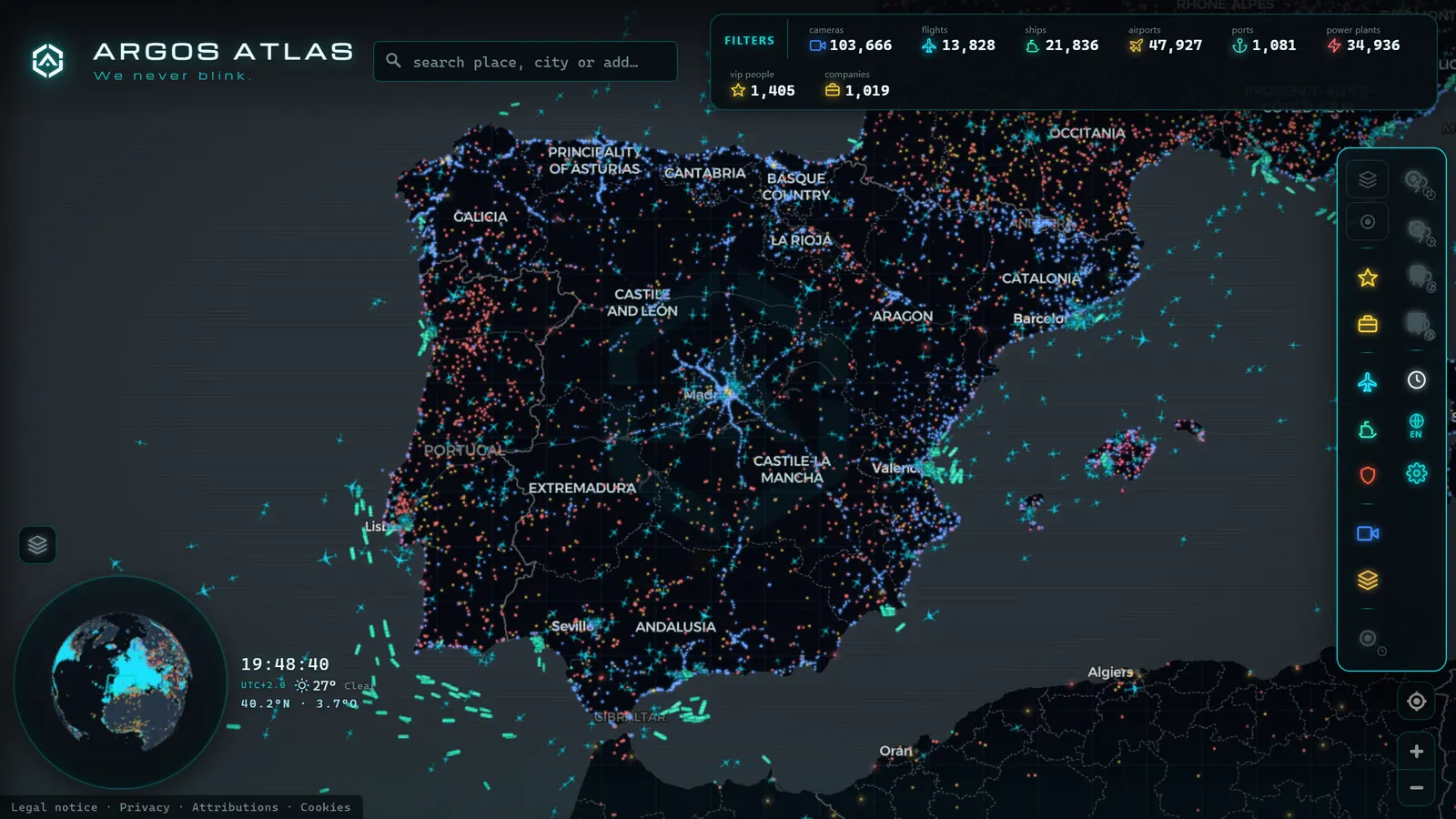
A context trick: on the geolocated predictions of Argos Atlas you can see Polymarket markets plotted at the exact spot on the globe where each event is unfolding, next to real-time layers of flights, ships and events; each market carries the ARGOS signal, which compares the market price with an independent estimate. For picking a first market, seeing the event in context beats any trending list.

Step 4: your first order (small, limited and documented)
Time to trade, and these are the three decisions that matter:
- Minimum size: your first order is tuition, not investment. Make it as small as the platform allows.
- Consider a limit order: instead of buying at whatever the current price is (a market order), you can set your price and wait. Limit orders usually pay lower fees than market orders, fees have changed over time, so check the official page.
- Write down your reasoning: before buying, note what probability you give the event and why. When the market resolves, compare. That habit, sustained, is the best teacher you will ever have.
Remember you are not locked in until resolution: you can sell your shares at any time at the market price, either to lock in a gain or to cut a loss.
First-day mistakes (so they are not yours)
- Deploying your whole budget in week one. The market will still be there next month; your capital might not.
- Buying "locks" at $0.95 thinking it is free money: you win pennies when right and lose nearly everything when wrong.
- Skipping the resolution rules and discovering the fine print when it is too late.
- Trading headlines without checking the context or the market's liquidity.
- Mistaking a streak for skill. With few data points, luck rules; judge your method over months, not days.
Getting started on Polymarket is easy; staying profitable is the hard part. Go slow, trade small, and treat your first months as paid training.
This content is informational and does not constitute financial advice or an investment recommendation.
Frequently asked questions
Do I need to know crypto to get started?
You do not need to be an expert, but you should understand the basics: Polymarket runs on USDC (a dollar-pegged stablecoin) over the Polygon network. The concepts in this guide and in our deposit guide are enough to take your first steps safely.
How much money do I need for my first trade?
Very little: each share trades between $0 and $1, so you can practice with minimal amounts. When you are learning, the smaller the stake, the cheaper the lesson.
Is Polymarket available in my country?
Availability varies by jurisdiction and has changed over time. Before signing up, review the platform's official terms and your local rules, that is the real first step of this guide.
What makes a good first market?
A topic you already follow, with high volume, a resolution date in the near future and resolution rules you fully understand after one read. Avoid exotic or illiquid markets until the mechanics feel natural.
- Is Polymarket Safe? Security, Custody and On-Chain Transparency
- Polymarket Fees: What Trading Really Costs
- How to Withdraw Your Polymarket Winnings
- How to Use Polymarket Without Knowing Anything About Crypto
- Prediction Markets Glossary: 25 Terms You Need to Know
- Who Decides the Outcome: How Polymarket Markets Resolve