Blog · Wealth, jets & yachts
How Celebrity Private Jets Are Tracked, and Why It Matters
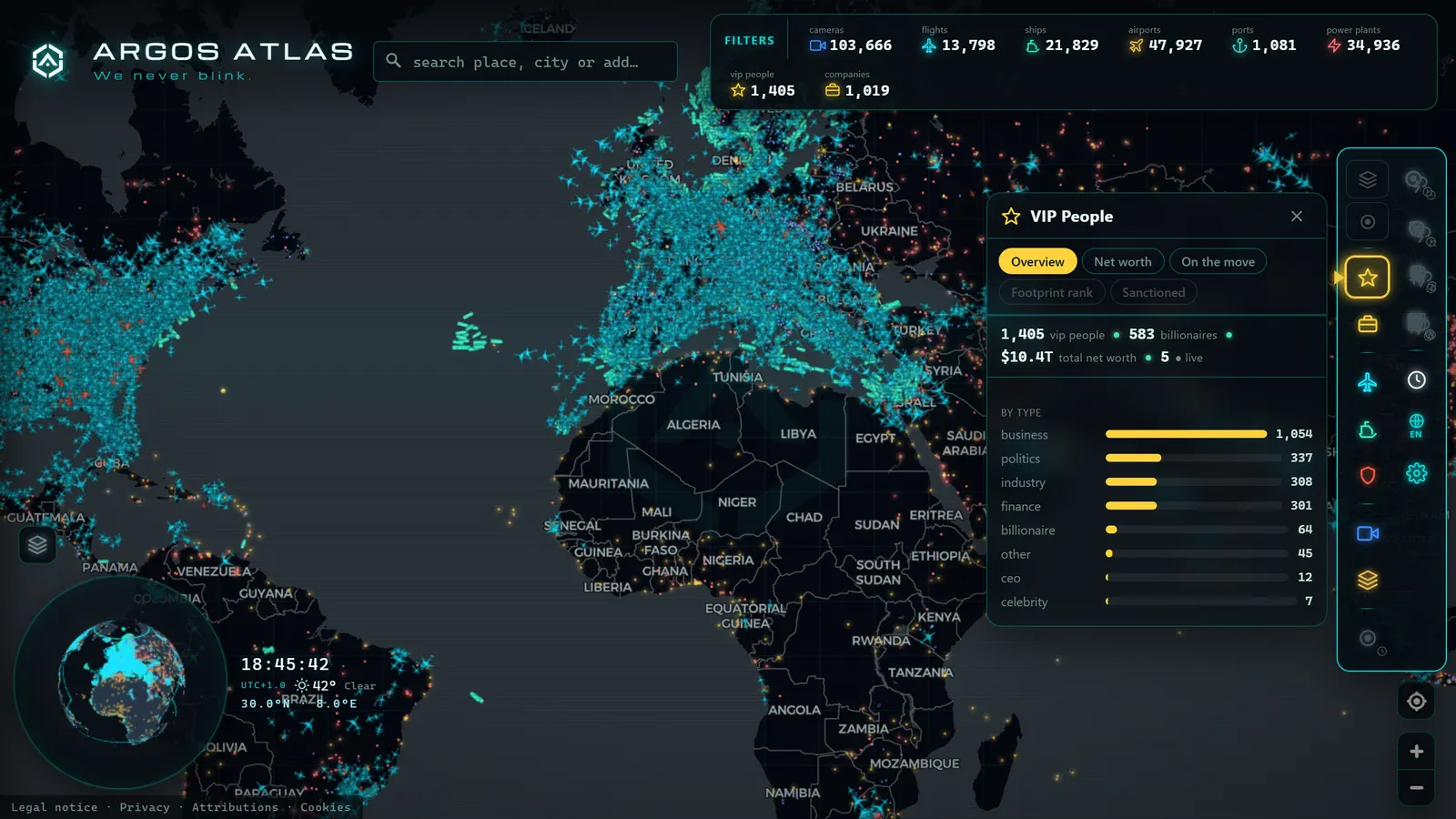
Every time a major celebrity's jet takes off, someone is watching. Celebrity private jets have become among the most observed objects in the sky: automated accounts publish each takeoff and landing, news organizations worldwide cite the data, and the subjects of that scrutiny sometimes respond, occasionally through lawyers. What makes this remarkable is that no hacking is involved. Everything begins with a signal the aircraft itself broadcasts openly, public registries, and patient investigative work. This article explains how jet tracking works, why it generates such fierce debate, and where you can watch it for yourself.
The phenomenon: accounts that publish every departure
Tracking the aircraft of the ultra-wealthy reached global headlines through one particularly vivid case: Jack Sweeney, a university student in the United States, built automated accounts that published Elon Musk's jet movements on social media, every takeoff, every landing, every stopover. Musk reportedly offered Sweeney money to shut the account down; the dispute ended in account suspensions and a worldwide debate about where technical data ends and personal privacy begins.
The pattern repeated with Taylor Swift: tracking accounts published her jet's flights, her representatives sent legal demands, and the episode reopened the question of whether publishing an aircraft's position is equivalent to publishing a person's location. Both cases are extensively documented in the international press and marked a turning point in public conversation about jet tracking.
What matters beyond the celebrity angle is what these cases revealed: anyone with basic knowledge and access to open data can reconstruct the aerial movements of the world's wealthiest individuals. Whether that constitutes transparency or intrusion depends on who you ask.
How it works technically: the signal is open
The foundation is ADS-B (Automatic Dependent Surveillance-Broadcast) a system by which an aircraft continuously broadcasts its GPS position, altitude, speed, and a unique identifier over radio, several times per second, without encryption. The signal travels on 1090 MHz, and anyone with an inexpensive receiver can capture it. For a deeper explanation of the technology, see what ADS-B is and how it enables flight tracking.
Enthusiasts around the world operate receivers at home and share what they capture with collaborative networks. The result is a near-global picture of air traffic built from signals the aircraft themselves voluntarily emit, voluntarily in the sense that the system exists for safety: it lets aircraft and controllers see each other.
The challenge is attribution, not reception
Here is the key point that many observers miss: receiving the signal is the easy part; knowing whose aircraft it is, the hard part. ADS-B identifies an aircraft, not a passenger. Linking a jet to a specific public figure requires a different kind of work entirely:
- Public aircraft registries. Many countries publish who holds the registered title to each registration mark. This is the starting point of any investigation.
- Shell companies. Jets are rarely registered in a celebrity's own name. They typically appear under holding companies, trusts, or aviation management firms, sometimes chained across multiple jurisdictions.
- Document research. Press reports, airport photographs, cross-checks between a person's public schedule and aircraft movements, court filings, and corporate records. Reliably attributing a jet is archival and methodological work, not radar work.
That is why serious tracking accounts maintain their own databases mapping registrations to probable owners, and why they occasionally get it wrong: corporate structures change hands without public announcement.

Why it generates so much debate
The tension is direct: on one side, personal privacy; on the other, technical data that a machine broadcasts openly as a safety requirement. Advocates of tracking argue that no one's location is being published (only an aircraft's) and that this information is public by design. Critics respond that when a jet is used by a single person, the distinction is theoretical: knowing where the aircraft lands is knowing where its owner is.
A second angle has gained traction: climate. Tracking accounts increasingly publish not just routes but estimated emissions for each flight, highlighting especially short hops, journeys of a few minutes that could easily be made by car. That exposure has turned the private jet into a symbol of the climate inequality debate, which we explore in depth in the carbon footprint of private jets.
The data is technical and public; the interpretation is social and political. That is where the debate lives.
The security argument also carries weight: highly exposed individuals contend that real-time publication facilitates stalking. This is a serious claim that deserves genuine consideration, and it explains much of the concealment strategy described below.
Recorded straight off the map, no sound.
The concealment attempts, and why they work only partly
Several mechanisms exist to reduce the visibility of a private aircraft. In a number of countries, operators can request that their registration not be distributed through official data channels, which in practice causes commercial aggregators that feed from those sources to stop displaying the flight or to display it anonymously. Other approaches include using temporary or opaque identifiers that make it harder to link the signal to the real registration, or changing the aircraft's registration altogether and restructuring the ownership entity.
Do they work? Partially. These programs bind only those who have agreed to respect them, but they do not switch off the signal: the transponder keeps transmitting because flight safety requires it. Independent receiver networks, fed by enthusiasts who capture the radio signal directly from the air, are not party to those agreements and continue seeing the aircraft. Attribution may take longer when the identifier is opaque, but the aircraft appears on the map. This is also why some planes show up in certain viewers but not others, a topic covered in why some aircraft don't appear on tracking radar.
The practical conclusion is that complete concealment is nearly impossible as long as the aircraft operates within normal airspace rules. What concealment does achieve is friction: making tracking more labor-intensive and causing the general public to lose the trail, even if persistent investigators do not.
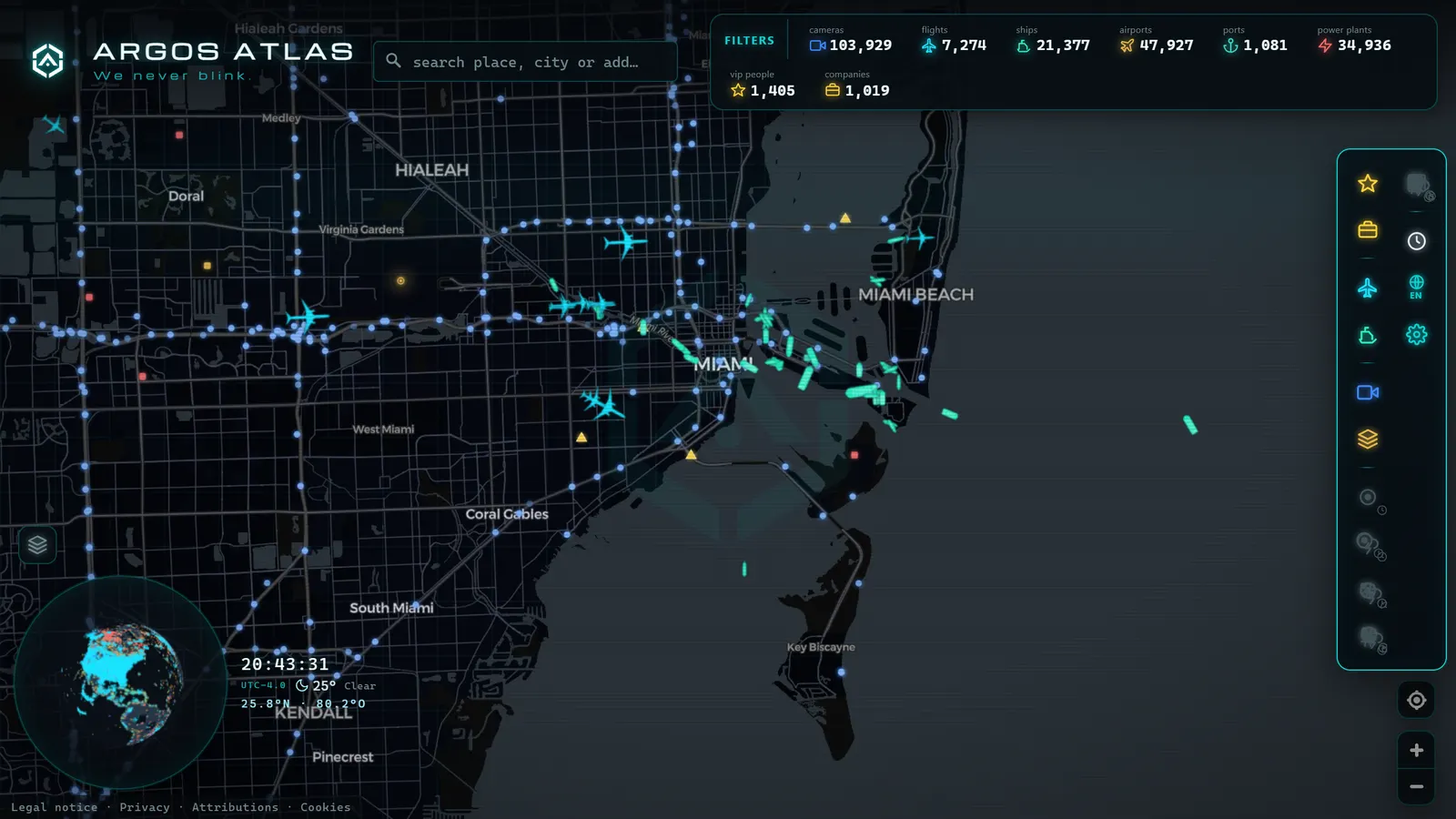
VIP jet tracking in Argos Atlas
If you want to see this phenomenon directly, you do not need to set up a receiver. Argos Atlas includes a layer of VIP private jets in flight right now, shown on the same worldwide map that displays commercial and military aviation. The distinguishing feature is context: each person in the VIP ranking is connected to their net worth, to their companies' headquarters on the map, and (when their jet is airborne) to the live flight position.
That connection transforms an isolated data point (an aircraft crossing the Atlantic) into a readable story: who the person is, which companies they run, what their fortune amounts to according to public rankings, and where they are flying at this moment. It is the difference between watching dots and understanding the map.
The ethical reading: public interest without harassment
It is worth closing with the uncomfortable question: is this right? The reasonable answer distinguishes between purposes. Following the aerial movements of public figures carries a defensible public interest: emissions, resource use, consistency between stated values and actual behavior, and corporate connections. This is the kind of scrutiny that journalism and open-source investigation have always practised, now with better data.
Something entirely different is using that data to show up where someone lands, harass them, or put them at risk. No public interest argument covers that, and most legal systems treat it as what it is: stalking. The tool is neutral; its use is not. If you want to understand how that line is drawn in investigative practice, we develop the question in OSINT, legality, and ethics in open sources.
The guiding principle is simple: public data for public questions. Who pollutes, who decides, who moves and why. Not to pursue anyone.
Frequently asked questions
Is it legal to track a celebrity's jet?
Generally, yes. An aircraft's position is broadcast by the plane itself over open, unencrypted radio as part of the safety infrastructure of air traffic. Receiving that signal and publishing it is legal in most countries, and tracking platforms have defended this position when put under pressure. What can carry legal consequences is not the data itself, but its use: employing that information to stalk, intimidate, or endanger someone can constitute a criminal offense regardless of whether the target is famous.
How do trackers know which plane belongs to which celebrity?
By cross-referencing sources. The ADS-B signal identifies the aircraft, and the registration is then checked against public aircraft registries. The difficulty is that most jets are registered to shell companies or aviation management firms, so final attribution requires document research: corporate filings, press reports, airport photographs, and cross-checks against the person's public schedule. Serious tracking accounts maintain their own attribution databases, and even those sometimes get it wrong when an aircraft changes hands without announcement.
Can celebrities hide their flights?
Only partially. Programs in several countries allow operators to request that a registration not be distributed through official data channels, removing the flight from many commercial aggregators. Opaque identifiers and registration changes add further friction. But the transponder keeps broadcasting because flight safety requires it, and independent receiver networks capture that signal directly from the air. The typical outcome is that the aircraft becomes harder to attribute, but does not disappear from the observable sky.
Where can I watch private jets live?
Any ADS-B-based flight viewer will show private jets mixed in with general traffic. Argos Atlas goes a step further: it offers a dedicated layer of VIP private jets currently in flight, linked to wealth rankings and to the companies those individuals control, so you can move from the aircraft to the person to their corporate footprint in a few clicks.
Conclusion
Tracking celebrity private jets involves no magic or espionage: it is the combination of a signal aircraft broadcast openly, public registries, and patient research. That is why it is so difficult to suppress, and why it has ignited a debate that weaves together privacy, climate, and power. You can form your own view by looking at the data directly: open the map and observe which VIP jets are in the air right now, who is behind each one, and what the sky reveals when no one ever stops watching.
Frequently asked questions
Is it legal to track a celebrity's jet?
Generally, yes. An aircraft's position is broadcast by the plane itself over open, unencrypted radio, and receiving and publishing that signal is legal in most countries. What can carry legal consequences is using that data to stalk or endanger someone, not the data itself.
How do trackers know which plane belongs to which celebrity?
By cross-referencing the aircraft's registration against public aircraft registries, corporate documents, and investigative journalism. Many jets are registered to shell companies, so reliable attribution requires document research, not just reading the radio signal.
Can celebrities hide their flights?
Only partially. Programs exist that ask commercial data aggregators not to display certain registrations, and tricks like opaque identifiers or registration changes can slow attribution. But independent receiver networks still capture the raw signal, the aircraft keeps transmitting because it has to, for flight safety.
Where can I watch private jets live?
On any ADS-B-based flight viewer. Argos Atlas includes a dedicated layer showing VIP private jets in flight right now, linked to each person's net worth and their companies' locations on the same map.