Blog · Prediction markets
The Types of Markets on Polymarket (and Which Move the Most Money)

Opening Polymarket for the first time feels like walking into a newsstand where every headline has a price tag. Who wins the election? Will there be a ceasefire this quarter? Who lifts the World Cup? All Polymarket markets share the same mechanics (shares trading between $0 and $1, where the price is the event's implied probability and a winning share pays exactly $1) but the markets themselves are far from identical: format, liquidity, tempo and the kind of information you need to trade them all vary.
This guide walks through the major categories, explains the difference between binary and multi-outcome markets, and tells you where the real money concentrates.
Binary and multi-outcome: the two formats behind everything
Before topics, structure, because there are only two formats:
- Binary market: one question, two answers. "Will X happen by this date?" You buy YES or you buy NO, and the two prices always add up to roughly $1. It's the simplest format and the best place to start.
- Multi-outcome market: one question, several candidates, who wins an election, which team wins a tournament. Each candidate has its own YES/NO pair, and all the probabilities have to fit together, which opens up specific strategies we cover in multi-outcome markets and negative risk.
In both formats, the fine print rules. Every market resolves according to written rules published in advance and the UMA oracle, with a dispute window. Before buying a single share, read how Polymarket markets resolve, half of all beginner heartbreak comes from not reading the resolution criteria.
Politics and elections: the historical giant
If Polymarket is famous for one thing, it's politics. Presidential races, legislative elections, primaries, nominations, confidence votes: election cycles across the world produce the platform's most liquid and most-watched markets, and major races have historically generated its biggest volumes. These are long markets (weeks or months), sensitive to polls and news, with huge participation, which usually means fairly efficient prices. Finding value here requires knowing something the market hasn't digested yet.
Geopolitics and world events: where the map matters
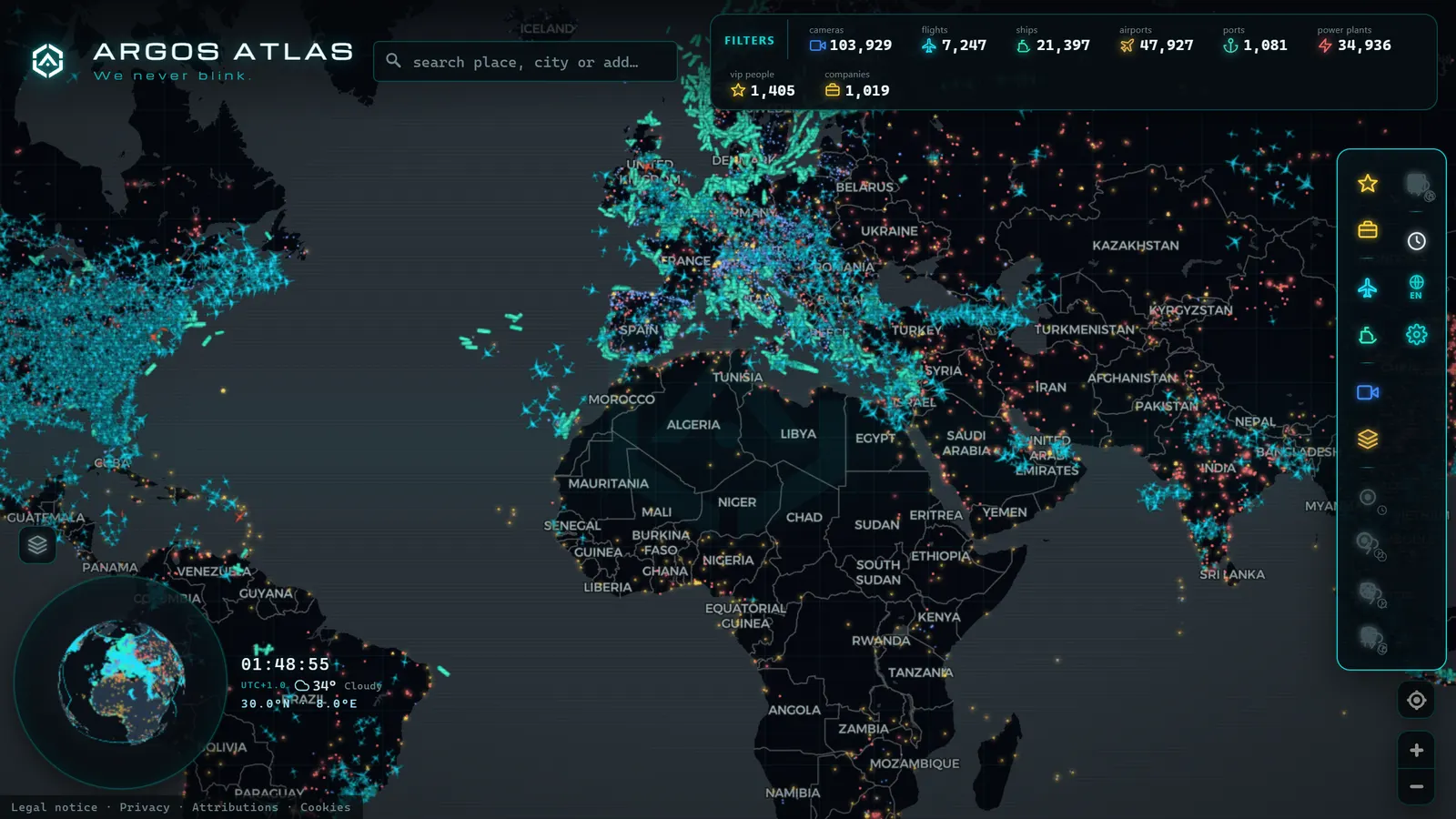
The second big family is world events: conflicts, ceasefires, summits, sanctions, international agreements. Fascinating and difficult in equal measure, because information arrives fragmented, multilingual and noisy. Here the edge doesn't come from a statistical model but from context, understanding what's happening on the ground before the price reflects it, an approach we develop in prediction markets and geopolitics.
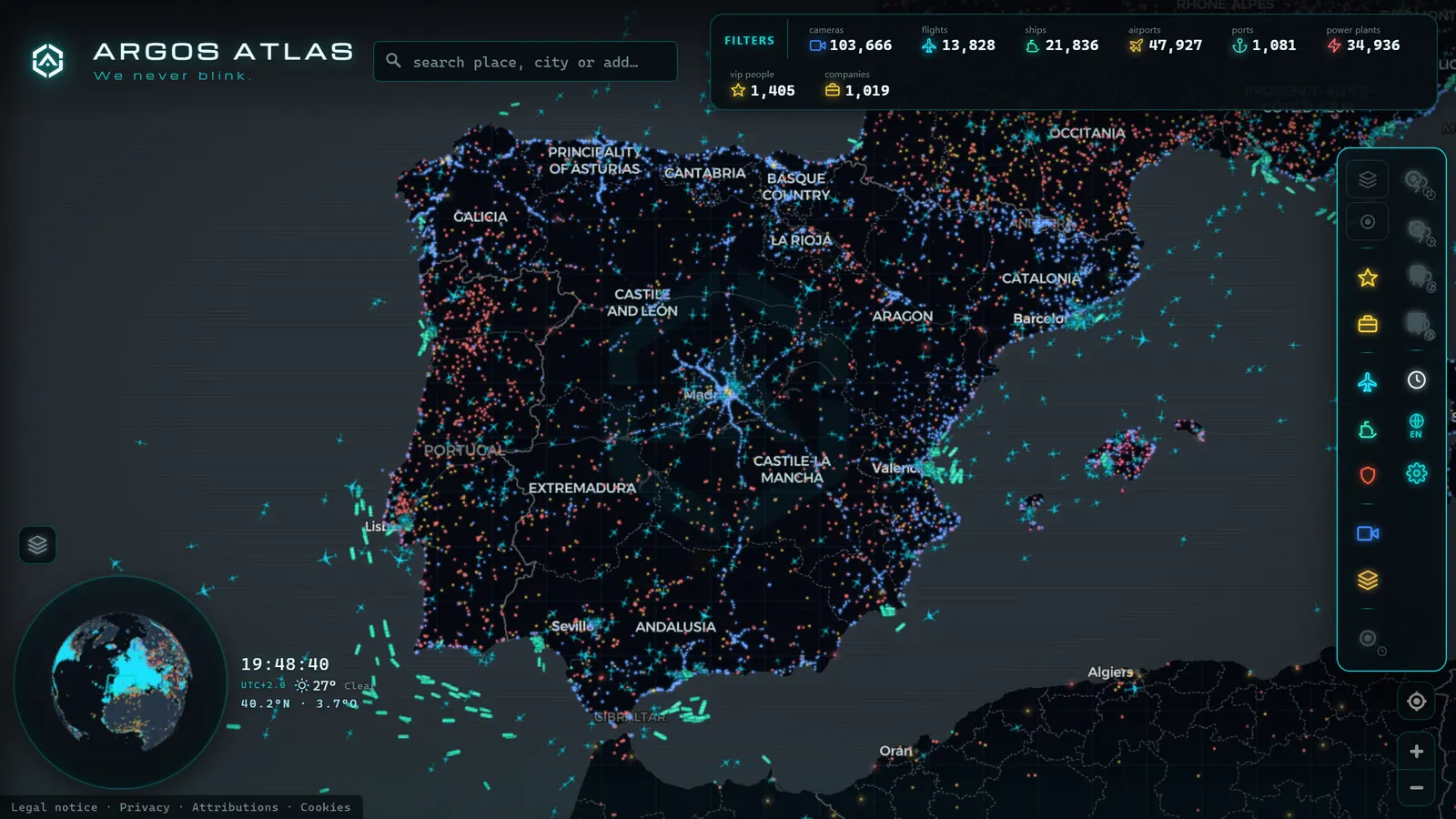
It's also the category where geolocation shines brightest: on the Argos Atlas predictions map, each Polymarket market is pinned to the exact location of the event (the border, the capital, the facility) alongside the ARGOS signal, which compares the market's odds against an independent estimate and flags prices that look out of step with the observable context.
Recorded straight off the map, no sound.
Sports: the volume of the calendar
Sport brings something no other category has: an endless calendar of events with fast, objective resolution. Matches, series, tournaments, markets that open and close within days or hours, ideal for anyone who wants to trade frequently. And when a planetary event arrives, the scale explodes: the 2026 World Cup, being decided this very summer across the United States, Mexico and Canada, is moving hundreds of millions of dollars in volume between the championship market and individual match markets. We give it a full breakdown in the 2026 World Cup in prediction markets.
Crypto, the economy and the Fed: the steady flow
The financial categories are the platform's metronome: crypto prices, interest-rate decisions, macro data. Because these are recurring, dated events (a Fed meeting, a monthly close) they generate regular markets all year long and attract a more quantitative crowd. A warning: a financial topic doesn't make the market more predictable; it makes the competition more professional.
Culture, entertainment and everything else
The long tail: film awards, releases, music, science, space launches, viral phenomena. These are generally the lowest-volume markets, and that cuts both ways: there are more pricing inefficiencies (fewer eyes watching) but also less liquidity to get in and out at a fair price. As a rule, in small markets limit orders are not optional: they usually pay lower fees than market orders and protect you from wide spreads. And in these niches the resolution rules deserve double the scrutiny: the more unusual the question, the more the exact wording ends up deciding who gets paid.
Which markets move the most money (and what that means for you)
The volume podium is dominated by electoral politics and, depending on the calendar, major sporting events (with the 2026 World Cup as the extreme case) followed by high-stakes geopolitics and the steady flow of crypto and macro. What does that mean for you? Two honest things. First: more volume means more efficient prices, so the flagship markets are harder to beat but cheaper to trade. Second: 2026 on-chain analysis estimates that only about 7-8% of wallets are profitable, across every category. Picking terrain where your genuine knowledge beats the average participant's matters far more than chasing whichever market is trending. If, map of the territory in hand, you want to explore it from the inside, you can open a Polymarket account and start by just watching, that part is free.
This content is informational and does not constitute financial advice or an investment recommendation.
Frequently asked questions
What's the difference between a binary and a multi-outcome market?
A binary market has two outcomes (YES or NO) while a multi-outcome market has several candidates, each with its own pair of shares. In both cases the share price ($0-$1) is its implied probability and a winning share pays exactly $1. Multi-outcome markets demand extra attention because all candidates' probabilities have to stay consistent with each other.
Which categories move the most money on Polymarket?
Historically, politics and elections have generated the largest volumes, with geopolitics and sports trading places depending on the calendar. In 2026, the World Cup alone is moving hundreds of millions of dollars. Crypto and the economy provide steady flow all year round.
Who decides how a market resolves?
Nobody, discretionally: every market has resolution rules written in advance and resolves through the UMA oracle, with a dispute window in case the outcome is contested. Reading those rules before trading is mandatory, the exact wording matters.
Should beginners start with big or small markets?
Big ones. High-volume markets have more liquidity, tighter spreads and more efficient prices, which makes your learning mistakes cheaper. Small markets can be priced less efficiently, but they also carry more operational risk and fewer counterparties when you want out.
- Sports Betting vs Prediction Trading: Two Different Mindsets
- Taxes and Prediction Markets: What You Should Keep in Mind
- What Is USDC and Why Polymarket Runs on It
- Crypto Wallets for Polymarket: What You Need to Know
- Best Prediction Markets in the US: 2026 Guide
- Will the Fed Hold Rates in July 2026? Prediction Markets Weigh In