Blog · Prediction markets
The 2026 World Cup in Prediction Markets: Hundreds of Millions at Stake

While the world watches to see who lifts the trophy across the United States, Mexico and Canada, another competition is running that never makes the broadcast: the competition between prices. The 2026 World Cup has become one of the most heavily traded events in prediction-market history, with hundreds of millions of dollars in volume spread across the championship market and individual match markets. World Cup 2026 odds on platforms like Polymarket aren't just a way to have a stake in the game, they're a real-time thermometer of what the world believes is about to happen.
This is not a predictions article, the tournament is being decided this very summer, and any result we printed here would expire within days. It's about something more durable: how a World Cup actually trades, which markets exist, how favorites move, and what anyone can learn just by watching the process.
Why a World Cup is the perfect event for these markets
Few events combine so many ideal ingredients. There's global interest (massive liquidity), objective resolution (the scoreboard admits no dispute), a dense calendar (new markets every day for weeks) and a firehose of public information: lineups, injuries, statistics. On Polymarket, everything trades with the standard mechanics: shares between $0 and $1 whose price is the implied probability, where every winning share pays exactly $1 and YES plus NO adds up to roughly $1. If probability-as-price still feels foreign, how odds work in prediction markets covers the foundations.
The result is a unique laboratory: thousands of participants putting real money on 48 national teams for over a month, with prices repricing match by match.
The outright: buying and selling teams for weeks
The flagship market is the outright: who wins the World Cup? It's a multi-outcome market with one position per team, and it behaves like a miniature stock portfolio: every team has a price, all the probabilities have to stay coherent with each other, and every result in the tournament redistributes money among the survivors.
What makes the outright special is its time dimension. Someone who bought a team's shares at outsider prices before the tournament and watches it reach the semifinals faces a decision no sportsbook slip allows: sell before resolution and lock in the gain, sell half and let the rest ride, or hold to the final. For many traders, managing that exit is where the tournament is won or lost.
Match markets: the tournament's daily grind
Around the outright orbits a swarm of short-term markets: who wins each match, who advances from each knockout tie, and variations on what happens on the pitch. They resolve within hours, concentrate enormous volume on matchdays, and are the natural entry point for sports bettors arriving from the sportsbook world, if that's you, sports betting vs prediction trading will save you several mindset stumbles.
One practical note for these fast markets: limit orders usually pay lower fees than market orders and stop you from entering at a worse price than the one on your screen, no small thing in markets that move with every goal.
Recorded straight off the map, no sound.
How favorites trade: the mechanics of repricing
Watching how World Cup favorites are priced is a crash course in markets. The same patterns repeat tournament after tournament:
- Favorites pay a popularity toll: recreational money flows toward the big teams, which can inflate their price above their true probability.
- Every match reshuffles the whole board: a convincing win by the favorite barely moves its price (it was already priced in); a stumble craters it and revalues everyone else.
- Overreaction is real: a poor first half, an injury rumor or a nervy penalty shootout can move prices further than the information justifies, and that's where the patient trader looks for an opening.
- Liquidity concentrates: the headline markets have deep books; the secondary ones carry wider spreads that demand extra care.
None of this tells you who will win. It tells you something more useful: where to look when price and reality drift apart. The traders who come out of a World Cup ahead are rarely the ones who called the champion, they're the ones who recognized, a handful of times, that the market's emotion had outrun the evidence.
Following the tournament on the map (with a sanity-check signal)
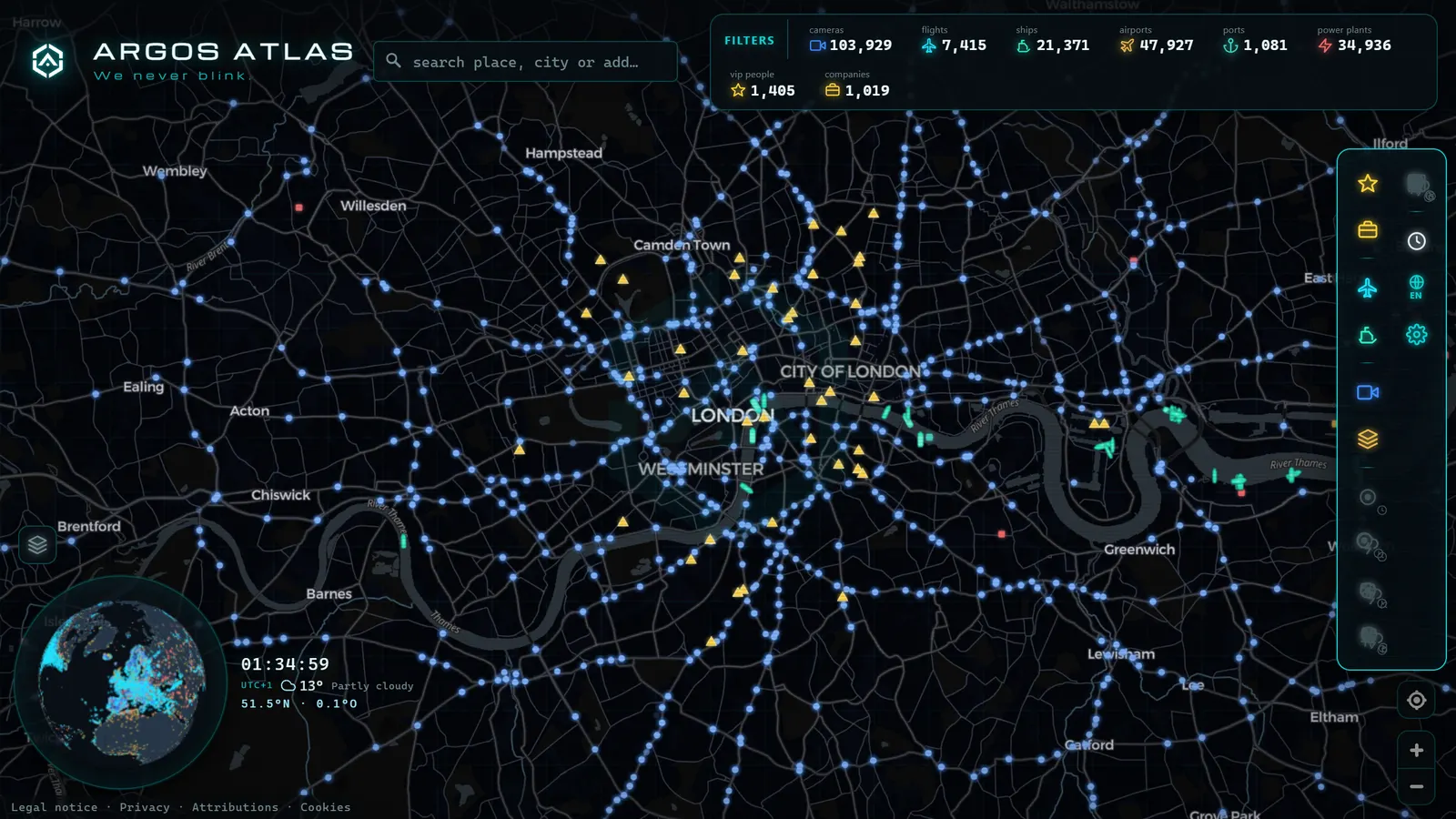
A World Cup spread across three countries is also a geographic event, and that's where a different tool comes in: on the geolocated predictions map in Argos Atlas, Polymarket markets appear pinned to the exact location of the event (the final's stadium, each knockout round's host cities) alongside the map's other live intelligence layers. Every market carries the ARGOS signal, which compares the traded odds against an independent estimate and flags prices that look out of line: a useful sanity check precisely when tournament noise peaks.
And if after watching you want to take part, do it with your feet on the ground: you can open a Polymarket account in minutes (availability varies by country, so check the official terms) but remember the statistic no tournament changes: 2026 on-chain analysis estimates that only about 7-8% of wallets are profitable. The World Cup is an extraordinary school for markets. Treat it as a school, with money you can afford to lose, and you'll walk away with something that outlasts the tournament: judgment.
This content is informational and does not constitute financial advice or an investment recommendation.
Frequently asked questions
How much money is the 2026 World Cup moving on prediction markets?
Hundreds of millions of dollars in volume across the championship market and individual match markets. It ranks among the most heavily traded sporting events in these platforms' history, with deep liquidity in the main markets throughout the tournament.
What is an outright and how does it differ from a match market?
The outright is the long-term market on the tournament champion: a multi-outcome market with one position per team that lives for weeks. A match market is short-term and resolves within hours. The outright rewards big-picture judgment; the match market rewards fast reaction.
Can I sell my position if my team is doing well but hasn't won yet?
Yes, that's the big advantage over a classic betting slip. If you bought a team's shares cheap and its probability has risen during the tournament, you can sell before the final and lock in the gain, or sell part and let the rest ride.
Is the World Cup a good moment to start with prediction markets?
It's an instructive one: high liquidity, easy-to-understand markets and objective resolution. But remember that 2026 on-chain analysis estimates only about 7-8% of wallets are profitable. Start with small amounts you can afford to lose and treat the tournament as a classroom, not a cash machine.
- Taxes and Prediction Markets: What You Should Keep in Mind
- What Is USDC and Why Polymarket Runs on It
- Crypto Wallets for Polymarket: What You Need to Know
- Best Prediction Markets in the US: 2026 Guide
- Will the Fed Hold Rates in July 2026? Prediction Markets Weigh In
- Will Gavin Newsom Win the 2028 Democratic Presidential Nomination?