Blog · Prediction markets
Polymarket vs Betfair Exchange: Crypto Predictions vs Classic Betting

Polymarket and Betfair Exchange share a family secret that most people miss: both are exchanges, marketplaces where you bet against other people, not against the house. Betfair invented the model for sports in the early 2000s; Polymarket rebuilt it two decades later on a blockchain and aimed it at world events. The kinship is real, but the differences (money, catalog, transparency, mechanics) are big enough that you should understand them before picking a side.
We'll walk through them without cheerleading: each platform solves a different problem well, and knowing which problem is yours matters more than any ranking.
The shared DNA: trading against people, not the house
At a traditional sportsbook, an operator sets the odds, bakes in a margin and manages its own risk; the contest is you versus the company. On an exchange there is no corporate counterparty: every position you take is matched by another user who believes the opposite, and the price emerges from crossing buy and sell orders. That structural difference (which we unpack in prediction markets vs bookmakers) has two huge consequences:
- Prices reflect the market's aggregated opinion, not an operator's commercial margin.
- You can exit whenever you want: just as you bought in, you can sell before resolution to lock in profit or cap a loss.
Betfair implements this with its back/lay system (betting for or against an outcome); Polymarket does it with YES and NO shares trading between $0 and $1. Different mechanics, same idea.
How the price is expressed: decimal odds vs raw probabilities
Betfair speaks the language of the European bettor: decimal odds. Odds of 4.0 mean a winning bet returns four times your stake, implying a 25% probability. Polymarket speaks probability natively: the share price ($0-$1) is the implied probability of the event, and every winning share pays exactly $1. A share at $0.25 and odds of 4.0 say the same thing in different grammar, and on any Polymarket market, YES plus NO adds up to roughly $1.
Which is better? Raw probability has a pedagogical virtue: it forces you to think "this happens 25% of the time" rather than "I get paid 4 to 1", which is exactly the mental frame you need to trade well. But if you come from betting, the conversion becomes automatic within a week.

What you can trade: pure sport vs the world's front page
The catalog is where they diverge most:
- Betfair Exchange is, above all, sport: football, horse racing, tennis and dozens of disciplines, with per-match and per-tournament markets plus some politics and specials. Its depth in live, in-play sport is its historic strength.
- Polymarket covers the world like a newspaper front page: politics and elections, geopolitics, crypto, the economy, culture, and sports too, with the 2026 World Cup moving hundreds of millions of dollars in volume. If it makes the news, it probably has a market.
Put simply: to trade the Premier League on a random Saturday, Betfair; to put a price on an election, a ceasefire or a Fed decision, Polymarket.
Recorded straight off the map, no sound.
Money, access and transparency
Betfair works like the classic gambling operator it is: a named account, deposits in local currency through traditional methods, and gambling licenses in the markets where it operates. Polymarket runs on-chain on Polygon with USDC: you need a stablecoin and a wallet, and in exchange you get something no traditional operator offers, public, auditable positions on the blockchain, with markets resolved by written rules and the UMA oracle, dispute window included. If that model appeals to you, you can open a Polymarket account and see it from the inside; the process is simpler than its crypto reputation suggests.
On fees, ignore the specific numbers floating around forums: they have changed over time on both platforms, and the only reliable source is the official page. Two things do hold: Betfair charges commission on net winnings, and on Polymarket limit orders usually pay lower fees than market orders. And the obligatory legal note: availability varies by jurisdiction for both, check the official terms before registering.
The numbers worth keeping in front of you
Honesty first: trading on an exchange isn't easier than betting, it's fairer. 2026 on-chain analysis estimates that only about 7-8% of Polymarket wallets are profitable, a figure that will sound familiar to anyone who knows the statistics of sports trading on Betfair. The exchange model's advantage isn't that you win more: it's that the playing field is transparent and the tools (limit orders, early exit, public data) are available to you if you put in the work.
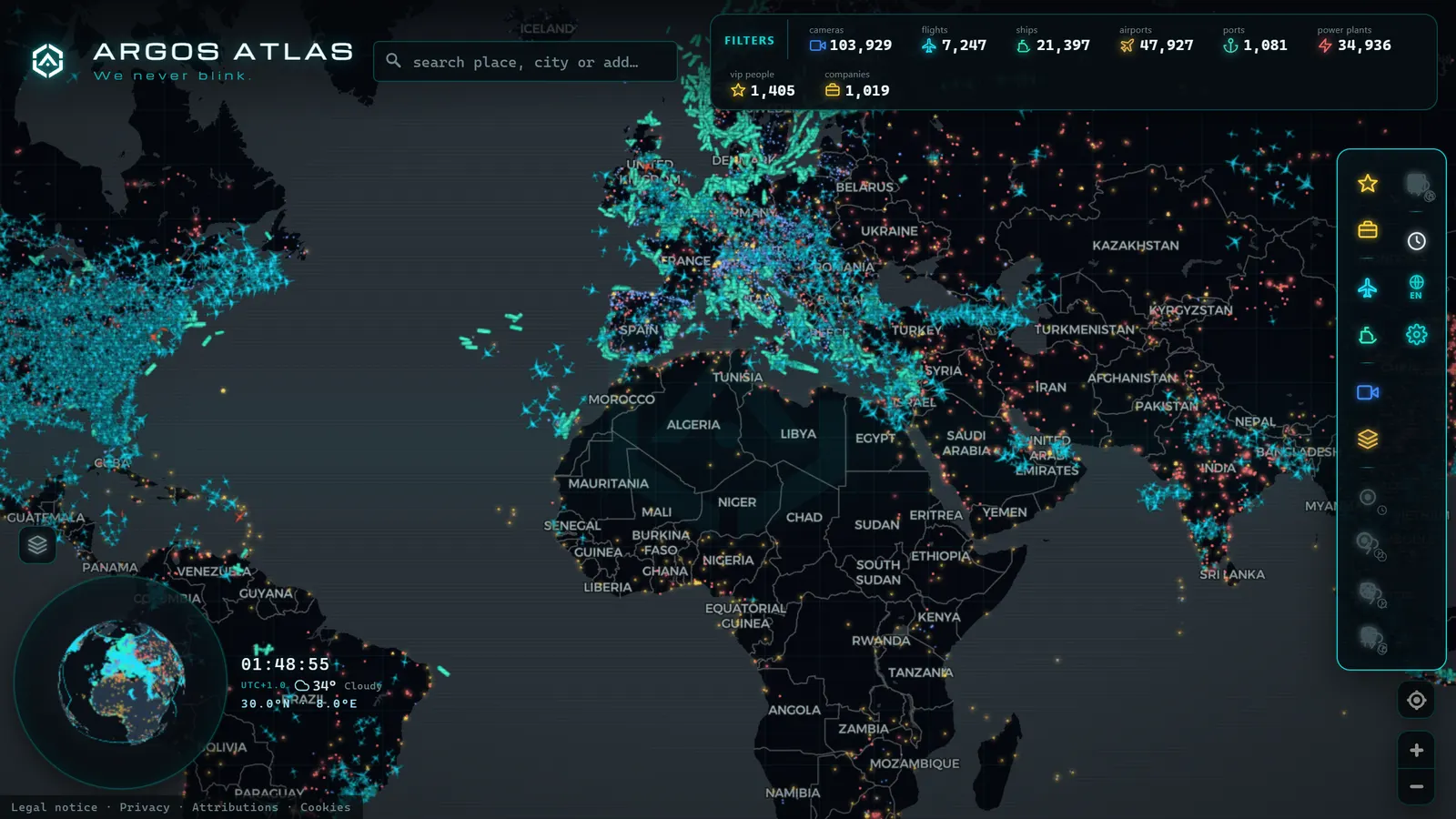
One more tool for that work: geographic context. On the geolocated predictions map in Argos Atlas, Polymarket markets are pinned to the exact location of the event (the summit city, the conflict region, the tournament stadium) alongside the ARGOS signal, which compares the market's odds against an independent estimate and flags prices that look out of line with the context. It's a different way to hunt for value: by place, not just by list.
Verdict: two tools, not two rivals
If your ground is live sport and you want maximum depth in football or racing, Betfair Exchange remains the reference. If you want to price world events with on-chain transparency, Polymarket has no rival on catalog. And if you're serious about this, the real answer is probably to know both: the same principles (probability, value, discipline) work on each, and comparing how one event trades across two markets is among the best schooling available.
This content is informational and does not constitute financial advice or an investment recommendation.
Frequently asked questions
How are Polymarket and Betfair Exchange similar?
At their core, both are exchanges: you trade against other people, not against the house. Prices come from supply and demand in an order book, and on both you can close your position before the event ends. The differences lie in the infrastructure, the money and the catalog.
Are Betfair odds and Polymarket prices comparable?
Yes, with one simple conversion. A decimal odd equals 1 divided by the implied probability: odds of 4.0 imply 25%, which on Polymarket would be a share priced at $0.25. Translating between the two formats lets you compare the same event's price on both platforms.
Can I trade in and out on both platforms?
Yes. Both Betfair and Polymarket let you sell or hedge your position before resolution, locking in profit or cutting losses. That's the big difference both share against traditional sportsbooks, where your ticket is frozen until the final whistle.
Which one is legal in my country?
Availability varies by jurisdiction for both: Betfair operates under gambling licenses in specific markets, and Polymarket has its own territorial restrictions. There is no universal answer, check each platform's official terms before signing up or depositing.
- The Types of Markets on Polymarket (and Which Move the Most Money)
- The 2026 World Cup in Prediction Markets: Hundreds of Millions at Stake
- Taxes and Prediction Markets: What You Should Keep in Mind
- What Is USDC and Why Polymarket Runs on It
- Crypto Wallets for Polymarket: What You Need to Know
- Best Prediction Markets in the US: 2026 Guide