Blog · Prediction markets
Cross-Platform Arbitrage: When YES + NO Cost Less Than $1

One piece of arithmetic holds every prediction market together: since each winning share pays out exactly $1, YES and NO on the same event must add up to roughly $1. If YES trades at $0.62, NO should sit around $0.38. That is not a convention, it is the structure of the product itself, because buying both sides guarantees you collect $1 whatever happens.
Here is the interesting part: when the same event trades on two different platforms, that identity breaks more often than you would expect. If you can buy YES on one platform and NO on another for a combined total under $1, you have just locked in a profit that does not depend on the outcome. That is cross-platform arbitrage (the "purest" flavor of prediction market arbitrage) and this article covers how it works, why it exists, and the fine print that can wreck it.
The mechanics: a worked example
Picture a binary event listed on two platforms. The numbers are invented to show the arithmetic, not real quotes:
- On platform A, YES is offered at $0.47.
- On platform B, NO is offered at $0.49.
You buy one share of each, spending $0.96 total. Whatever happens, one of the two shares pays $1:
- If the event happens, your YES on platform A pays $1.00.
- If it doesn't, your NO on platform B pays $1.00.
Outcome: a guaranteed $1.00 for $0.96 invested. Those 4 cents per share pair (~4% before fees) are yours the moment you complete the trade, with no opinion about the event required. Scale it up and cents become serious money, it is no accident that academic research documented more than $40 million in arbitrage profits on Polymarket between April 2024 and April 2025.
Why these gaps exist
If this is near-guaranteed money, why doesn't it vanish instantly? Fragmentation:
- Different crowds. Each platform has its own user base, with its own biases and information. Polymarket runs on-chain with USDC; other venues operate under different regulatory frameworks and attract a different profile. Two different crowds rarely agree exactly.
- Different speeds. A headline moves one platform in seconds while the other takes minutes to catch up, especially off-peak. In that window, prices diverge.
- Access friction. Platform availability varies by jurisdiction, and moving capital between venues costs time and fees. The harder the bridge is to cross, the longer the gap survives.
- Uneven liquidity. In quiet markets, a couple of large orders push the price and nobody corrects it for hours.
In Polymarket vs Kalshi we compare the two platforms most often mentioned in this context and their structural differences.
The fine print that eats the margin
This is the part the Twitter threads skip. The margin on a cross-platform arbitrage is thin, and several enemies nibble at it:
- Resolution risk, the dangerous one. Your profit is only guaranteed if both platforms resolve identically. Each has its own written rules and resolution mechanism (Polymarket uses the UMA oracle, with a dispute window) and two slightly different wordings of the "same" market can produce opposite outcomes in edge cases: cutoff dates, different official sources, ambiguous definitions. Read both rule sets in full before entering; how markets get resolved covers where the traps usually hide.
- Fees and slippage. Fee structures have changed over time on every platform (check the official pages), and market orders in shallow books fill worse than the screen suggests. A theoretical 4% margin can shrink to half, or to nothing.
- Locked capital. Your money sits committed on both platforms until resolution. A 4% return is fine; a 4% return waiting eight months for a market to resolve is a different conversation.
- Operational risk. Two accounts, two balances, two withdrawal processes. If you only manage to execute one leg, you no longer have an arbitrage, you have a directional bet you never chose.
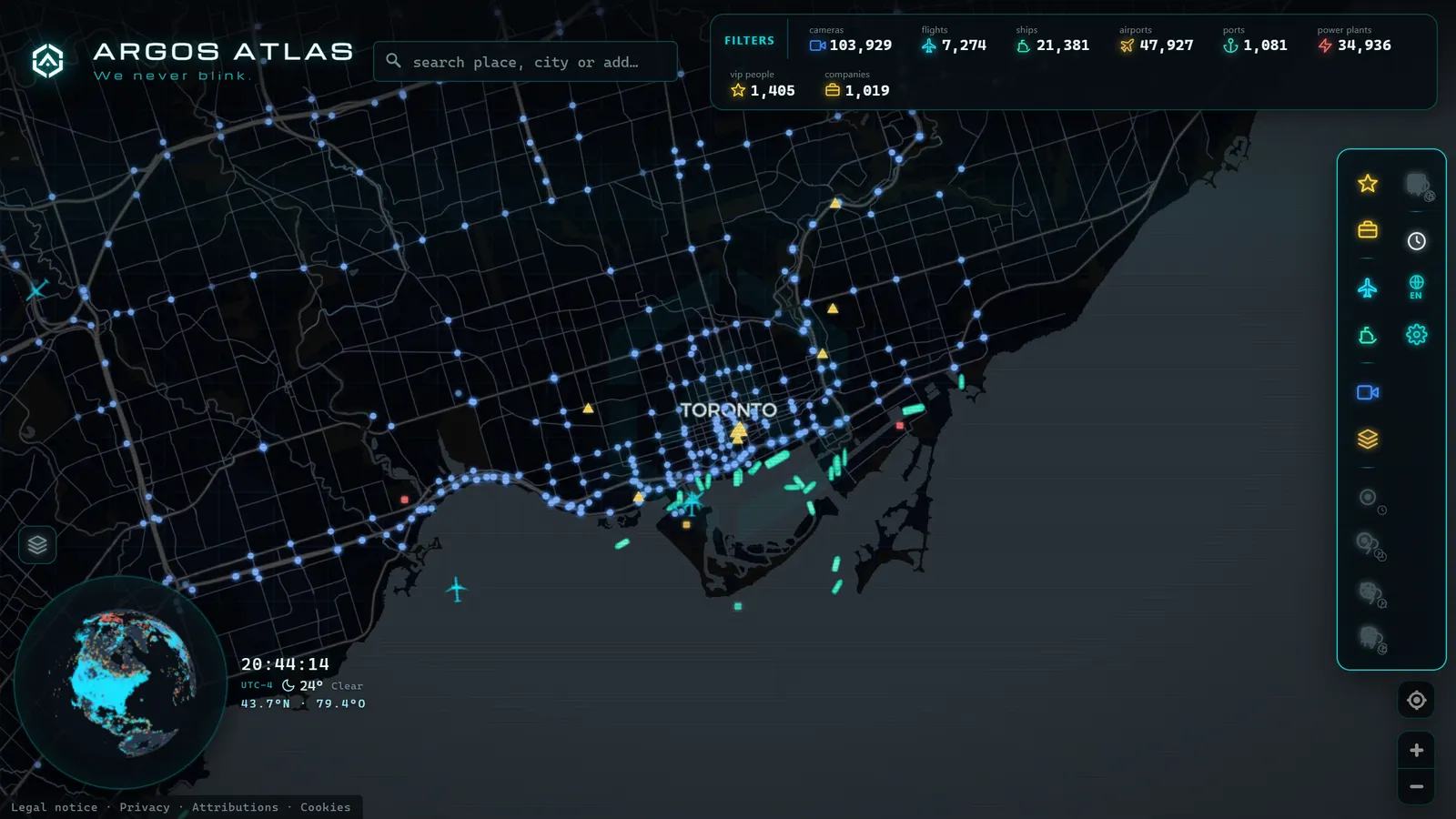
Recorded straight off the map, no sound.
How gaps get spotted in practice
The hunt needs two ingredients: coverage (watching many equivalent markets at once) and context (understanding the underlying event well enough to judge resolution risk). The first calls for tooling that compares prices for the same event across venues; the second calls for information about the event itself.
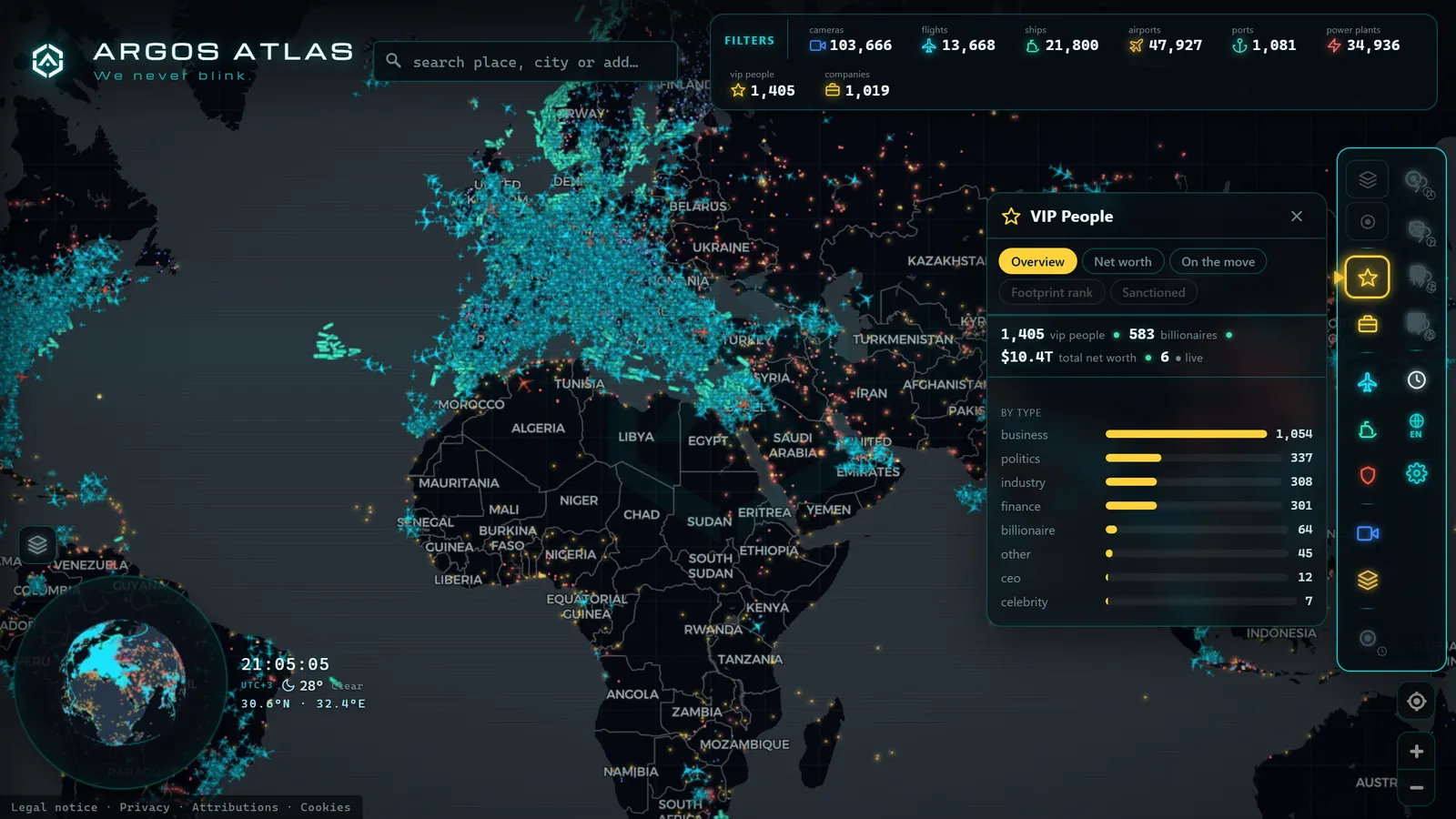
That second half is where the Argos Atlas predictions map fits: the markets layer pins every Polymarket market to the exact location of its event (an election, a conflict, a weather system) alongside the ARGOS signal, which compares the market's price against an independent probability estimate built from the map's own data. It is not a multi-platform scanner, but it does the other half of the job: when you spot a cross-platform gap, the map gives you ground-level context in seconds, so you can judge whether the gap is an opportunity or a sign that one of the two platforms knows something you don't.
If the numbers still hold after all that scrutiny, execution starts with having accounts ready: open Polymarket and its counterpart on the other platform, funded in advance, gaps do not wait for bank transfers.
An honest summary
Cross-platform arbitrage is real, measurable and conceptually simple: YES + NO < $1 = locked profit. But the margin is thin, the automated competition is fierce, and resolution risk turns "risk-free" into "risks you can't see at first glance". Treat it as what it is: a precision strategy for organized people with patient capital and an obsession with fine print. If that is you, few things in this niche are as elegant. If it isn't, understanding the mechanics still makes you a better trader: you will know why prices across platforms eventually converge, and who gets paid to converge them.
This content is informational and does not constitute financial advice or an investment recommendation.
Frequently asked questions
Is cross-platform arbitrage really risk-free?
Not entirely. The profit is only locked in if both platforms resolve the market the same way, and that depends on their written rules. On top of that come fees, slippage, capital locked until resolution and the operational risk of moving funds between platforms.
Why should YES and NO add up to $1?
Because every winning share pays out exactly $1. Buying both YES and NO on the same event guarantees you collect $1 no matter what happens, so the pair is worth $1. If you can assemble it for less, the difference is profit locked in from the moment you buy.
Can I do this manually or do I need a bot?
The big gaps get sniped by automated players in seconds, but less-watched markets show mispricings that last minutes or hours. Manual execution works if you monitor few markets and keep funded accounts ready in advance, preparation matters more than click speed.
If these gaps are near-certain money, why do they exist at all?
Because liquidity is fragmented: each platform has its own user base, regulatory framework and reaction speed to news. Prices don't synchronize on their own, arbitrageurs synchronize them, and until they arrive, the gap lives.
- Expected Value (EV): The Only Formula You Need Before Predicting
- Implied Probability: How to Calculate It and Why It Saves You Money
- The 10 Beginner Mistakes in Prediction Markets
- Bankroll Management and the Kelly Criterion for Prediction Markets
- Limit Orders on Polymarket: The Quiet Way to Pay Less
- How Many People Actually Make Money on Polymarket? The Real Data