Blog · Prediction markets
Arbitrage in Prediction Markets: What It Is and How to Spot It

Arbitrage is one of those words that sounds like Wall Street but describes something very down to earth: exploiting the fact that the same asset carries two different prices at the same time. In prediction markets the concept gets unusually interesting, because here the price is not just any price, it is a probability. A Polymarket share trades between $0 and $1, pays exactly $1 if you are right, and its price is the probability the market assigns to the event. A YES share at $0.30 means "the market thinks this has a 30% chance of happening."
Which raises the question this whole article rests on: what happens when that probability is wrong? That is where prediction market arbitrage is born, and where real, audited money has been made, and also lost by people who mistook a misunderstanding for an opportunity.
What arbitrage means when the price is a probability
In a classic financial market, arbitrage means buying cheap in one place and selling dear in another. In a prediction market there is a second, deeper reading: the divergence between the market's price and the event's real probability. If a market prices YES at $0.30 but the best available evidence points to a 50% chance, that share is cheap in a strictly mathematical sense: every dollar invested carries positive expected value.
That is the core idea worth engraving: in prediction markets, arbitrage is the systematic exploitation of mispriced probabilities. Everything else (the techniques, the tools, the risks) is just ways of finding those gaps before everyone else, and of not fooling yourself along the way.
The two kinds: mechanical arbitrage and value arbitrage
Two very different practices share the same name, and it pays to keep them apart:
- Mechanical (pure) arbitrage: requires no opinion about the event. It appears when prices violate a mathematical identity, for instance, YES and NO on the same market should add up to roughly $1, and the same holds across different platforms listing the same event. If you can buy both sides for less than $1, the profit is locked in instantly, whatever happens. We break this down in cross-platform arbitrage.
- Value (statistical) arbitrage: does require your own estimate. You compare the market's price against a probability you compute independently (data, models, public information the market has not yet digested) and buy when the gap is large enough. It is not guaranteed profit: it is positive expected value, repeated many times.
Mechanical arbitrage is rarer and vanishes fast, because anyone can see it. Value arbitrage is more abundant and more durable, because it demands something scarce: estimating probabilities better than the crowd in some specific domain.
The $40 million study: proof the inefficiencies are real
Is all of this theory? No. Because Polymarket runs on-chain (on Polygon, in USDC) and every position is public and auditable, researchers can measure arbitrage with a precision impossible at traditional bookmakers. Academic research documented more than $40 million in arbitrage profits on Polymarket between April 2024 and April 2025.
Two honest readings of that number. First: prediction markets are not perfectly efficient, the divergences exist, they are measurable, and somebody is collecting them. Second: that money went to fast, methodical, often automated participants. The study proves the mine contains gold, not that gold is still lying on the surface. We dissect the paper in the $40 million arbitrage study.
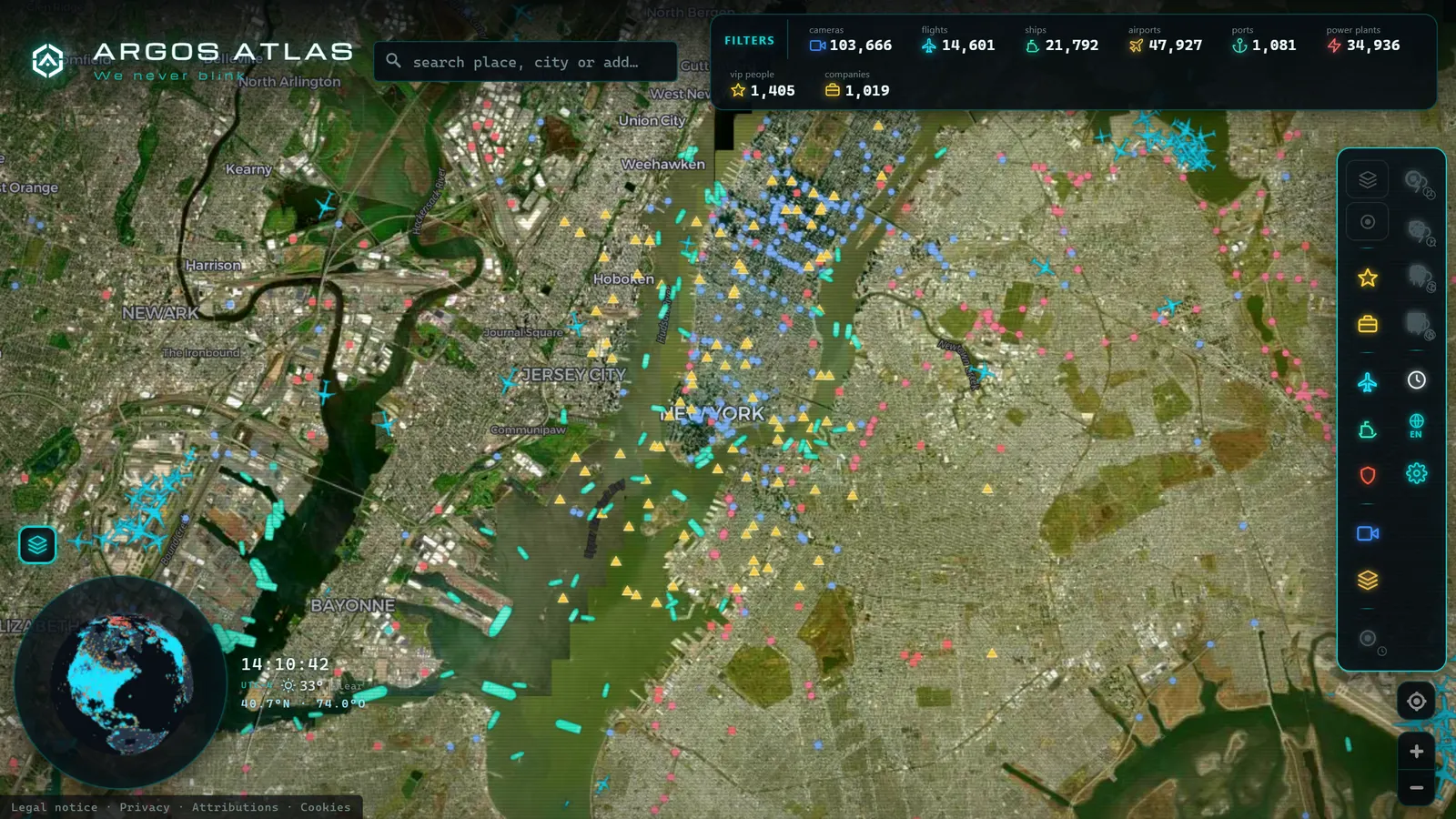
Recorded straight off the map, no sound.
How you actually spot a divergence
Stripped to the skeleton, the process has three steps:
- Estimate the probability yourself, before looking at the price. Use primary data: base rates for similar events, polls, official information, whatever your niche provides. If you look at the price first, your brain will anchor to it and you will measure nothing.
- Compare your estimate with the market's price. Small differences are noise, your estimate has error too. What you are hunting for are large, explainable gaps: you know something the market has not priced in yet.
- Ask why the gap exists before you enter. This is what separates arbitrage from self-deception. Sometimes the "weird" price is explained by a resolution rule you didn't read, a detail of the UMA oracle, or a headline you missed. If you can't find the explanation and your estimate survives scrutiny, you have a candidate with positive expected value, which you can quantify with the expected value formula.
The ARGOS signal: divergences on a map
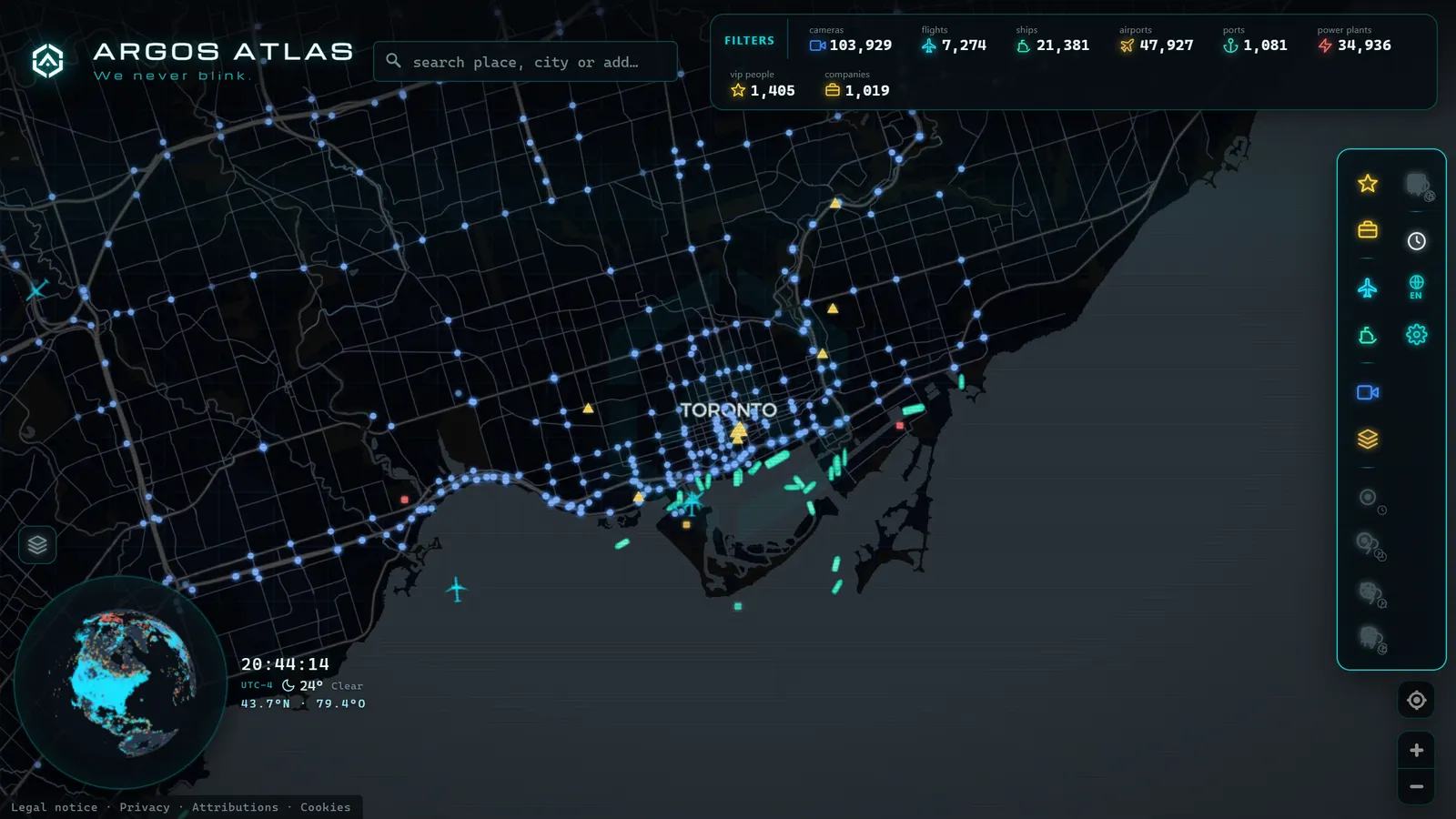
Step 1 (building an independent estimate) is the bottleneck of the whole process, and it is exactly what the predictions layer of Argos Atlas automates. On the geolocated predictions of Argos Atlas, every Polymarket market is pinned to the exact location of its event: the city holding an election, the zone of a conflict, the path of a hurricane. Next to each market, the ARGOS signal compares the current price against an independent probability estimate built from the map's own sources, cameras, maritime and air traffic, events and open-source intelligence.
When price and estimate agree, the market is doing its job. When they diverge hard, you are looking at precisely what this article describes: a possibly mispriced probability, flagged on the map, with the geographic context right beside it. The signal doesn't decide for you (no serious tool does) but it compresses hours of manual scanning into a glance. If a candidate survives your own analysis, the rest is a matter of checking the market on Polymarket and sizing the position.
What arbitrage is not
Let's close with the fine print, because in this niche honesty is worth more than enthusiasm:
- It is not free money. Even mechanical arbitrage carries risk: fees, slippage in thin markets and, above all, resolution risk, markets resolve according to written rules and the UMA oracle, with a dispute window, and a careless reading of those rules can turn a "sure profit" into a loss.
- It is not for capital you can't lock up. Positions stay committed until resolution, or until you find a counterparty to exit.
- It does not replace judgment. Sometimes the strange price is the correct answer to a question you haven't asked yet.
With that in your pack, arbitrage stops being a promise of riches and becomes what it really is: the discipline of hunting mispriced probabilities, measuring them, and acting only when the numbers (not the excitement) justify it.
This content is informational and does not constitute financial advice or an investment recommendation.
Frequently asked questions
Is prediction market arbitrage legal?
Arbitrage itself is a legitimate trading practice: buying where something is cheap and selling where it is expensive. Platform availability is a separate question that varies by jurisdiction, always check the official terms before trading.
How much money does arbitrage actually move on Polymarket?
Academic research documented more than $40 million in arbitrage profits on Polymarket between April 2024 and April 2025. That is an aggregate figure across many participants: it proves the inefficiencies exist, not that anyone can capture them.
Do I need bots to arbitrage?
For pure mechanical arbitrage, speed matters and serious players automate. For value arbitrage (spotting prices that diverge from the real probability) judgment beats speed, and an informed human with good tools still has room to compete.
What is the ARGOS signal?
It is Argos Atlas's own indicator: it compares each Polymarket market's price against an independent probability estimate built from the map's data sources. When the gap is large, the signal flags it so you can decide whether it is an opportunity or an explanation you are missing.
- Expected Value (EV): The Only Formula You Need Before Predicting
- Implied Probability: How to Calculate It and Why It Saves You Money
- The 10 Beginner Mistakes in Prediction Markets
- Bankroll Management and the Kelly Criterion for Prediction Markets
- Limit Orders on Polymarket: The Quiet Way to Pay Less
- How Many People Actually Make Money on Polymarket? The Real Data